Desserts · Part 3 of 3: Tips & recipe card
Japanese Soufflé Cheesecake, Cloud-Airy in 90 Minutes Tips, FAQ & printable recipe
- Prep
- Cook
- Total
- Serves
- 8
Tips for success
Room temperature is the single biggest lever: cream cheese at 68°F melts smooth in minutes, while cold cheese leaves specks no amount of whisking fixes. Whip the whites in a bowl wiped with vinegar, add the sugar gradually, and stop at stiff peaks — a dry meringue folds unevenly.
Use an instant-read thermometer rather than the clock; ovens vary more than any recipe assumes. If the top colors early, tent it with foil. And keep the water bath topped up with boiling water, never cold, which would drop the oven temperature and stall the bake.
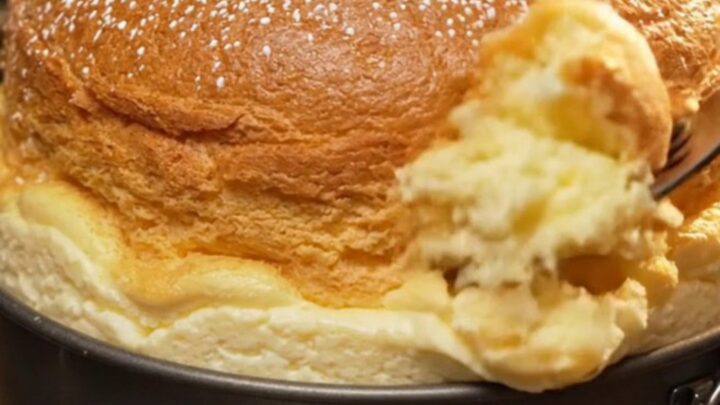
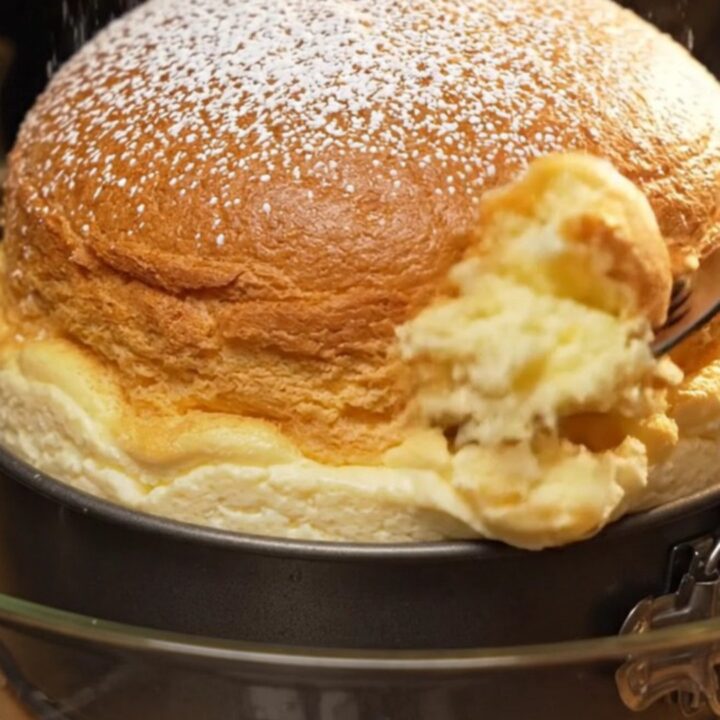
For the cleanest slices, chill the cake fully, then cut with a knife dipped in hot water and wiped dry between cuts. Dust with confectioners' sugar at the table, not hours ahead, so the white layer stays visible on the golden top.
If the kitchen is humid, wait until the surface has cooled completely before dusting, or the sugar dissolves. Leftover slices are excellent straight from the refrigerator; the texture firms slightly and the flavor concentrates. A serrated knife handled with a light sawing motion keeps the tender crumb from compressing.
Variations
- Matcha Finish: Sift 1 tablespoon of matcha powder over the golden dome together with the confectioners' sugar for a two-tone, snowy-green finish that suits the Japanese origin of the bake.
- Citrus Lift: Whisk the finely grated zest of one lemon into the warm base before folding; the perfume cuts through the cream cheese and the crumb stays exactly the same.
- Cocoa Dusting: Replace the confectioners' sugar with an even dusting of unsweetened cocoa powder through a sieve, for a darker, more adult-tasting finish over the golden surface.
- Mini Cakes: Divide the batter among eight lined ramekins set in the water bath and reduce the bake to about 35 minutes; check for 160°F (71°C) in the center of one ramekin.
Storage and make-ahead
- Fridge
- Refrigerate slices in an airtight container for up to 4 days; the crumb stays tender and the flavor clean.
- Freezer
- Wrap individual slices in plastic and foil and freeze up to 1 month; thaw overnight in the refrigerator.
- Reheat
- Enjoy chilled, or warm a slice for 10 seconds in the microwave; longer heat dries the crumb.
Cool the cheesecake completely — no more than 2 hours at room temperature — then refrigerate it in an airtight container, or keep it in its pan wrapped in plastic. It keeps its texture best within 4 days; the crumb gradually firms and the flavor stays clean.
Keep it away from strong-smelling foods, since dairy picks up aromas quickly. Dust with confectioners' sugar only when serving, never before storage, because the sugar weeps into the surface overnight and leaves blotches. Slices can be wrapped individually for lunches.
This cheesecake suits making ahead: bake it the day before serving, let it cool in the switched-off oven and on a rack as directed, then chill overnight in its pan. The overnight rest actually improves the texture, giving the crumb time to set evenly, and unmolding is easier when the cake is fully cold.
Hold off on the confectioners' sugar until just before the table. The water-bath setup — foil, kettle, roasting pan — can be arranged earlier in the day so the bake itself takes only a little over an hour.
Serving ideas
Serve the cheesecake barely chilled or at room temperature, when its texture is at its most airy. A dusting of confectioners' sugar through a fine sieve is the classic finish, and it is all the cake needs. Cut modest slices — the crumb is so airy that portions look tall but feel weightless on the fork. A hot, dry knife gives the cleanest edges, and lifting each slice with a thin spatula keeps the tender structure intact from board to plate.
Pair it with unsweetened black tea or coffee, whose bitterness balances the creamy dairy. Fresh berries alongside add color and acidity without competing with the delicate flavor. If serving after a rich meal, present it slightly colder so the slices hold their shape; if it is the afternoon treat, ten minutes out of the refrigerator brings back the tender, melt-on-the-tongue texture. Present the whole dome on a wooden board and slice at the table — the tall, golden, snow-dusted dome is part of the experience.
Frequently asked questions
Why did the top crack?
Can the cheesecake be made without a water bath?
How is this different from New York cheesecake?
Can this be made a day ahead?
Why did the batter deflate before baking?
Japanese Soufflé Cheesecake, Cloud-Airy in 90 Minutes
Ingredients
- 8 oz cream cheese, at room temperature
- 4 tbsp unsalted butter, at room temperature
- 7 tbsp whole milk
- 6 large egg whites, at room temperature
- 1/2 cup granulated sugar
- confectioners' sugar, for serving
Instructions
- Heat the oven to 300°F (150°C) and place a rack in the center position. Line an 8-inch round cake pan with parchment so the paper overhangs two opposite sides, then wrap the outside in two layers of heavy-duty foil. Fill a kettle and bring the water to a boil for the bain-marie.
- Set a saucepan with an inch of simmering water over medium-low heat and place a heatproof bowl on top. Add the cream cheese, butter and milk and whisk until the mixture turns completely smooth and glossy, about 5 minutes. Lift the bowl off the heat and let the batter rest until just warm.
- Whip the 6 egg whites in a spotlessly clean bowl, first on medium speed until foamy, then with the sugar added a tablespoon at a time. Raise to medium-high and whip to stiff, glossy peaks that stand straight when the beater lifts. Do not push past this stage or the meringue turns dry.
- Stir one generous spoonful of the meringue into the warm base to lighten it, then add a third of the remaining meringue and fold with a silicone spatula: cut to the bottom, sweep along the side, and turn the bowl a quarter turn. Work slowly so the air stays in the batter.
- Fold in the rest of the meringue with the same gentle cut-and-turn motion, stopping the moment no streaks remain. Pour the batter into the lined pan, then tap the pan twice on the counter and pop any large bubbles with a skewer. Smooth the top with an offset spatula.
- Place the cake pan in a deep roasting pan and set both in the oven, then pour boiling water into the roasting pan to reach about 1 inch up the sides. Bake at 300°F (150°C) for 60 minutes, until the top is deep golden and the center registers 160°F (71°C) on an instant-read thermometer, the temperature at which the eggs are fully cooked.
- Turn the oven off, crack the door open with a wooden spoon, and leave the cheesecake inside for 10 minutes. This slow landing eases the temperature change so the dome settles instead of sinking or pulling away from the sides. Then lift the pan out and set it on a wire rack.
- Cool the cheesecake in its pan on a rack for 1 hour, then chill for 2 hours more for the cleanest slices. Lift it out by the parchment overhang, peel the paper away, and dust the top generously with confectioners' sugar through a fine-mesh sieve right before serving.
Estimated nutrition per serving
- Calories
- 200
- Protein
- 4 g
- Carbohydrates
- 15 g
- Fat
- 13 g
Next recipe
Creamy Baked Cornmeal Custard Cake with a Golden Crust
See the recipe → →This recipe is based on a short cooking video and is published under the pen name Clara Weller. It was checked before publication, but errors can slip through. Nutrition, when shown, is an estimate. Read more in our editorial policy and on our food safety page.
More recipes to try
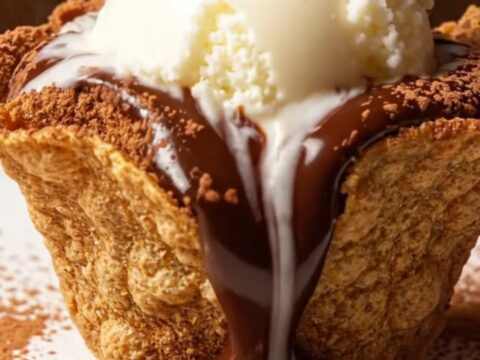
Mexican Hot Chocolate Lava Cakes in Crispy Tortilla Cups
Total time: 31 min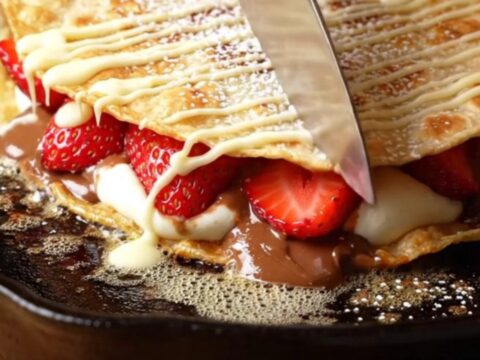
Crispy Nutella Strawberry Quesadilla Ready in 10 Minutes
Total time: 14 min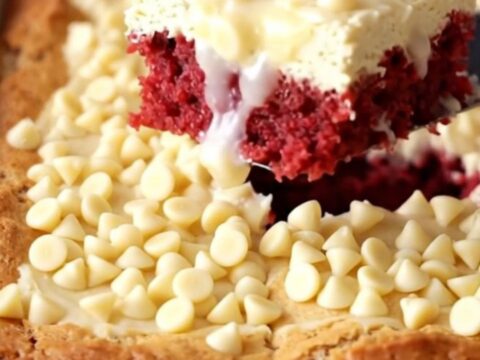
Easy Red Velvet Gooey Butter Cake with White Chocolate Chips
Total time: 3 h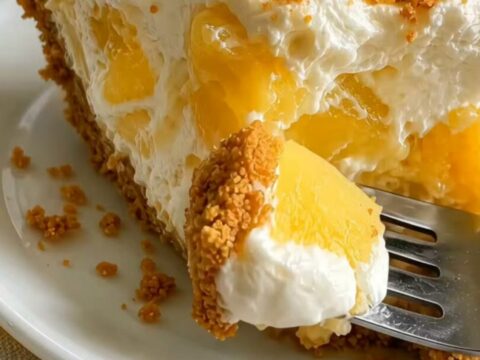
No-Bake Pineapple Cream Cheesecake with a Crisp Cookie Crust
Total time: 6 h 30 min
Creamy Caramel Cheesecake with Graham Crust
Total time: 5 h 30 min