Desserts · Part 1 of 3: Ingredients
Creamy Caramel Cheesecake with Graham Crust
- Prep
- Cook
- Total
- Serves
- 12
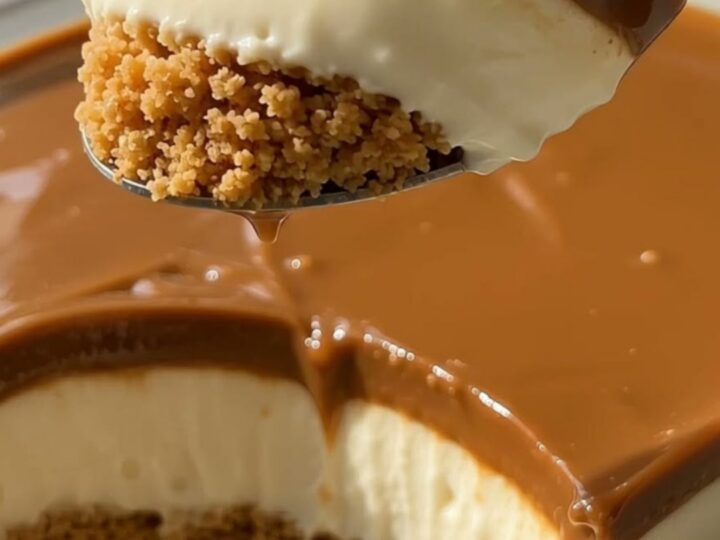
Three layers, one perfect bite: a crumbly graham crust, a filling so smooth it barely holds its shape, and a glossy caramel top that catches the light. This is the cheesecake that gets requested for every birthday and holiday table, and the method below makes it approachable — a water bath, a low oven and a long chill do all the hard work.
Caramel cheesecake looks like a bakery project but is really just good ingredients handled patiently. The base is a classic graham cracker crust pressed firm and briefly toasted so it stays crisp under the filling. The filling is straight from the New York playbook: full-fat cream cheese beaten smooth, just enough sugar, eggs added one at a time on low speed, and a cup of sour cream for tenderness and a gentle tang.
Everything bakes in a water bath at a modest temperature, the single biggest factor in getting that dense yet creamy texture with a pale, uncracked top. After a slow cool-down and a proper chill, a layer of warm caramel sauce settles into a smooth, mirror-like finish, and every slice comes out with three clean, distinct layers.
Ingredients
Crust
- 1 1/2 cups graham cracker crumbs (about 12 full sheets, crushed fine)
- 5 tbsp unsalted butter, melted
- 1/4 cup granulated sugar
Filling
- 2 lb cream cheese, softened to room temperature
- 3/4 cup granulated sugar
- 3 large eggs, at room temperature
- 1 cup sour cream, at room temperature
- 1 tsp vanilla extract
Topping
- 3/4 cup caramel sauce, store-bought or made ahead
Why this recipe works
The method works because it treats the filling like the delicate custard it is. Cream cheese proteins tighten as they heat; push them past a certain point and they squeeze out moisture, leaving a grainy, cracked cake. Baking at 325°F (163°C) in a water bath keeps the temperature around the pan gentle and even, so the edges never set far ahead of the center. The water also blocks the dry oven air that would otherwise brown and wrinkle the top.
The mixing order builds the texture just as deliberately. Beating the cream cheese alone first, before any liquid goes in, breaks it down fully without incorporating air. Eggs added one at a time on low speed emulsify into the base rather than foaming it, and the sour cream, folded in last, loosens the batter to that pourable-but-thick consistency.
Air bubbles are the enemy: whipped-in air rises during baking, then collapses and cracks as the cake cools. A low, dense batter plus a slow, gradual cool-down in the switched-off oven means the top stays flat and the crumb stays velvety from edge to center.
Notes and substitutions
Use full-fat, block-style cream cheese — the kind sold in foil-wrapped bricks, not the spreadable tubs, which contain extra water and stabilizers that loosen the filling.
Take the cream cheese, eggs and sour cream out about an hour ahead; room-temperature ingredients blend smoothly without long beating. For the crust, graham crackers crushed in a food processor give the finest, most even crumbs, but a zip-top bag and a rolling pin work nearly as well.
The springform pan matters more than any other piece of equipment here: a 9-inch pan with a tight, leak-proof ring keeps the water bath out. Wrap it in two layers of heavy-duty foil regardless — cheap insurance.
An instant-read thermometer takes the guesswork out of doneness, and a roasting pan big enough to hold the springform with an inch of clearance completes the setup. Store-bought caramel sauce is entirely fine for the topping; choose one that pours thick at room temperature so it holds a defined layer on top of the cake.
- graham cracker crumbs: Digestive biscuits or vanilla wafer crumbs work the same way; crush them fine and use the same 1 1/2 cups so the crust still holds together.
- sour cream: Plain full-fat Greek yogurt replaces sour cream cup for cup and keeps the filling tender; avoid fat-free versions, which can turn the texture chalky.
- caramel sauce: Warm store-bought dulce de leche thinned with a tablespoon of heavy cream gives a similar glossy topping; spread it just before serving either way.
Equipment
- 9-inch springform pan
- electric hand mixer or stand mixer
- mixing bowls
- rubber spatula
- roasting pan for the water bath
- instant-read thermometer
- food processor or zip-top bag and rolling pin
- aluminum foil
Up next · Part 2 of 3
10 steps · 1 h of cooking · what to look for at each stage
Step-by-step instructions (Part 2)