Dinner · Part 3 of 3: Tips & recipe card
Pan-Seared Swordfish with Tomato-Caper Pan Sauce Tips, FAQ & printable recipe
- Prep
- Cook
- Total
- Serves
- 2
Tips for success
Start with the steaks cold from the refrigerator, straight from the package once patted dry. Cold fish holds its shape while the outside sears, and the center cooks more evenly. Keep the seasoned steaks covered in the refrigerator until the skillet is hot, and never leave them out for longer than 30 minutes before cooking.
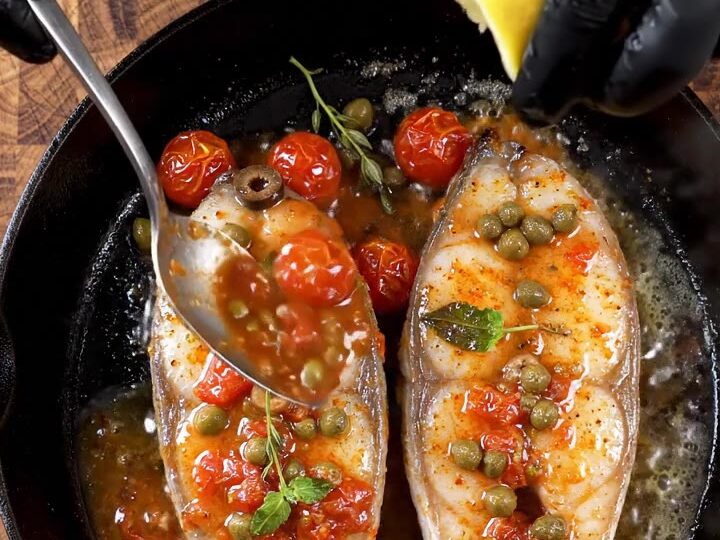
Spoon the pan juices over the swordfish every minute or so rather than all at once. Small, repeated basting builds a glossy coating on the fish and keeps the sauce from reducing too far. If the sauce starts to look dry, add a splash of water or a little more lemon juice to loosen it, then continue spooning. Taste the sauce before serving and adjust the salt, because the capers and olives already add a good amount of saltiness.
Variations
- Extra Lemon Zest: Finely grate the zest of the lemon over the swordfish just before serving. The zest adds a fragrant citrus aroma to the glossy sauce and sharpens the flavor without adding more juice or changing the texture of the dish.
- Garlic Butter Finish: Add a thinly sliced garlic clove to the butter as it melts, stirring until it turns pale gold. This gives the tomato-caper sauce a deeper savory base while keeping the same ingredients and the same method throughout the cooking.
- Halibut Version: Swap the swordfish for thick halibut steaks cut to the same thickness. Cook them in the same way, basting until the flesh turns opaque and flakes easily, adjusting the time slightly to match the lighter fish.
- Crushed Red Pepper: Add a small pinch of crushed red pepper to the pan with the capers. The gentle heat pairs well with the blistered tomatoes and the buttery pan sauce, giving the finished dish a subtle warmth without overpowering the fish.
Storage and make-ahead
- Fridge
- Store leftover fish and sauce in an airtight container in the refrigerator for up to 2 days, after cooling for no more than 2 hours.
- Reheat
- Reheat gently in a covered skillet over low heat with a spoon of water, just until warmed through, to keep the fish moist.
Swordfish is best eaten the same day it is cooked. If you have leftovers, let the fish and sauce cool for no more than 2 hours at room temperature, then transfer them to a shallow airtight container. Keep the tomatoes, olives and sauce together with the fish so the flavors stay connected. Store the container in the refrigerator, where the leftovers keep for up to 2 days.
Do not leave cooked fish out of the refrigerator for longer than that window, and do not reuse the container for raw fish without washing it first. Keep the grated cheese separate in its own container, because it dries out quickly once exposed to air. Herbs such as basil are best added fresh rather than stored in the pan sauce for long periods.
Several components of this dish can be prepared in advance, which makes the final cooking quicker. Halve the cherry tomatoes, pit the olives, drain the capers and juice the lemon up to a day ahead, keeping each in its own covered container in the refrigerator. Grate the hard cheese shortly before serving so it stays fine and fresh.
Tear the basil just before cooking, because the leaves bruise and darken once cut. Season the swordfish steaks no more than 30 minutes before searing, keeping them cold until the skillet is ready. The actual cooking takes only about 15 minutes, so the dish is best assembled and finished just before serving. Avoid cooking the fish in advance, because swordfish dries out when reheated and loses its glossy texture.
Serving ideas
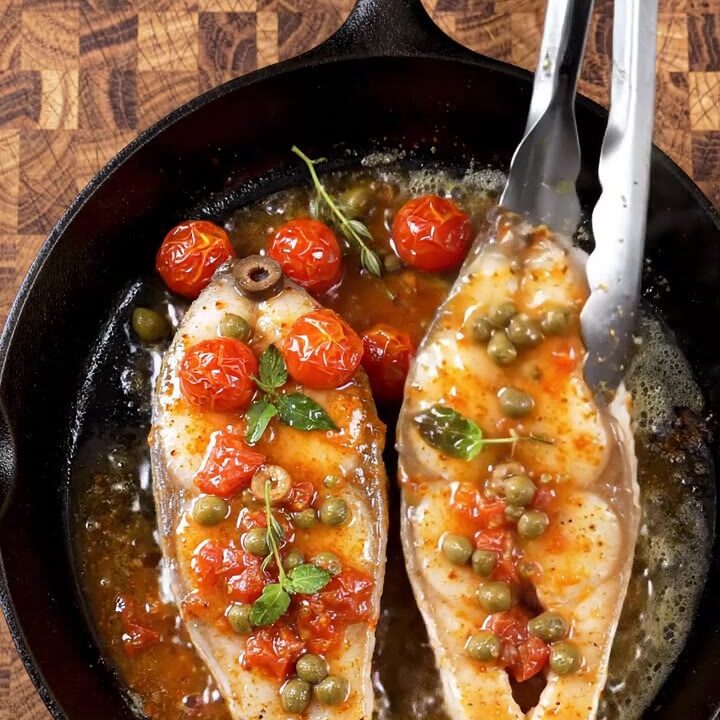
Serve the swordfish directly in the cast iron skillet, placed on a heatproof trivet in the center of the table. Each steak should be topped with blistered tomatoes, olives and capers, with plenty of the glossy pan sauce spooned over the fish. Arrange lemon slices around the edge of the skillet so guests can squeeze extra juice over their portion.
Grate hard cheese over the top just before eating, and finish with a few torn basil leaves. The dish is generous enough to serve as a main course on its own, and it pairs well with crusty bread for mopping up the sauce, which is the best part of the meal.
A simple side keeps the focus on the fish. A green salad with a light vinaigrette, a plate of roasted or steamed green vegetables, or a bowl of plain boiled potatoes all complement the sharp flavors of the tomatoes, capers and lemon without competing with them.
Choose a crisp, dry white wine or a light rosé to serve alongside, since acidity balances the buttery sauce well. Keep the table relaxed and let each guest serve themselves from the skillet, which is part of the appeal of cooking and serving in cast iron.
Frequently asked questions
Can swordfish be cooked from frozen in this recipe?
How thick should the swordfish steaks be?
Why do the capers go in after the lemon juice?
Can you substitute the cherry tomatoes?
What is the best way to tell when swordfish is done?
Pan-Seared Swordfish with Tomato-Caper Pan Sauce
Ingredients
- 2 thick swordfish steaks, about 1 inch thick
- kosher salt, to taste
- freshly ground black pepper, to taste
- 2 tbsp extra-virgin olive oil
- 2 tbsp unsalted butter
- 1 cup cherry tomatoes, halved
- 1/4 cup mixed black and green olives, pitted and halved
- 1 lemon, juiced, plus thin slices for serving
- 1 tbsp capers, drained
- 3 sprigs fresh thyme
- 6 leaves fresh basil, torn
- grated hard cheese, such as Parmesan, for serving
Instructions
- Pat the swordfish steaks dry and season both sides generously with salt and black pepper. Heat the olive oil in a cast iron skillet over medium-high heat until it shimmers, then lay the steaks in the pan and sear until golden on the edges.
- Turn the steaks and let the butter melt over the fish in the pan. Scatter the halved cherry tomatoes and olives into the skillet around the steaks so they start to soften and blister.
- Squeeze the lemon juice over the fish and scatter the capers into the pan. Stir the pan juices gently so the lemon, butter and caper brine combine into a loose sauce.
- Spoon the buttery pan juices over the steaks repeatedly, about every minute, for several minutes. Continue until the flesh turns opaque all the way through and flakes easily when pressed with a fork at the thickest point.
- Add the fresh thyme sprigs and torn basil leaves to the pan at the end, letting them wilt in the hot sauce. Remove the skillet from the heat and let the fish rest for about 1 minute before serving.
- Serve the dish in the skillet, with each swordfish steak topped with blistered tomatoes, olives, capers and spooned pan sauce. Garnish with lemon slices and grate hard cheese over the top just before eating.
Estimated nutrition per serving
- Calories
- 480
- Protein
- 38 g
- Carbohydrates
- 8 g
- Fat
- 32 g
- Fiber
- 2 g
- Sugar
- 4 g
- Sodium
- 820 mg
Next recipe

Gochujang Honey Shrimp and Charred Octopus Skillet in One Pan
See the recipe → →This recipe is based on a short cooking video and is published under the pen name Clara Weller. It was checked before publication, but errors can slip through. Nutrition, when shown, is an estimate. Read more in our editorial policy and on our food safety page.
More recipes to try
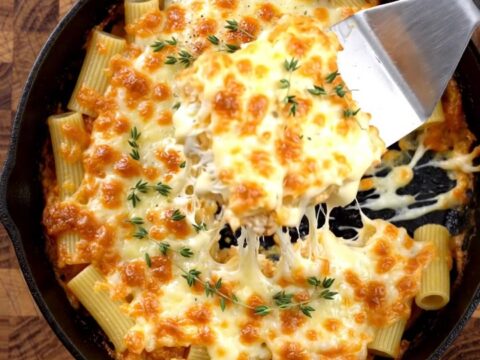
French Onion Rigatoni Skillet: One Pan, Golden Cheese Crust
Total time: 1 h 25 min
Coconut Crusted Mahi Mahi with Mango Salsa in One Skillet
Total time: 30 min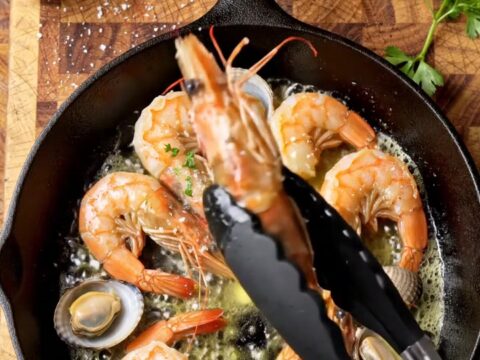
Garlic Butter Clams and Prawns Skillet with White Wine
Total time: 25 min
Crispy Smashed Potatoes with Molten Raclette Cheese Skillet
Total time: 35 min
Four Cheese Macaroni with Crispy Panko Cauliflower Skillet
Total time: 1 h