Dinner · Part 1 of 3: Ingredients
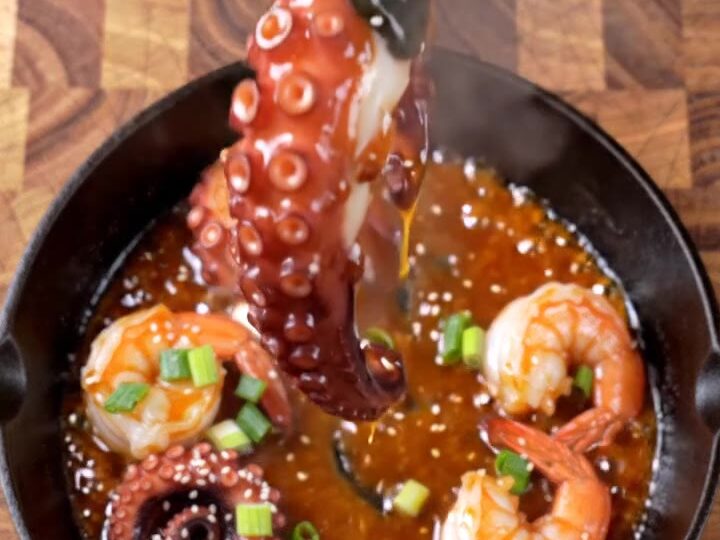
Gochujang Honey Shrimp and Charred Octopus Skillet in One Pan
- Prep
- Cook
- Total
- Serves
- 2
Caramelized shrimp and charred octopus tentacles meet a sticky red gochujang glaze in one hot cast iron skillet. Honey adds shine, fresh ginger adds warmth, and scallions finish each bite with a clean, sharp note. The whole dish comes together in about thirty minutes, with a single pan to wash afterwards.
This gochujang honey skillet is built for a weeknight that still feels special. Cooked octopus and raw shrimp share the same pan, so the seafood takes on a smoky, caramelized edge before the sauce ever touches it. The glaze is simple: gochujang brings fermented chili depth, honey brings gloss and sweetness, and fresh ginger and garlic keep the flavor lively.
You need only a few ingredients, and most of the work happens in the first fifteen minutes, while the skillet heats. Once the sauce goes in, the dish is ready in a couple of minutes, so have plates and bowls within reach before you start.
Ingredients
- 8 oz cooked octopus, cut into tentacle pieces
- 1/2 lb raw shrimp, peeled and deveined
- 1 tbsp unsalted butter
- 1 tbsp neutral oil, such as vegetable or canola
- 3 cloves garlic, minced
- 1 tbsp fresh ginger, finely grated
Glaze
- 2 tbsp gochujang
- 1 tbsp honey
- 3 scallions, sliced into rings, whites and greens separated
Why this recipe works
The method depends on the pan. Cast iron holds heat evenly and stays hot when cold seafood is added, so the octopus browns at the edges instead of steaming in its own moisture.
Adding the octopus first gives it the longest time to char, and the shrimp follow once the surface has color. Each protein gets the heat it needs, and the pieces stay separate enough to brown rather than boil.
Gochujang and honey are a natural pair because the sugar in honey balances the heat of the chili paste and the glaze turns sticky as it reduces.
Fresh ginger and garlic go in before the sauce, so they bloom in the hot fat and carry their aroma into the glaze. Adding the sauce last keeps the honey from burning on the bottom of the pan, which is the most common reason this kind of glaze turns bitter.
Notes and substitutions
Gochujang is a thick Korean red chili paste that is sold in most American supermarkets, usually near the Asian foods or in the international aisle. Check the label for the heat level, since some brands are much milder than others, and adjust the honey if you use a sweeter or spicier version. Store it in the refrigerator after opening.
A 12-inch cast iron skillet is the best vessel because it moves from the stove to the table without a transfer, and it keeps the glaze warm.
Use a box grater for the ginger so the pulp collects in a fine heap that dissolves into the glaze. A pair of tongs gives you control when tossing the seafood, and a sharp knife makes the octopus and scallions easy to cut.
- cooked octopus: cooked squid tubes or extra shrimp, cut to similar size; the flavor changes but the method stays the same
- neutral oil: avocado oil or light olive oil, which handle the same high heat
- honey: maple syrup or agave nectar for a slightly different sweetness
Equipment
- 12-inch cast iron skillet
- Wooden cutting board
- Sharp chef's knife
- Box grater
- Tongs
- Heatproof spatula
Up next · Part 2 of 3
5 steps · 10 min of cooking · what to look for at each stage
Step-by-step instructions (Part 2)