Dinner · Part 1 of 3: Ingredients
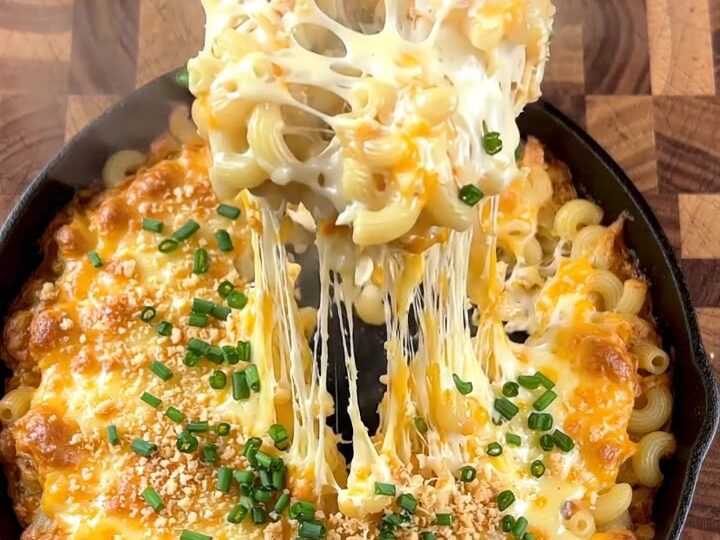
Four Cheese Macaroni with Crispy Panko Cauliflower Skillet
- Prep
- Cook
- Total
- Serves
- 4
Picture a cast iron skillet coming out of the oven, its top crackling golden and the cheese sauce bubbling at the edges. Pasta, cauliflower and a blend of four cheeses turn into one hearty dinner. Each forkful brings crisp panko, soft florets and gooey strands of cheese together in a single pan.
This four cheese macaroni is built on a simple idea: cook the pasta and cauliflower separately, then bring them together in a silky sauce made from butter, flour, milk and a mix of cheeses.
The sauce is poured over the pasta and florets in the skillet, a layer of panko is scattered across the surface, and the whole pan finishes in the oven until the crumbs turn crisp and golden.
The method uses one skillet for baking and serving, so cleanup stays easy and the dish stays hot all the way to the table. Chives and toasted sesame seeds give the top a fresh finish. The result is a comforting macaroni dinner with more texture than the classic version, thanks to the roasted cauliflower and the crunchy topping.
Ingredients
- 1 head cauliflower, broken into florets
- 8 oz dried short spiral pasta, such as cavatappi or fusilli
- 3 cloves garlic, peeled and minced
- 3 tbsp unsalted butter
- 3 tbsp all-purpose flour
- 2 cups whole milk, warmed
- 1 cup shredded sharp cheddar cheese
- 1 cup shredded cheese blend, such as Monterey Jack and mozzarella
- 2 oz block of cheese, such as Gruyere or Parmesan, for grating
- 1 tsp kosher salt, plus more to taste
- 2 tbsp olive oil
Topping
- 1/2 cup panko breadcrumbs
- 2 tbsp fresh chives, thinly sliced
- 1 tsp toasted sesame seeds
Why this recipe works
The sauce starts as a basic roux, a mixture of butter and flour cooked briefly before the warm milk goes in. The flour thickens the milk so the sauce clings to the pasta instead of pooling at the bottom of the pan. Adding the cheese off the heat keeps the proteins from tightening, which prevents a grainy or oily texture and keeps the sauce smooth and glossy.
Cauliflower browns in a hot pan and develops a nutty, toasted flavor that plain steamed florets never reach. When the florets go into the sauce, they hold their shape and add bite against the soft pasta. Scattering panko over the top before baking lets the crumbs toast in the oven heat, so the surface turns crisp while the cheese underneath stays creamy.
Notes and substitutions
Use a sharp cheddar for flavor and a melting cheese such as Monterey Jack or mozzarella for stretch. Grating the block cheese yourself gives a better melt than pre-shredded cheese, which is coated with anti-caking agents. Gruyere or Parmesan from the block adds a nutty depth to the sauce, and both melt well when they are finely grated.
You need one 10-inch black cast iron skillet that can go from stovetop to oven, a large pot for the pasta, a saucepan for the sauce, a box grater, a cutting board with a sharp chef's knife, a wooden spoon and a colander. A cast iron pan holds heat evenly, which gives the crust its color across the whole surface.
Short spiral pasta such as cavatappi or fusilli holds sauce in its ridges and keeps the cauliflower in the bite. Broccoli florets cut to a similar size can replace the cauliflower and roast the same way.
Half-and-half in place of whole milk makes a richer sauce. Crushed plain crackers can stand in for panko if you need a different crumb, though the texture will be less airy.
- cauliflower: broccoli florets cut to a similar size, roasted the same way
- whole milk: half-and-half for a richer sauce
- panko breadcrumbs: crushed plain crackers for a similar crunch
Equipment
- 10-inch black cast iron skillet
- large pot
- box grater
- cutting board and chef's knife
- wooden spoon
- colander
Up next · Part 2 of 3
6 steps · 35 min of cooking · what to look for at each stage
Step-by-step instructions (Part 2)