Dinner · Part 3 of 3: Tips & recipe card
Honey Gochujang Shrimp and Charred Octopus Skillet in 30 Minutes Tips, FAQ & printable recipe
- Prep
- Cook
- Total
- Serves
- 4
Tips for success
Dry the seafood well before it goes into the pan. Paper towels remove surface moisture, which lets the shrimp and octopus brown quickly and keeps the glaze from thinning. Work with cold seafood straight from the refrigerator, and return any unused portion to the refrigerator right away.
Taste the gochujang glaze before adding it to the pan, because brands and batches vary a great deal in heat and sweetness. Add a little extra honey for a milder result or a spoonful more gochujang for more heat. Keep the seafood moving with tongs so the sauce coats every piece evenly.
Variations
- Extra spicy version: Add an extra tablespoon of gochujang to the glaze for more heat and deeper red color. Balance the spice with an extra teaspoon of honey so the sauce stays sticky and sweet rather than sharp.
- Shrimp only: Skip the octopus and cook the shrimp alone in the same butter and oil. Sear them for about two minutes per side, then add the aromatics and glaze, which keeps the skillet quick and simple on busy nights.
- Squid instead of octopus: Replace the octopus with thinly scored squid tubes or rings. Sear them quickly over high heat for about one minute, then add the glaze. Squid cooks faster than octopus, so watch it closely to keep it tender.
- Garlicky butter finish: Stir an extra tablespoon of butter and a pinch of minced garlic into the sauce at the very end. The butter makes the glaze richer and more glossy, which suits a slightly more indulgent dinner.
Storage and make-ahead
- Fridge
- Store the cooled seafood in an airtight container in the refrigerator and eat it within two days for the best texture and flavor.
- Reheat
- Reheat gently in a skillet over medium-low heat with a teaspoon of water, stirring until just warmed through, so the seafood stays tender.
Leftover shrimp and octopus should cool for no more than 2 hours at room temperature before going into the refrigerator. Transfer them to a shallow airtight container so they chill quickly and evenly.
Keep the garnish separate if possible, since sliced green onions lose their crispness once they soften in the sauce. Stored this way, the skillet keeps well for up to two days. The octopus will firm up as it chills, so reheat it gently to keep the texture tender rather than rubbery.
You can prepare most of this dish ahead of time, which makes the final cooking very fast. Mix the honey, gochujang and soy sauce glaze up to two days ahead and keep it covered in the refrigerator, stirring before use.
Slice the green onions, mince the garlic and grate the ginger the morning you plan to cook, storing the pulp in a sealed container.
Toast the sesame seeds in advance and keep them in a dry jar. Keep the raw seafood refrigerated until the pan is hot, and cook it within a short time of taking it out. The seafood itself is best cooked fresh and served immediately, so avoid searing it far ahead of time.
Serving ideas
Serve the skillet hot, straight from the cast-iron pan, so the glaze stays sticky and the octopus keeps its tender, charred edges.
Place the pan in the center of the table with a spoon or small serving tongs so everyone can take a generous portion of shrimp and octopus. Scatter extra green onions and sesame seeds at the table for a fresh finish.
Steamed short-grain rice is the classic partner, since it soaks up the honey gochujang sauce beautifully. Crusty bread, a simple cucumber salad or lightly dressed greens also balance the sweet heat. Keep the rest of the meal simple so the seafood remains the focus of the dinner.
Frequently asked questions
Can you use frozen octopus for this skillet?
How spicy is gochujang, and can you make the glaze milder?
Why does the sauce burn in the pan?
Can you cook this dish in a nonstick pan?
What should you serve with the shrimp and octopus?
Honey Gochujang Shrimp and Charred Octopus Skillet in 30 Minutes
Ingredients
- 1 lb fresh raw octopus tentacles, cleaned and cut into bite-size pieces
- 1 lb large shrimp, peeled and deveined
- 4 green onions, white and light green parts sliced, plus more for garnish
- 6 cloves garlic, 4 whole and 2 minced
- 1 inch fresh ginger, grated on a box grater
- 2 tbsp neutral oil, such as vegetable or canola oil
- 2 tbsp unsalted butter
- 3 tbsp honey
- 2 tbsp gochujang (Korean red chili paste)
- 1 tbsp soy sauce
- 1 tbsp toasted sesame seeds, for garnish
Instructions
- Pat the octopus and shrimp dry with paper towels. Slice the green onions, mince two garlic cloves and grate the ginger on a box grater, setting the pulp aside. Keep the shrimp and octopus refrigerated until the pan is hot.
- In a small bowl, whisk the honey, gochujang and soy sauce until smooth and glossy. Set the glaze aside next to the stove so it is ready to spoon over the seafood.
- Heat the cast-iron skillet over high heat with the oil and butter until the butter foams. Add the octopus in a single layer and sear for 3 to 4 minutes, until the edges char. Add the shrimp and cook 2 minutes until they start to turn pink.
- Lower the heat to medium. Add the minced garlic, the whole garlic cloves and the grated ginger pulp to the pan. Stir for 30 seconds until the kitchen smells fragrant and the fat is aromatic.
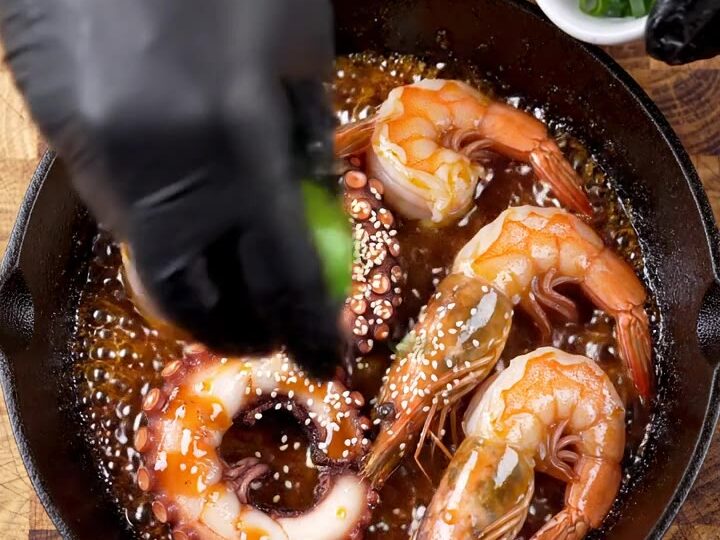
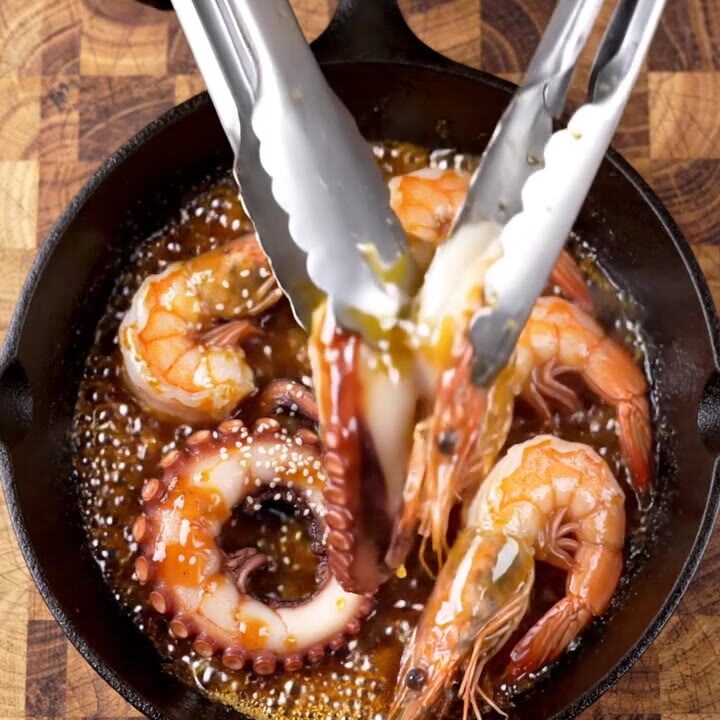
- Spoon the honey gochujang glaze over the shrimp and octopus. Toss and turn everything with tongs while the pan bubbles, for about 2 minutes, until the sauce thickens and caramelizes and coats every piece.
- Remove the skillet from the heat and scatter the sliced green onions and toasted sesame seeds over the seafood. Serve hot, directly from the cast-iron skillet, with extra glaze spooned over the top.
Estimated nutrition per serving
- Calories
- 340
- Protein
- 30 g
- Carbohydrates
- 22 g
- Fat
- 14 g
- Fiber
- 1 g
- Sugar
- 12 g
- Sodium
- 980 mg
Next recipe

French Onion Rigatoni with Gruyère in One Skillet
See the recipe → →This recipe is based on a short cooking video and is published under the pen name Clara Weller. It was checked before publication, but errors can slip through. Nutrition, when shown, is an estimate. Read more in our editorial policy and on our food safety page.
More recipes to try

Crispy Eggplant Parmesan in One Skillet, Golden and Bubbly
Total time: 1 h
Coconut Crusted Mahi Mahi with Mango Salsa in One Skillet
Total time: 30 min
Garlic Butter Clams and Prawns in White Wine, One Skillet
Total time: 25 min
Truffle Four Cheese Mac with Crispy Panko Cauliflower Skillet
Total time: 1 h 5 min
Crispy Smashed Potatoes with Molten Raclette Cheese
Total time: 55 min