Dinner · Part 1 of 3: Ingredients
Seared Swordfish with Tomato Caper Sauce in One Skillet
- Prep
- Cook
- Total
- Serves
- 4
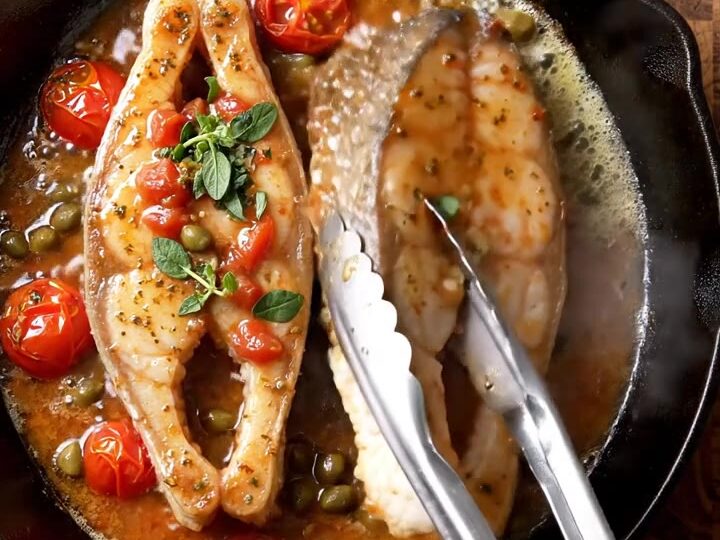
Swordfish is one of the few fish that holds its shape in a hot skillet, which makes it ideal for a weeknight dinner that looks like a restaurant plate. Thick steaks sear to a deep golden crust while cherry tomatoes and black olives soften in the buttery oil around them. Within minutes the pan turns into a rustic sauce of capers, herbs and lemon, ready to spoon over the fish.
This dish builds its flavor in a single cast iron skillet, so every step happens in the same pan. Thick swordfish steaks are seasoned with salt, black pepper and a squeeze of lemon, then seared in olive oil and butter until the underside turns golden.
Halved cherry tomatoes and pitted black olives go into the pan alongside the fish, blistering and softening as the butter melts.
Once the steaks are flipped and basted until just opaque in the center, capers and fresh herbs join the pan, the tomatoes burst into a sauce, and a generous squeeze of lemon juice finishes the skillet. The fish is plated firm and golden, topped with the glossy sauce, garnished with herb sprigs and a little grated hard cheese.
Ingredients
- 4 thick swordfish steaks, about 1 inch thick
- kosher salt, to taste
- freshly ground black pepper, to taste
- 1 lemon, for juice and wedges
- 2 tbsp extra-virgin olive oil
- 2 tbsp unsalted butter
- 1 cup cherry tomatoes, halved
- 1/2 cup pitted black olives
- 2 tbsp capers, drained
- fresh herbs, to taste
- hard cheese, grated, for serving
Why this recipe works
Searing swordfish in a very hot skillet of oil and butter creates a golden crust that seals in moisture. The steak cooks from the bottom up, so the underside browns before the top is flipped. Basting with the melting butter keeps the upper surface tender while the center reaches just opaque, which preserves the firm, meaty texture swordfish is known for.
The tomatoes and olives go into the pan while the fish sears, so their juices and the flavors of the butter and oil mingle in the same pan.
Pressing the tomatoes at the end releases their juice and thickens the pan into a sauce without any extra cooking vessel. Adding capers and herbs last keeps their brightness, and the lemon juice added off the heat finishes the sauce with a clean, sharp note.
Notes and substitutions
Swordfish steaks should be at least 1 inch thick so the center can stay moist while the outside sears. Ask the fishmonger for steaks cut from the thickest part of the loin, and keep them cold until the pan is ready. If you can only find thinner steaks, reduce the flipping time and watch the center closely.
A 12-inch cast iron skillet holds the four steaks with room between them and retains heat well for an even sear. A box grater is used for the hard cheese, which should be grated fresh so it melts slightly on the warm fish.
A wooden board is the simplest place to season the steaks and prep the tomatoes and olives before cooking. Use a fish spatula to flip the steaks, since its thin edge slides under the golden crust without tearing it.
- swordfish steaks: halibut or thick tuna steaks, cooked to the same temperature
- black olives: Kalamata olives, pitted and halved
- hard cheese: Parmesan or Pecorino Romano, finely grated
- unsalted butter: ghee, which tolerates the heat of the skillet better
Equipment
- 12-inch cast iron skillet
- box grater
- wooden cutting board
- fish spatula
- small bowl for the lemon juice
- sharp paring knife
Up next · Part 2 of 3
7 steps · 20 min of cooking · what to look for at each stage
Step-by-step instructions (Part 2)