Dinner · Part 1 of 3: Ingredients
Crispy Eggplant Parmesan in One Skillet, Golden and Bubbly
- Prep
- Cook
- Total
- Serves
- 4
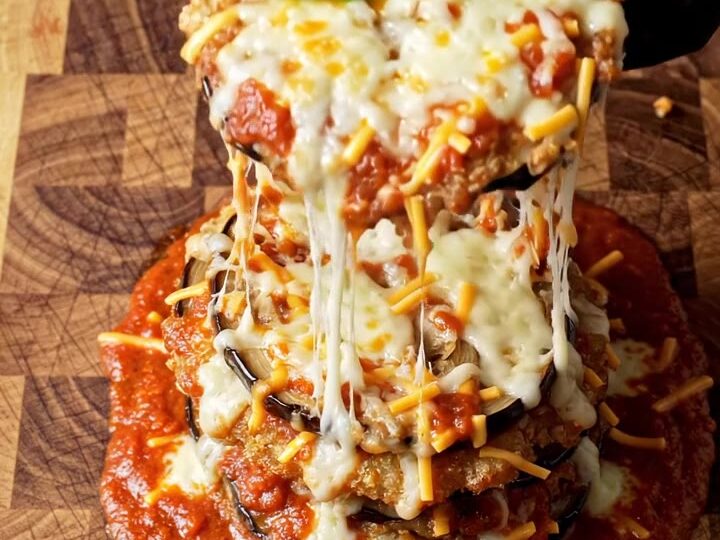
Thin rounds of purple eggplant turn shatteringly crisp in a hot cast iron skillet, then disappear under bubbling tomato sauce and a thick blanket of melted mozzarella. This version keeps everything in one pan, so the crust stays golden from the first slice to the last. Serve it straight from the skillet while the cheese is still stretching and the basil is bright green.
This crispy eggplant parmesan is built around one whole purple eggplant sliced into even rounds, breaded and fried until the edges turn golden and crisp. Tomato sauce goes into the skillet next, followed by a scatter of finely grated hard cheese that melts and browns on top.
The fried slices are then layered and stacked, finished with sliced mozzarella and more grated cheese, and the finished dish is served on a board with a pool of red sauce, fresh basil leaves and a bubbly, golden cheese crust. Because the frying, saucing and layering all happen in the same cast iron skillet, you move from stovetop to oven with very little cleanup, and the dish stays hot enough to serve family style at the table.
Ingredients
- 1 whole purple eggplant, about 1 lb, sliced into 1/3-inch rounds
Breading
- 1/2 cup all-purpose flour
- 2 large eggs, beaten
- 1 cup plain dry breadcrumbs
Cheese
- 1 cup finely grated hard cheese, such as Parmesan
- 8 oz mozzarella cheese, sliced or shredded
- 1/2 cup vegetable oil, for frying
- 2 cups tomato sauce, store-bought or made ahead
- 2 cloves garlic, lightly crushed
- 1/2 cup fresh basil leaves, for serving
- kosher salt and black pepper to taste
Why this recipe works
Frying the breaded eggplant before it goes near the sauce is the key to a crisp result. The flour, egg and breadcrumb coating seals moisture inside each round while the oil browns the outside, so the slices keep their texture instead of turning soft under the tomato sauce.
Fry in batches and keep the oil bubbling steadily so each piece picks up color quickly and does not absorb grease. Once fried, the slices hold their shape when they are layered, and the edges stay golden enough to show through the cheese.
Cast iron holds heat extremely well, which matters for this method. When you spoon in the sauce and scatter the grated cheese, the pan stays hot enough for the cheese to melt and brown at the edges rather than simply warming through.
The same heat sets the mozzarella on top in a few minutes under the broiler. Because the pan is already hot from frying, the whole dish comes together quickly and the layers stay distinct instead of collapsing into a single soft mass.
Notes and substitutions
Choose a firm purple eggplant with smooth, tight skin and no soft spots. Slicing it into rounds about one-third inch thick gives a good balance between a crisp coating and a tender center. Salting the rounds briefly draws out some moisture, which helps them brown more evenly once they meet the hot oil. Pat them dry before breading so the flour and egg adhere properly.
A 10-inch cast iron skillet is the best choice because it fits enough eggplant for a generous stack and goes straight from the stovetop to the oven or broiler. You will also need a chef's knife, a box grater for the hard cheese, three shallow dishes for the breading station and a slotted spatula for lifting out the slices.
Freshly grated hard cheese melts more smoothly than pre-shredded cheese. If you prefer a sharper flavor, Pecorino Romano works well in place of the hard cheese.
- vegetable oil: peanut oil or another neutral frying oil with a high smoke point
- plain dry breadcrumbs: panko for an even crunchier coating
- hard cheese: Pecorino Romano for a sharper, saltier flavor
Equipment
- 10-inch cast iron skillet
- chef's knife
- cutting board
- box grater
- shallow dishes for breading
- slotted spatula
- paper towels
Up next · Part 2 of 3
8 steps · 25 min of cooking · what to look for at each stage
Step-by-step instructions (Part 2)