Dinner · Part 1 of 3: Ingredients
Truffle Four Cheese Mac with Crispy Panko Cauliflower Skillet
- Prep
- Cook
- Total
- Serves
- 6
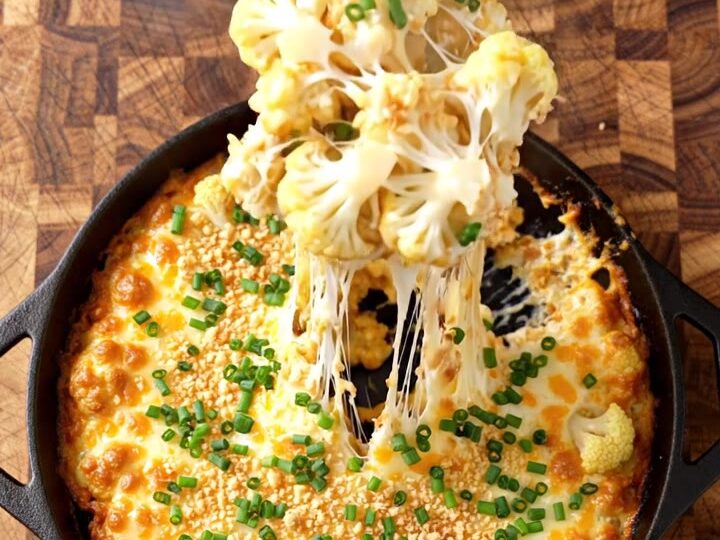
Picture a cast iron skillet coming out of the oven, the cheese bubbling at the edges and golden panko crackling on top. This four cheese macaroni is cauliflower-studded, thick and orange, and it comes together in one pan with a short list of ingredients and a simple method.
This dish brings together two comfort classics in one skillet. Tender cauliflower florets and al dente macaroni are coated in a thick four cheese sauce built on a simple butter and flour base, then finished with a whisper of truffle oil.
The cauliflower adds body and a gentle vegetable sweetness, so the dish feels more balanced than a plain macaroni bake while keeping all the richness people want from a cheesy dinner.
A crisp panko crust goes on top before baking, giving every spoonful a contrast of creamy and crunchy. Fresh chives add color and a bright, oniony note at the end. It is a practical dinner for a weeknight, and it works just as well when you want something warm to share at the table.
Ingredients
- 1 head cauliflower, broken into small florets
- 12 oz dry macaroni pasta
- 3 cloves garlic, peeled and minced
- 3 tbsp unsalted butter
- 3 tbsp all-purpose flour
- 2 1/2 cups whole milk, warmed
- 1 cup shredded sharp cheddar cheese
- 1/2 cup shredded Gruyere cheese
- 1/2 cup finely grated Parmesan cheese
- 1 cup shredded mozzarella cheese
- 1 tsp truffle oil
- kosher salt and black pepper, to taste
Topping
- 1/2 cup panko breadcrumbs
Garnish
- 2 tbsp finely sliced fresh chives, for serving
Why this recipe works
The sauce is a classic roux-based cheese sauce. Cooking the butter and flour together for a minute removes the raw flour taste and gives the sauce structure.
Adding warm milk slowly keeps it smooth, and simmering it thickens it enough to cling to the macaroni and cauliflower. When the cheeses melt in on low heat, they stay silky instead of turning grainy, which is why the sauce looks so glossy in the finished skillet.
Cauliflower is cooked gently in the sauce as it bakes, so it stays tender and absorbs flavor without turning mushy. Baking the skillet uncovered lets the top dry out and brown, while the panko toasts into a crisp layer. Serving directly from the cast iron keeps the heat in, so the cheese stays bubbling and the crust stays crunchy at the table.
Notes and substitutions
Choose a block of sharp cheddar, Gruyere, Parmesan and low-moisture mozzarella and shred them yourself. Pre-shredded cheese often contains anti-caking agents that can make the sauce grainy.
A box grater works well for the Parmesan and cheddar, and the mozzarella shreds easily on the larger holes. Keep the Parmesan finely grated so it blends into the sauce rather than sitting in clumps.
A 12-inch cast iron skillet is the ideal pan because it holds heat evenly, moves from stovetop to oven, and gives the edges a good browned crust. A large pot is needed to cook the pasta and cauliflower, and a whisk keeps the roux and milk smooth. If you do not have cast iron, use any oven-safe skillet or a 3-quart baking dish, though the crust may brown slightly less evenly.
- truffle oil: a pinch of black pepper, or omit it for a plain four cheese version
- Gruyere cheese: Swiss cheese or extra sharp cheddar
- whole milk: half-and-half for a richer sauce
Equipment
- 12-inch cast iron skillet
- box grater
- large pot
- cutting board
- whisk
- wooden spoon
Up next · Part 2 of 3
5 steps · 35 min of cooking · what to look for at each stage
Step-by-step instructions (Part 2)