Dinner · Part 2 of 3: Instructions
Truffle Four Cheese Mac with Crispy Panko Cauliflower Skillet Step-by-step instructions
- Prep
- Cook
- Total
- Serves
- 6
Before you start
Gather everything before you turn on the heat, because the sauce moves quickly once the milk goes in. Break the cauliflower into small florets and trim the stems so they cook evenly. Peel and mince the garlic. Shred the cheddar, Gruyere and mozzarella and finely grate the Parmesan. Warm the whole milk in a small saucepan or microwave until it is hot to the touch but not boiling. Measure the flour and butter, and have the panko, truffle oil and chives within reach. Set the oven rack in the middle position and preheat the oven to 375°F (190°C). Bring a large pot of salted water to a boil for the macaroni and cauliflower.
Ingredients at a glance (14)
- 1 head cauliflower, broken into small florets
- 12 oz dry macaroni pasta
- 3 cloves garlic, peeled and minced
- 3 tbsp unsalted butter
- 3 tbsp all-purpose flour
- 2 1/2 cups whole milk, warmed
- 1 cup shredded sharp cheddar cheese
- 1/2 cup shredded Gruyere cheese
- 1/2 cup finely grated Parmesan cheese
- 1 cup shredded mozzarella cheese
- 1 tsp truffle oil
- kosher salt and black pepper, to taste
- 1/2 cup panko breadcrumbs
- 2 tbsp finely sliced fresh chives, for serving
Instructions
Cook the pasta and build the sauce
- Prepare the cauliflower and pastaBreak the cauliflower into small florets and trim the stems. Bring a large pot of salted water to a boil and cook the macaroni until just al dente, about 6 minutes. Drain well and set aside.Look for Florets are small and even, and the pasta still has a slight bite.Tip Stop cooking the pasta a minute early, since it finishes in the sauce.
- Build the cheese sauceMelt the butter in the cast iron skillet over medium heat. Add the minced garlic and cook for 1 minute, then whisk in the flour and cook for 1 minute more. Slowly whisk in the warm milk and simmer until thickened, about 4 minutes.Look for The sauce coats the back of a spoon and smells nutty and savory.Tip Warm the milk first so the sauce stays smooth and does not lump.
After the first phase, the macaroni is drained and the sauce coats the back of a spoon. The garlic smells fragrant and the butter and flour have turned a light golden color with a nutty aroma. The milk has been whisked in until the sauce is smooth, with no lumps left against the bottom of the skillet, and it has simmered long enough to thicken. Before you move on, lift the whisk and check that the sauce drops off in a thick ribbon rather than running thin. If it still looks loose, simmer it another minute, stirring constantly, so the cheese has a stable base to melt into. The pasta should still have a slight bite, since it will finish cooking in the oven.
Melt the cheese and fold in the cauliflower
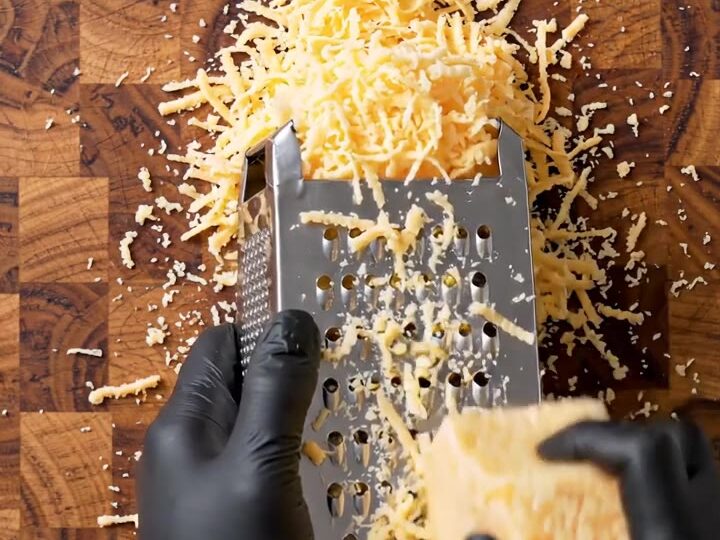
- Melt in the four cheesesReduce the heat to low. Add the cheddar, Gruyere, Parmesan and mozzarella a handful at a time, stirring until each addition melts. Stir in the truffle oil, season with salt and black pepper, then fold in the macaroni and cauliflower until coated and evenly distributed.Look for The sauce is thick, glossy and deep orange, and every piece is coated.Tip Shred the cheese yourself from blocks for a smoother melt.
- Add the panko toppingSprinkle the panko evenly over the top of the macaroni and cauliflower in the skillet. Transfer the skillet to the oven and bake until the cheese is melted, bubbly and lightly browned at the edges, about 15 minutes.Look for Edges bubble and the crumbs turn golden and crisp.Tip Keep an eye on the panko after 12 minutes so it does not darken too fast.
At the end of the second phase, the four cheeses should be fully melted into the sauce, which turns smooth, glossy and deep orange. The truffle oil adds a rich, earthy aroma that rises from the skillet, and salt and black pepper have been tasted and adjusted. The macaroni and cauliflower should be evenly coated, with no pasta sticking together and no florets sitting dry on top.
Check the bottom of the skillet with a spoon to make sure no cheese has stuck or scorched on low heat. The cauliflower should look bright and tender, not raw. Once the sauce coats everything smoothly, spread the mixture level so the panko can cover the surface evenly before it goes into the oven.
Bake until bubbly and golden
- Rest and garnishRemove the skillet from the oven and let it rest for 5 minutes so the sauce thickens slightly. Scatter the sliced chives over the top and serve straight from the cast iron skillet.Look for The sauce sets slightly and the crust stays crisp on top.Tip Serve from the skillet so the crust stays crunchy.
When the skillet comes out of the oven, the cheese should be melted all the way through, bubbling steadily at the edges and pulling slightly away from the sides of the pan. The panko on top should be golden brown and crisp, with no pale spots, and the crumbs should look dry rather than soaked.
Lift a small corner with a spoon to confirm the sauce has thickened and that the cauliflower is tender when pierced. The aroma should be toasty and cheesy, without any sharp burnt smell. If the top is pale but the sauce is hot, give it a few more minutes under the broiler, watching closely. Once the skillet rests for 5 minutes, the sauce firms slightly so each serving holds together on the spoon.
Common mistakes
The most common mistake is adding cold milk to the roux, which can make the sauce lumpy and hard to smooth out. Warm the milk first and add it slowly while whisking constantly. Another mistake is using pre-shredded cheese, which often contains anti-caking powders that keep the sauce from melting evenly and can make it slightly grainy. Shredding a block yourself gives a silkier result.
Melting the cheese over high heat is also risky, since the proteins tighten and the sauce can turn stringy or break. Keep the heat low once the cheese goes in. Skipping the rest after baking means the sauce runs when you serve it. Finally, do not add the panko before the mixture is evenly spread, or the topping will sink into the sauce instead of forming a crisp layer on top.
How to tell it’s done
The dish is done when the cheese sauce is bubbling vigorously at the edges, the center looks hot and fully melted, and the panko is golden brown and crisp on top. Pierce a piece of cauliflower with a fork: it should be tender but still hold its shape, with no resistance at the center. The sauce should look thick and glossy, not thin or separated.
Because this recipe has no meat or eggs, there is no safe-internal-temperature requirement, but a probe thermometer reading about 165°F (74°C) in the center is a reliable sign that the sauce is hot all the way through. Let the skillet rest for 5 minutes before serving so the sauce firms up enough to hold its shape in each spoonful.
Up next · Part 3 of 3
4 variations · storage & make-ahead · 5 answers · printable card
Tips, FAQ & printable recipe (Part 3)← Back to the ingredients (Part 1)