Dinner · Part 1 of 3: Ingredients
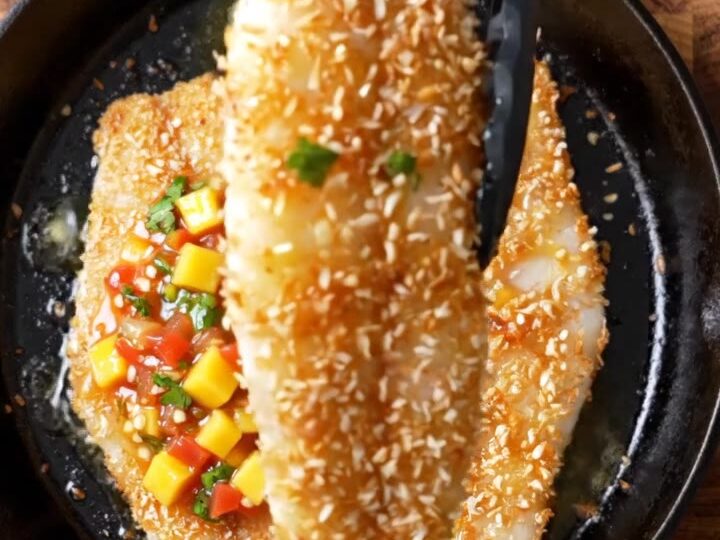
Coconut Crusted Mahi Mahi with Mango Salsa in One Skillet
- Prep
- Cook
- Total
- Serves
- 2
Crisp coconut shell, flaky white fish, and a glossy pan of foaming butter: this dish brings a tropical mood to a weeknight table. The fish cooks in one cast iron skillet, and a cool mango salsa balances the warm, toasty crust in every bite.
Coconut crusted mahi mahi is a simple way to turn a firm, mild fillet into something special. Fresh coconut is grated onto the board and pressed into both sides of the fish, so it forms a crust that turns deep golden in hot butter. The method is quick, and the cooking happens in a single pan, which keeps cleanup short.
Serve the fillets straight from the skillet with a spoonful of sweet mango salsa, red onion, tomato, cilantro and lime.
Each part of the dish has a clear role: the crust adds crunch, the butter adds richness and browning, and the salsa brings freshness and acidity. Keep the components warm and bright, and the whole plate comes together in about thirty minutes from start to finish.
Ingredients
- 2 mahi mahi fillets, skin removed, about 6 oz each
- 1/2 tsp kosher salt, plus more to taste
- 1/4 tsp freshly ground black pepper
- 1 cup fresh coconut, finely shredded into flakes
- 2 tbsp neutral oil, such as canola or vegetable oil
- 2 tbsp unsalted butter
Mango salsa
- 1 ripe golden mango, peeled and diced into small cubes
- 1/4 cup red onion, finely chopped
- 1 ripe tomato, chopped
- 2 tbsp chopped fresh cilantro
- Fresh lime halves and juice to taste, for squeezing over the salsa
- 1 clove garlic, finely grated or minced
Why this recipe works
Coating the fish in coconut before it hits the pan creates a barrier that protects the delicate flesh while the outside turns crisp and golden. Mahi mahi is lean and firm, so it holds together well during the flip and stays moist inside when the crust sets quickly over medium-high heat.
Spooning the foaming butter over the fillets while they cook transfers heat to the top of the coconut, so the crust browns evenly on both sides. The butter also toasts its milk solids, which gives the finished dish a nutty flavor that complements the sweetness of the coconut and the mango.
Notes and substitutions
Choose mahi mahi fillets of similar thickness so they cook at the same pace in the skillet. A fresh golden mango gives the best texture and sweetness for the salsa, and a ripe tomato keeps the salsa juicy.
Use a cast iron skillet if you have one, because its heavy base holds steady heat and browns the coconut evenly. A large skillet lets the fillets sit with space between them, which helps the crust form instead of steaming.
Fresh coconut gives the best flakes, but unsweetened shredded coconut works if you lightly toast it first. Grate the coconut on the large holes of a box grater and spread it thinly on a shallow dish so the fillets can be pressed in evenly.
Halibut or snapper are good swaps for mahi mahi, cooked the same way. Ghee can replace the butter if you want a higher tolerance for heat. A fish spatula or tongs help you flip the fillets without tearing the crust.
- fresh coconut: unsweetened shredded coconut, lightly toasted in a dry pan first for extra flavor
- mahi mahi: halibut or snapper fillets of similar thickness, cooked the same way
- unsalted butter: ghee, which handles the heat with less risk of burning
Equipment
- cast iron skillet
- box grater
- cutting board
- chef's knife
- fish spatula or tongs
- mixing bowl
- shallow dish
Up next · Part 2 of 3
7 steps · 10 min of cooking · what to look for at each stage
Step-by-step instructions (Part 2)