Desserts · Part 3 of 3: Tips & recipe card
Creamy Baked Cornmeal Custard Cake with a Golden Crust Tips, FAQ & printable recipe
- Prep
- Cook
- Total
- Serves
- 9
Tips for success
Warm the dairy before it meets the eggs, but stop short of a simmer. Milk around 120°F incorporates like a dream and shortens the whisking; hotter dairy risks scrambling the eggs on contact and leaving baked-in specks throughout the cake. If the saucepan has already gone too far, cool the mixture for two minutes before pouring, whisking the eggs constantly as the stream goes in.
The thermometer is worth more than any timer here. Ovens vary by twenty degrees or more, and the center of this custard climbs from creamy to fully set in a matter of minutes near the end. Check at 35 minutes, then every five after that, aiming the probe for the exact middle of the pan. Rotating the pan once at the halfway mark keeps the corners from outrunning the center and browning before the bake is finished.
Variations
- Brown Sugar Cinnamon: Replace the granulated sugar with an equal amount of packed light brown sugar and whisk 1/2 teaspoon of ground cinnamon in with the dry ingredients. The crust bakes a shade darker and the flavor leans toward spiced caramel, especially good warm.
- Coconut Version: Swap the heavy cream for an equal amount of canned coconut milk and use 1 teaspoon vanilla plus 1/2 teaspoon coconut extract. The center takes on a subtle coconut flavor and the top browns slightly faster, so start checking a few minutes early.
- Lemon Cornmeal Cake: Add the finely grated zest of one lemon to the egg and sugar mixture before whisking, and reduce the vanilla to 1 teaspoon. The citrus brightens the rich custard and makes the dessert feel lighter at the end of a heavy meal.
- Maple Sweetened: Use 1/2 cup of pure maple syrup in place of the granulated sugar, reducing the whole milk by 2 tablespoons to compensate for the added liquid. The custard bakes a deeper gold and carries a warm maple note through every bite.
Storage and make-ahead
- Fridge
- Cover tightly and refrigerate for up to 4 days; the center stays creamy when reheated gently.
- Freezer
- Wrap individual squares well and freeze for up to 2 months; thaw overnight in the refrigerator before reheating.
- Reheat
- Microwave a square for 20 to 30 seconds, or warm in a 300°F oven for about 10 minutes until creamy again.
Leftover squares keep remarkably well because the custard is fully set. Cool the cut pieces to room temperature within two hours, then transfer them to an airtight container with parchment between the layers. Refrigerated, they hold their texture for up to four days; the crust softens slightly but the center stays creamy.
Reheat individual squares gently rather than aggressively, since high heat can make the custard weep. Avoid stacking warm pieces in a sealed container, as trapped steam turns the crust soggy within hours and dulls the contrast that makes this dessert worth baking.
This cake suits advance planning because it actually improves overnight. Bake it in the morning or the night before serving, let it cool completely in the pan, then cover the pan tightly with foil and refrigerate. The flavors meld and the texture firms to a clean-cutting consistency.
When ready to serve, cut the chilled cake into squares and rewarm them gently in a low oven or briefly in the microwave until the center is creamy again. The full bake-and-rest cycle can also be completed a full day ahead for a dinner party, freeing the oven and the last-minute attention entirely for the rest of the meal.
Serving ideas
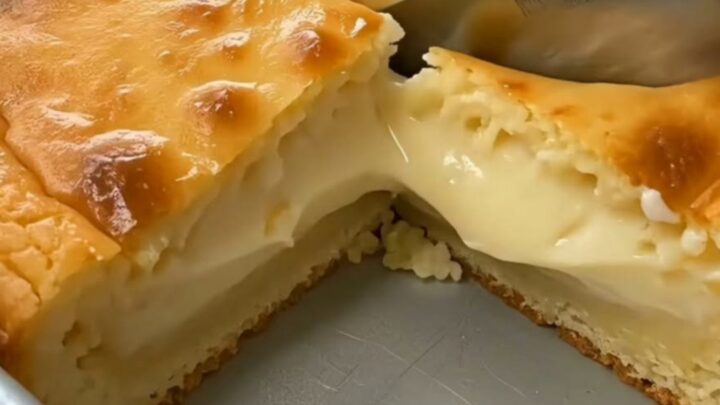
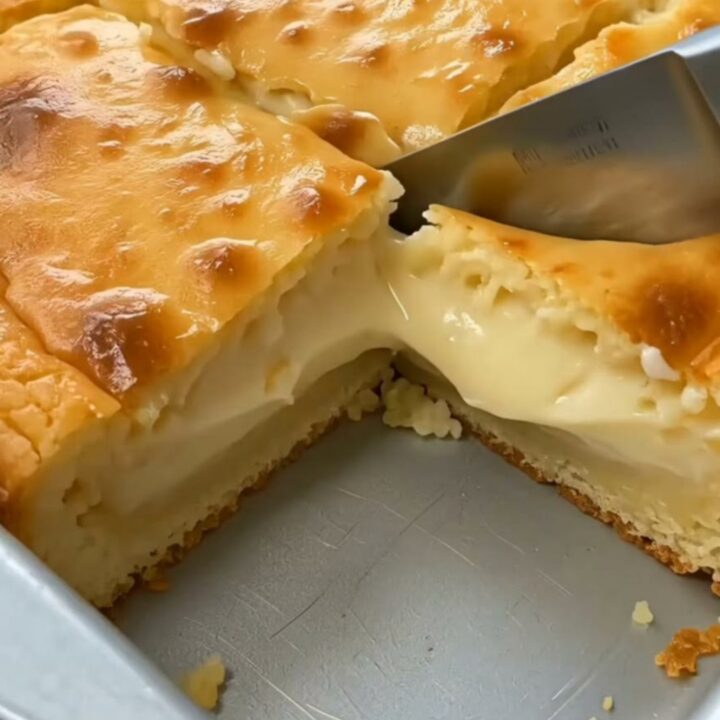
Serve the squares warm, straight from the pan, with nothing more than a fork — the video's approach, and honestly the best one. The contrast between the crisp golden crust and the creamy center is the entire point, and it fades as the cake cools to room temperature.
For a slightly dressed-up plate, dust the top of each square with a whisper of confectioners' sugar just before it goes to the table, or add a spoonful of lightly sweetened whipped cream alongside.
Portioning is simple: one 8-inch pan cuts cleanly into nine generous squares, which suits a family dessert or a small gathering. For larger crowds, double the batter into a 9-by-13-inch pan and add roughly ten minutes to the bake, checking the center with the thermometer as usual.
Warm squares pair naturally with coffee at the end of an evening meal, and leftovers make an unexpectedly good next-morning treat, briefly reheated and eaten straight from the plate with no ceremony at all.
Frequently asked questions
Can this be made ahead of time?
Why is the center creamy while the top is firm?
What kind of cornmeal works best?
Can this be baked in a different pan size?
How does the center reach a safe temperature without overbaking?
Creamy Baked Cornmeal Custard Cake with a Golden Crust
Ingredients
- 1/2 cup unsalted butter, melted, plus more for the pan
- 4 large eggs, at room temperature
- 3/4 cup granulated sugar
- 2 cups whole milk, warmed
- 1 cup heavy cream
- 2 tsp vanilla extract
- 1 cup finely ground yellow cornmeal
- 1/2 tsp kosher salt
- 2 tsp baking powder
Instructions
- Heat the oven to 350°F (175°C) and set a rack in the center. Butter an 8-inch square metal baking pan generously, tipping out any excess. A thorough coat of butter keeps the delicate crust intact when the warm squares are lifted out of the pan.
- Whisk the eggs and granulated sugar in a large bowl for a full minute, until the mixture turns pale, thick and faintly foamy. This early aeration helps the custard rise gently in the oven and settle into an even, tender layer as it cools in the pan.
- Combine the whole milk and heavy cream in a small saucepan and warm over medium-low heat until the mixture feels just hot to the touch, then stir in the melted butter and vanilla extract. Warm dairy blends into the eggs smoothly instead of shocking them into curds.
- Add the cornmeal, kosher salt and baking powder to the egg mixture and whisk until no dry streaks remain. Pour in the warm milk mixture in a slow, steady stream, whisking constantly, until the batter looks smooth and pours like a thick pancake batter.
- Pour the batter into the prepared pan and tap it once or twice on the counter to release any trapped air bubbles. Smooth the surface lightly with a spatula, then transfer the pan to the center rack of the oven without delay, before the cornmeal starts to settle.
- Bake for 40 to 45 minutes, until the top is deep golden and an instant-read thermometer reads 160°F (71°C) in the center — the temperature at which the eggs are fully cooked through. To cook the eggs all the way through for a firmer, fully set center, keep baking until the middle reads 160°F (71°C). Rotate the pan once halfway through so the corners brown at the same pace as the middle.
- Set the pan on a wire rack and let the cake rest for 15 minutes. The custard finishes setting as it cools and the crust firms enough to release clean squares. Skipping this rest is the most common reason slices break apart on the way out of the pan.
- Cut the cake into nine squares with a sharp knife wiped clean between cuts. Slide a thin metal spatula under the first piece and lift it gently onto a plate, crust side up. Serve warm, while the center is at its creamiest and the crust is still faintly crisp.
Estimated nutrition per serving
- Calories
- 270
- Protein
- 6 g
- Carbohydrates
- 31 g
- Fat
- 13 g
Next recipe

Mexican Hot Chocolate Lava Cakes in Crispy Tortilla Cups
See the recipe → →This recipe is based on a short cooking video and is published under the pen name Clara Weller. It was checked before publication, but errors can slip through. Nutrition, when shown, is an estimate. Read more in our editorial policy and on our food safety page.
More recipes to try

Crispy Nutella Strawberry Quesadilla Ready in 10 Minutes
Total time: 14 min
Easy Red Velvet Gooey Butter Cake with White Chocolate Chips
Total time: 3 h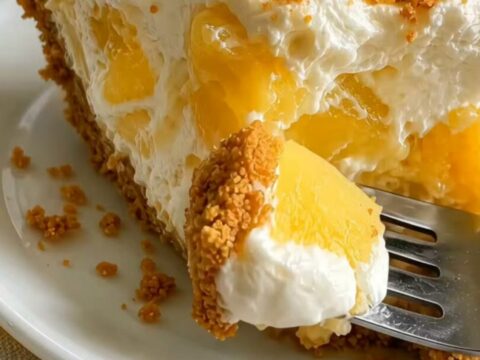
No-Bake Pineapple Cream Cheesecake with a Crisp Cookie Crust
Total time: 6 h 30 min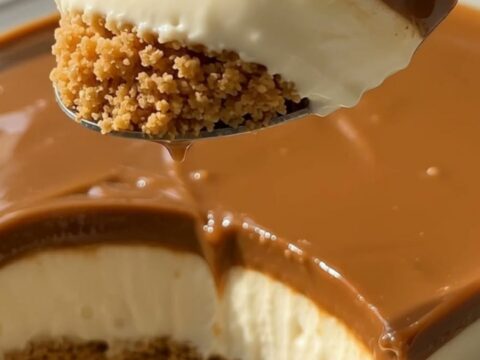
Creamy Caramel Cheesecake with Graham Crust
Total time: 5 h 30 min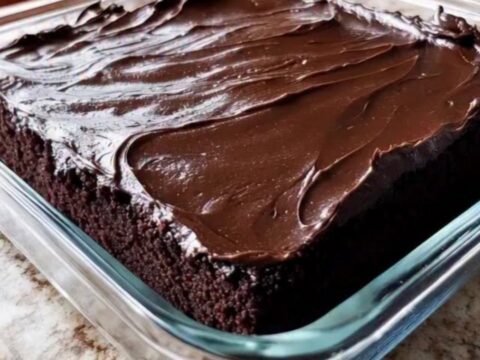
Chocolate Wacky Cake: One-Pan, Egg-Free and Ready in an Hour
Total time: 1 h 5 min