Desserts · Part 2 of 3: Instructions
Creamy Baked Cornmeal Custard Cake with a Golden Crust Step-by-step instructions
- Prep
- Cook
- Total
- Serves
- 9
Before you start
Take the eggs out of the refrigerator first; they whisk to a paler, thicker foam at room temperature, and cold eggs dropped into warm dairy can seize into curds. Measure everything before turning on the oven so the batter moves without pauses once it is mixed. Melt the half cup of butter and let it cool until barely warm, reserving a little extra for the pan. Set out the saucepan, a large bowl, a whisk and the instant-read thermometer. Butter the 8-inch square pan thoroughly, bottom and corners, before starting the batter.
Ingredients at a glance (9)
- 1/2 cup unsalted butter, melted, plus more for the pan
- 4 large eggs, at room temperature
- 3/4 cup granulated sugar
- 2 cups whole milk, warmed
- 1 cup heavy cream
- 2 tsp vanilla extract
- 1 cup finely ground yellow cornmeal
- 1/2 tsp kosher salt
- 2 tsp baking powder
Instructions
Build the batter
- Prepare the pan and ovenHeat the oven to 350°F (175°C) and set a rack in the center. Butter an 8-inch square metal baking pan generously, tipping out any excess. A thorough coat of butter keeps the delicate crust intact when the warm squares are lifted out of the pan.Look for The butter should coat every corner and the bottom in a thin, even, shiny film.Tip Add a parchment sling if the pan has a dark finish; dark metal runs hotter and can overbrown the crust.
- Whisk the eggs and sugarWhisk the eggs and granulated sugar in a large bowl for a full minute, until the mixture turns pale, thick and faintly foamy. This early aeration helps the custard rise gently in the oven and settle into an even, tender layer as it cools in the pan.Look for The whisk should leave pale ribbons that hold on the surface for a second or two.Tip Room-temperature eggs blend faster and more smoothly than cold ones straight from the refrigerator.
- Warm the dairyCombine the whole milk and heavy cream in a small saucepan and warm over medium-low heat until the mixture feels just hot to the touch, then stir in the melted butter and vanilla extract. Warm dairy blends into the eggs smoothly instead of shocking them into curds.Look for Look for wisps of steam and a bare simmer at the edges, never rolling bubbles.Tip About 120°F is the target; a thermometer takes out the guesswork in seconds.
- Bring the batter togetherAdd the cornmeal, kosher salt and baking powder to the egg mixture and whisk until no dry streaks remain. Pour in the warm milk mixture in a slow, steady stream, whisking constantly, until the batter looks smooth and pours like a thick pancake batter.Look for The batter should fall from the whisk in a slow ribbon with no visible grains floating on top.Tip Fine-ground cornmeal dissolves into the custard; coarse grind stays gritty and sinks to the bottom.
At the end of this phase the batter should look like thick pancake batter — smooth, pourable, a warm cream color with no dry streaks of cornmeal floating on top. Lift the whisk and watch the fall: it should ribbon slowly and leave a brief trail on the surface.
Taste a trace on a fingertip; it should taste sweet and faintly salty, with no raw graininess between the teeth. The pan is buttered, the oven is at 350°F (175°C), and the batter is ready to pour immediately. If the mixture looks curdled or separated, whisk hard for thirty seconds before judging it; warm dairy usually brings it back together.
Bake to golden
- Fill the panPour the batter into the prepared pan and tap it once or twice on the counter to release any trapped air bubbles. Smooth the surface lightly with a spatula, then transfer the pan to the center rack of the oven without delay, before the cornmeal starts to settle.Look for The surface should look even and slightly glossy, with a thin ring of butter around the edges.Tip Work quickly here; batter that sits at room temperature while the oven finishes heating bakes unevenly.
- Bake until setBake for 40 to 45 minutes, until the top is deep golden and an instant-read thermometer reads 160°F (71°C) in the center — the temperature at which the eggs are fully cooked through. To cook the eggs all the way through for a firmer, fully set center, keep baking until the middle reads 160°F (71°C). Rotate the pan once halfway through so the corners brown at the same pace as the middle.Look for The edges pull slightly from the sides and the surface turns matte rather than glossy.Safe temperature 160°F (71°C) internal temperature (egg dishes)Tip Start checking at 35 minutes; the center climbs from creamy to fully set quickly at the end.
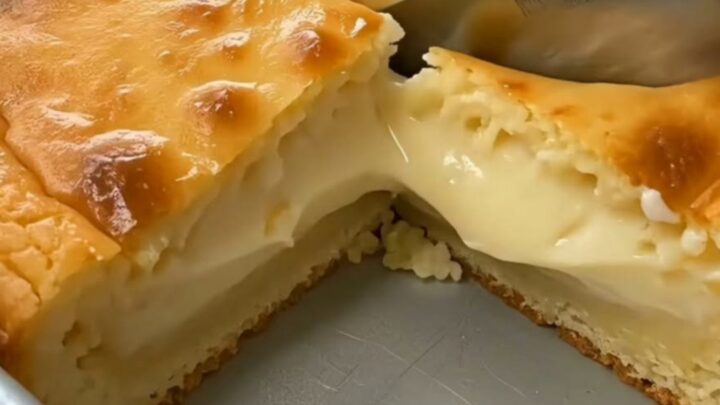
The finished bake shows a deep golden top, darkest at the corners where the butter concentration is highest, and the edges have pulled a visible eighth of an inch from the pan sides. The surface is matte, with faint cracks near the center that close as it cools. An instant-read thermometer in the middle reads 160°F (71°C), confirming the eggs are fully cooked.
Listen as the pan comes out: a set custard is nearly silent, while a wet batter hisses. Smell for toasted corn and caramelized butter. If the center reads below temperature, return the pan immediately and check again in five-minute intervals rather than guessing.
Rest, cut and serve
- Rest the cakeSet the pan on a wire rack and let the cake rest for 15 minutes. The custard finishes setting as it cools and the crust firms enough to release clean squares. Skipping this rest is the most common reason slices break apart on the way out of the pan.Look for The surface loses its shine completely and the edges feel firm when pressed with a fingertip.Tip A 15-minute rest is the minimum; 20 minutes gives the cleanest cuts of all.
- Cut and serve warmCut the cake into nine squares with a sharp knife wiped clean between cuts. Slide a thin metal spatula under the first piece and lift it gently onto a plate, crust side up. Serve warm, while the center is at its creamiest and the crust is still faintly crisp.Look for The first square should lift whole, with the creamy center holding its shape behind the crust.Tip Wipe the knife between cuts for bakery-neat squares; the sticky crumbs drag through the next slice otherwise.
After the 15-minute rest, the cake should look settled and slightly lower in the pan, its surface even and uncracked. Press the edge gently: the crust feels firm and dry, while the center behind it gives with creamy resistance. Drag a sharp knife across for the first cut — it should pass through with light pressure, releasing steam and the smell of warm corn. Lift the first square with a thin spatula: it comes out whole, crust intact, the creamy center holding its shape behind it. If the first square tears, let the cake rest five more minutes before continuing; the crust firms quickly on the rack.
Common mistakes
The most frequent failure is underbaking out of fear of dryness: the center must reach 160°F, and pulling the pan early leaves slices that slump and weep on the plate. The opposite error, baking far past that temperature, turns the custard grainy and the crust leathery, so use the thermometer rather than the clock.
Coarse cornmeal is the second trap — it sinks and bakes into a sandy bottom layer no amount of whisking fixes. Cold dairy added to the eggs can curdle them before the bake even starts, which shows as baked-in specks. Finally, skipping the rest costs clean squares: cut too soon and even a perfectly baked cake tears along the crust.
How to tell it’s done
Three signals confirm the cake is done. First, color: the top should be deep golden, darker at the corners, and matte rather than glossy. Second, the edges pull slightly away from the sides of the pan, a sign the custard has contracted as it set.
Third, and most reliable, an instant-read thermometer inserted into the center reads 160°F (71°C) — the temperature at which the eggs are fully cooked and safe, while the surrounding custard stays creamy. If the top colors before the center reaches temperature, lay a sheet of foil loosely over the pan and continue baking. After the 15-minute rest, a cut square should hold a clean edge with a glossy, pudding-like center behind the crust.
- Egg dishes: 160°F (71°C) in the thickest part
Up next · Part 3 of 3
4 variations · storage & make-ahead · 5 answers · printable card
Tips, FAQ & printable recipe (Part 3)← Back to the ingredients (Part 1)