Dinner · Part 3 of 3: Tips & recipe card
Turkish Kuru Fasulye with Tender Veal and Buttered Rice Pilaf Tips, FAQ & printable recipe

- Prep
- Cook
- Total
- Serves
- 6
Tips for success
For the most flavorful result, use a good quality beef broth, preferably homemade. The broth is the backbone of the sauce, so a rich, gelatinous broth will give a silkier texture.
If using store-bought, choose a low-sodium version and adjust the salt accordingly. You can also enhance the broth by simmering it with a bay leaf and a few black peppercorns before adding it to the stew.
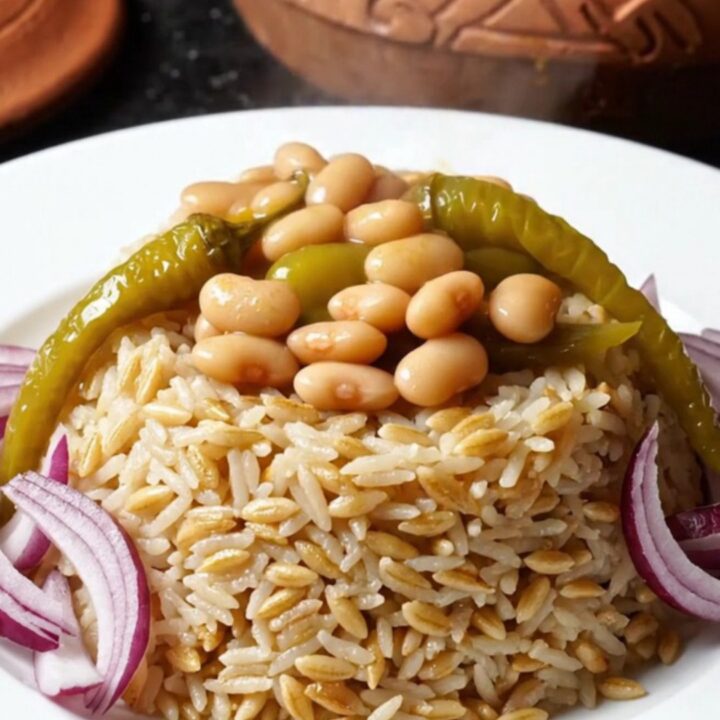
The buttered rice pilaf with orzo is a classic Turkish side. To make it, sauté orzo in butter until golden, then add rice and broth, and cook until fluffy. The orzo adds a nutty flavor and a pleasant texture contrast.
If you prefer, you can serve the kuru fasulye with plain steamed rice or crusty bread to soak up the sauce. The pickled peppers are essential for cutting through the richness, but you can also add a side of plain yogurt if desired.
Variations
- Vegetarian Kuru Fasulye: Omit the veal and use vegetable broth instead of beef broth. Add extra beans or a few chopped carrots and celery for heartiness. The rest of the recipe remains the same.
- Spicy Version: Add a second dried chili or a teaspoon of red pepper flakes along with the chili. For extra heat, stir in a pinch of cayenne pepper with the salt at the end.
- Lamb Kuru Fasulye: Substitute the veal with lamb shoulder, cut into cubes. Lamb pairs beautifully with the tomato and pepper flavors. Cook time may be slightly longer; check for tenderness.
- Tomato-Forward Version: Increase the tomato paste to 2 tablespoons and reduce the pepper paste to 1 teaspoon for a more tomato-driven sauce. Add a can of diced tomatoes along with the broth for extra body.
Storage and make-ahead
- Fridge
- Store cooled kuru fasulye in an airtight container in the refrigerator for up to 4 days. Keep the rice pilaf in a separate container.
- Freezer
- Kuru fasulye freezes well for up to 3 months. Thaw overnight in the refrigerator before reheating.
- Reheat
- Reheat gently on the stovetop over medium-low heat, adding a splash of broth or water to loosen the sauce. Stir occasionally until heated through.
Leftover kuru fasulye can be stored in an airtight container in the refrigerator for up to 4 days. The flavors will continue to meld, and it often tastes even better the next day.
When reheating, add a splash of water or broth to loosen the sauce, and warm gently on the stovetop or in the microwave. The rice pilaf should be stored separately to prevent it from becoming mushy.
This dish is ideal for making ahead. Prepare the kuru fasulye completely, then let it cool and store it in the refrigerator. The flavors deepen overnight. Reheat gently on the stovetop, adding a little broth or water if needed.
You can also cook the rice pilaf ahead and keep it warm, or reheat it separately. The pickled peppers and raw onion can be prepared in advance and kept in the refrigerator.
Serving ideas
Serve the kuru fasulye hot, ladled generously over a bed of buttered rice pilaf. The sauce should be spooned over the top so it soaks into the rice. Place a few pickled peppers and a wedge of raw sweet onion on the side of each plate. The pickles and onion provide a bright, tangy contrast to the rich, savory stew, and they are meant to be eaten with each bite.
This dish is a complete meal on its own, but it also pairs well with a simple green salad dressed with lemon and olive oil. For a more traditional Turkish spread, serve it with a bowl of plain yogurt and some crusty bread. The leftovers are excellent for lunch the next day, either reheated or even at room temperature, though the sauce is best warm.
Frequently asked questions
Can this recipe be made without soaking the beans overnight?
What can be used instead of Turkish pepper paste?
Why does the sauce sometimes remain thin?
Can this dish be prepared in a slow cooker?
How should the leftover rice pilaf be reheated?
Turkish Kuru Fasulye with Tender Veal and Buttered Rice Pilaf
Ingredients
- 300 g dried Turkish white beans (dermason fasulye), soaked overnight
- 300 g veal stew meat, cut into cubes
- 2 tbsp butter
- 1 tbsp olive oil
- 1 large onion, diced
- 1 tbsp tomato paste
- 1 tbsp Turkish pepper paste
- 600 ml rich beef broth
- 1 dried red chili
- 1 tsp salt
- Pickled peppers (turşu), for serving
- Buttered Turkish rice pilaf with orzo, for serving
- Raw sweet onion wedges, for serving
Instructions
- In a large heavy pot or Dutch oven, melt the butter with the olive oil over medium-high heat. Add the veal cubes in a single layer and sear until deeply browned on all sides, about 5 to 7 minutes. Remove the veal to a plate. Reduce the heat to medium, add the diced onion, and cook until translucent, about 4 minutes. Stir in the tomato paste and Turkish pepper paste, and cook for 1 minute until fragrant and the paste darkens slightly. Let it rest for 3 minutes before slicing.
- Return the seared veal to the pot. Add the soaked and drained white beans, the rich beef broth, and the whole dried red chili. Stir to combine, scraping up any browned bits from the bottom of the pot. Bring the mixture to a simmer over medium-high heat, then reduce the heat to low.
- Carefully transfer the entire mixture to a traditional clay pot, if using, or keep it in the Dutch oven. Cover with the lid. If using a clay pot, place it in a cold oven and then turn the oven on; if using a Dutch oven, place it directly in the oven.
- Preheat the oven to 340°F (170°C). Place the covered pot in the oven and cook for 2 hours, until the beans are buttery soft and the sauce has thickened to a rich, glossy consistency. Stir gently once or twice during cooking if possible, but avoid breaking the beans. Let it rest for 3 minutes before slicing.
- Remove the pot from the oven and discard the dried red chili. Stir in the salt, starting with 1 teaspoon and adjusting to taste. Let the stew rest, covered, for 5 minutes before serving. The sauce should be thick enough to cling to the beans and veal.
- Spoon the hot kuru fasulye over a bed of steaming buttered Turkish rice pilaf with orzo. The beans and veal should be generously coated with the red sauce. Serve immediately with crunchy pickled peppers (turşu) and raw sweet onion wedges on the side.
Estimated nutrition per serving
- Calories
- 420
- Protein
- 28 g
- Carbohydrates
- 38 g
- Fat
- 18 g
Next recipe

Crispy Japanese Pork Katsu Sando on Fluffy Milk Bread
See the recipe → →This recipe is based on a short cooking video and is published under the pen name Clara Weller. It was checked before publication, but errors can slip through. Nutrition, when shown, is an estimate. Read more in our editorial policy and on our food safety page.
More recipes to try

Tiny Tender Chicken Skewers with Sumac Flatbread
Total time: 2 h 25 min
Sticky Teriyaki Salmon Bites with Rice and Edamame
Total time: 22 min
Crispy Air Fryer Coconut Chicken Tenders with Sweet Chili Dip
Total time: 25 min
Crispy Baked Gochujang Glazed Chicken Wings
Total time: 1 h
Creamy Truffle Wild Mushroom Risotto with Shaved Grana Padano
Total time: 40 min