Dinner · Part 1 of 3: Ingredients
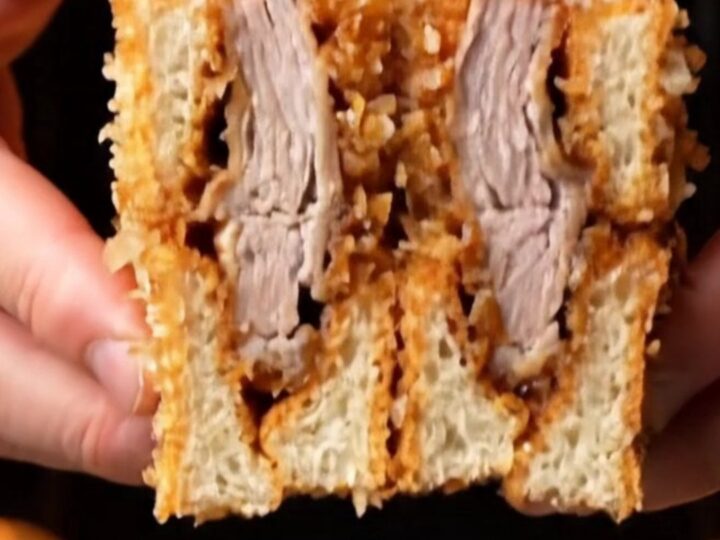
Crispy Japanese Pork Katsu Sando on Fluffy Milk Bread
- Prep
- Cook
- Total
- Serves
- 2
Imagine biting into a sandwich where the crust shatters with a satisfying crunch, revealing juicy, tender pork, and then hitting a pillow-soft cloud of milk bread. That is the magic of a Japanese pork katsu sando.
This recipe delivers that experience at home with thick-cut pork loin, a golden panko crust, and a tangy-sweet tonkatsu sauce. The contrast of textures—crispy, tender, fluffy, and crisp—makes every bite unforgettable. Perfect for a weeknight dinner or a special lunch, this sandwich is surprisingly simple to put together.
The Japanese pork katsu sando, or katsu sando, is a beloved sandwich that combines a deep-fried pork cutlet with a sweet and tangy sauce, all nestled between slices of soft, pillowy milk bread. It is a staple of Japanese convenience stores and cafes, prized for its satisfying crunch and comforting flavors.
This recipe brings the authentic experience to your kitchen, using simple ingredients and techniques that yield a superior result. The key lies in the details: scoring the pork fat, using coarse panko for a craggy crust, and assembling the sandwich while the cutlet is still hot. The result is a harmonious blend of textures and tastes that will make this a regular in your meal rotation.
Ingredients
- 2 thick boneless pork loin chops (about 7 oz each)
- Salt and freshly ground black pepper, to taste
- 1/2 cup all-purpose flour
- 1 large egg, beaten
- 3/4 cup coarse panko breadcrumbs
- 2 cups neutral oil, for frying
- 4 slices Japanese shokupan milk bread, crusts trimmed
- 2 tbsp unsalted butter, softened
- 1 tbsp Dijon or hot mustard
- 3 tbsp Japanese tonkatsu sauce
- 1 cup finely shredded green cabbage
Why this recipe works
The method for this katsu sando is built on a few key principles that ensure a perfect result every time. First, scoring the fat cap on the pork loin prevents the meat from curling during frying, allowing it to cook evenly.
Second, the double-coating process—flour, egg, and coarse panko—creates a thick, shattering crust that contrasts beautifully with the tender meat. The panko crumbs, being larger and more irregular than regular breadcrumbs, fry up airy and crisp, giving that iconic craggy texture.
Finally, assembling the sandwich while the cutlet is still hot is crucial. Dipping the hot cutlet into the tonkatsu sauce allows the sauce to cling and slightly soak into the crust without making it soggy. The butter on the bread adds richness and a subtle toastiness when the sandwich is pressed, while the cabbage provides a fresh, crisp counterpoint. Resting the cutlet before assembly ensures the juices redistribute, so every bite is moist and flavorful.
Notes and substitutions
For the best results, use thick-cut boneless pork loin chops—about 1/2 to 3/4 inch thick. This ensures the meat stays juicy inside while the crust crisps up. Japanese shokupan milk bread is ideal for its soft, slightly sweet crumb, but if unavailable, a high-quality white bread or brioche works well. Trim the crusts for the classic sando look and texture.
Coarse panko breadcrumbs are essential for the signature crunchy coating. If you can only find fine panko, you can pulse it lightly in a food processor to create larger flakes, but the texture will not be quite the same.
Tonkatsu sauce is a thick, fruity, savory sauce available in Asian grocery stores or online; a reasonable substitute can be made by combining ketchup, Worcestershire sauce, and a little sugar. The mustard adds a gentle heat that cuts through the richness—use Japanese karashi mustard if you can find it, or a good Dijon.
- pork loin chops: Boneless pork chops or pork tenderloin medallions can be used; adjust cooking time to reach 145°F (63°C).
- shokupan milk bread: Use any soft white bread like brioche or Texas toast; trim crusts for best texture.
- tonkatsu sauce: Mix 2 tbsp ketchup, 1 tbsp Worcestershire sauce, and 1 tsp sugar for a quick substitute.
- Dijon mustard: Use Japanese karashi mustard or a pinch of dry mustard mixed with water.
Equipment
- Heavy-bottomed pot or Dutch oven for frying
- Deep-fry thermometer
- Wire rack set over a baking sheet
- Three shallow dishes for breading
- Tongs
- Sharp chef's knife
- Cutting board
Up next · Part 2 of 3
8 steps · 10 min of cooking · what to look for at each stage
Step-by-step instructions (Part 2)