Dinner · Part 1 of 3: Ingredients
Turkish Kuru Fasulye with Tender Veal and Buttered Rice Pilaf
- Prep
- Cook
- Total
- Serves
- 6
This is the crown jewel of Turkish comfort food: tender veal and white beans slow-cooked in a rich, buttery tomato-pepper sauce until the beans are silky and the sauce turns into liquid gold.
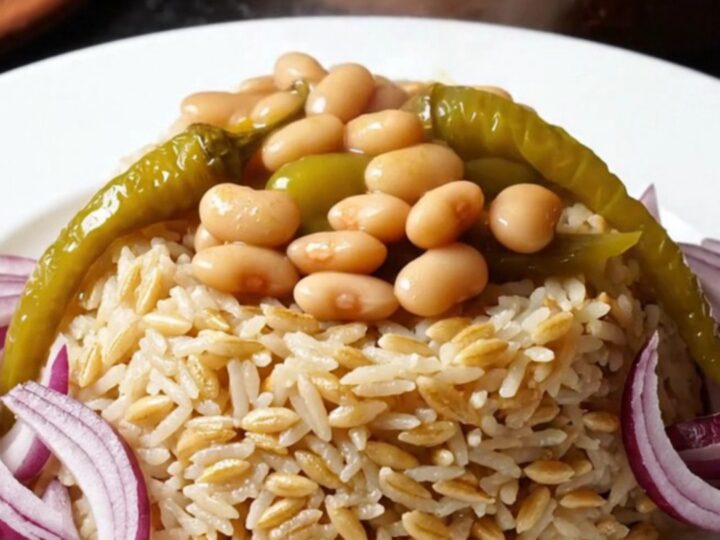
Spooned over steaming buttered rice pilaf with orzo and served with crunchy pickled peppers and raw onion wedges, it is a deeply satisfying one-pot dinner that brings the warmth of a Turkish home kitchen to your table. The slow oven simmer does all the work, transforming simple ingredients into something extraordinary.
Kuru fasulye, or Turkish white bean stew, is a beloved staple across Turkey, often called the national dish. This version features tender veal cubes seared in butter, then simmered with soaked white beans in a rich broth seasoned with tomato paste, Turkish pepper paste, and a whole dried chili.
The slow, gentle cooking in the oven melts the beans into buttery softness while the sauce reduces to a glossy, deeply flavored coating. Served over buttered rice pilaf with orzo, this meal is hearty, comforting, and perfect for a cold evening. The traditional clay pot adds rustic charm, but a Dutch oven works just as well.
Ingredients
- 300 g dried Turkish white beans (dermason fasulye), soaked overnight
- 300 g veal stew meat, cut into cubes
- 2 tbsp butter
- 1 tbsp olive oil
- 1 large onion, diced
- 1 tbsp tomato paste
- 1 tbsp Turkish pepper paste
- 600 ml rich beef broth
- 1 dried red chili
- 1 tsp salt
For serving
- Pickled peppers (turşu), for serving
- Buttered Turkish rice pilaf with orzo, for serving
- Raw sweet onion wedges, for serving
Why this recipe works
The method of searing the veal first develops a deep, savory crust that adds layers of flavor to the final sauce. The browning creates Maillard reaction compounds that infuse the broth with a rich, meaty taste. Then, slowly cooking everything in the oven at a low temperature allows the collagen in the veal to break down, making the meat fork-tender while the beans absorb the seasoned liquid and become creamy inside without turning to mush.
Using a whole dried chili during cooking adds a subtle, warm heat that perfumes the entire dish without making it spicy. Removing it before serving keeps the heat gentle and balanced.
The combination of tomato paste and Turkish pepper paste provides a sweet, slightly smoky depth that is characteristic of Turkish home cooking. The final addition of salt only at the end ensures the beans are properly seasoned without becoming tough, and the resting period lets the flavors meld.
Notes and substitutions
Dried Turkish white beans, also called dermason fasulye, are small, oval beans with a thin skin and a creamy texture. They are ideal for this dish because they hold their shape during long cooking while becoming buttery inside. If you cannot find them, cannellini or great northern beans are excellent substitutes. Soaking the beans overnight is essential to reduce cooking time and ensure even tenderness.
Veal stew meat provides a delicate flavor and becomes very tender when slow-cooked. If veal is not available, beef chuck or lamb shoulder are good alternatives. Turkish pepper paste, or biber salçası, is a sweet, concentrated pepper paste that adds a distinctive depth.
It can be found in Middle Eastern markets or online; if unavailable, substitute with a mix of sweet paprika and tomato paste. The clay pot is traditional but not necessary—a Dutch oven gives equally good results.
- veal stew meat: beef chuck or lamb shoulder, cut into cubes
- Turkish pepper paste: 1 tbsp sweet paprika mixed with 1 tsp tomato paste
- dried Turkish white beans: cannellini or great northern beans
- buttered rice pilaf with orzo: plain steamed rice or crusty bread
Equipment
- Large heavy pot or Dutch oven
- Clay pot (optional, for serving)
- Wooden spoon
- Chef's knife
- Cutting board
- Measuring cups and spoons
- Oven-safe pot with lid
Up next · Part 2 of 3
6 steps · 2 h 20 min of cooking · what to look for at each stage
Step-by-step instructions (Part 2)