Dinner · Part 2 of 3: Instructions
Turkish Kuru Fasulye with Tender Veal and Buttered Rice Pilaf Step-by-step instructions
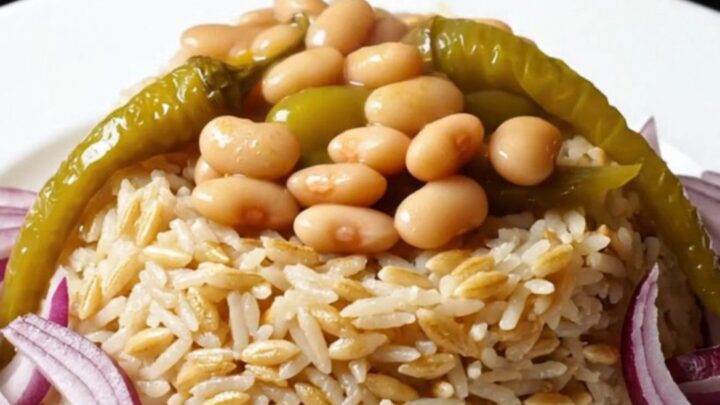
- Prep
- Cook
- Total
- Serves
- 6
Before you start
Soak the dried white beans in plenty of cold water overnight, then drain and rinse them. Cut the veal into 1-inch cubes and pat them dry with paper towels. Dice the onion finely. Measure the tomato paste, pepper paste, broth, and salt. Have the dried chili ready.
If using a clay pot, soak it in water for about 15 minutes before using, then drain. Preheat the oven to 340°F (170°C) when you are ready to start cooking. Prepare the buttered rice pilaf with orzo just before serving, or keep it warm separately.
Ingredients at a glance (13)
- 300 g dried Turkish white beans (dermason fasulye), soaked overnight
- 300 g veal stew meat, cut into cubes
- 2 tbsp butter
- 1 tbsp olive oil
- 1 large onion, diced
- 1 tbsp tomato paste
- 1 tbsp Turkish pepper paste
- 600 ml rich beef broth
- 1 dried red chili
- 1 tsp salt
- Pickled peppers (turşu), for serving
- Buttered Turkish rice pilaf with orzo, for serving
- Raw sweet onion wedges, for serving
Instructions
Sear and Build the Base
- Sear the Veal and Build the BaseIn a large heavy pot or Dutch oven, melt the butter with the olive oil over medium-high heat. Add the veal cubes in a single layer and sear until deeply browned on all sides, about 5 to 7 minutes. Remove the veal to a plate. Reduce the heat to medium, add the diced onion, and cook until translucent, about 4 minutes. Stir in the tomato paste and Turkish pepper paste, and cook for 1 minute until fragrant and the paste darkens slightly. Let it rest for 3 minutes before slicing.Look for The veal is deeply browned and the onion is soft and translucent.Safe temperature 145°F (63°C) internal temperature (steaks, chops and roasts)Tip Do not crowd the pan; sear in batches if needed to get a good crust.
- Add Beans, Broth, and ChiliReturn the seared veal to the pot. Add the soaked and drained white beans, the rich beef broth, and the whole dried red chili. Stir to combine, scraping up any browned bits from the bottom of the pot. Bring the mixture to a simmer over medium-high heat, then reduce the heat to low.Look for The liquid is gently simmering and the beans are just covered.Tip If the broth does not cover the beans, add a little water.
- Transfer to a Clay PotCarefully transfer the entire mixture to a traditional clay pot, if using, or keep it in the Dutch oven. Cover with the lid. If using a clay pot, place it in a cold oven and then turn the oven on; if using a Dutch oven, place it directly in the oven.Look for The pot is covered and ready for slow cooking.Tip A clay pot distributes heat gently, but a Dutch oven works perfectly.
The veal is browned with a rich crust, and the onions are soft and translucent. The tomato and pepper pastes have cooked into a fragrant, deep red paste that coats the bottom of the pot. The aroma is sweet and savory. The beans, broth, and chili are combined and just beginning to simmer. The liquid looks rich and reddish, and the veal is nestled among the beans.
Slow-Cook in the Oven
- Slow-Cook in the OvenPreheat the oven to 340°F (170°C). Place the covered pot in the oven and cook for 2 hours, until the beans are buttery soft and the sauce has thickened to a rich, glossy consistency. Stir gently once or twice during cooking if possible, but avoid breaking the beans. Let it rest for 3 minutes before slicing.Look for The beans are tender and the sauce coats the back of a spoon.Safe temperature 145°F (63°C) internal temperature (steaks, chops and roasts)Tip If the sauce looks too thin, remove the lid for the last 15 minutes.
- Season and FinishRemove the pot from the oven and discard the dried red chili. Stir in the salt, starting with 1 teaspoon and adjusting to taste. Let the stew rest, covered, for 5 minutes before serving. The sauce should be thick enough to cling to the beans and veal.Look for The sauce is rich and the salt is evenly distributed.Tip Taste and add more salt only if needed; the broth and pastes are salty.
After two hours in the oven, the beans are buttery soft and the sauce has thickened to a glossy, rich consistency. The veal is fork-tender. The kitchen smells intensely savory with a hint of chili. The sauce clings to the beans and meat. The chili is still whole and easily removed. The stew looks deeply colored and inviting, with a slight sheen from the butter.
Serve Over Rice
- Serve Over Buttered Rice PilafSpoon the hot kuru fasulye over a bed of steaming buttered Turkish rice pilaf with orzo. The beans and veal should be generously coated with the red sauce. Serve immediately with crunchy pickled peppers (turşu) and raw sweet onion wedges on the side.Look for The stew is ladled over the rice, and the sides are ready.Tip The pickles and raw onion add brightness and crunch against the rich stew.
The kuru fasulye is ladled over a mound of steaming buttered rice pilaf, with the red sauce pooling around the grains. The pickled peppers and raw onion wedges are on the side, adding brightness and crunch.
The dish looks hearty and comforting, with the beans and veal glistening. The first spoonful offers creamy beans, tender meat, and the tangy contrast of the pickles.
Common mistakes
A common mistake is not browning the veal properly, which leaves the stew lacking depth. Take the time to sear the cubes until they are deeply browned on all sides. Another issue is adding salt too early, which can make the bean skins tough.
Always salt after the beans are fully cooked. Over-stirring the stew can break the beans into mush; stir gently and minimally. Finally, if the sauce is too thin, remove the lid for the last 15 minutes of cooking to let it reduce, but watch that it does not dry out completely.
How to tell it’s done
The kuru fasulye is done when the beans are completely tender and can be easily mashed with a fork, but still hold their shape. The veal should be fork-tender and easily pull apart. The sauce should be thick enough to coat the back of a spoon, not watery.
To ensure the veal is safe, check that it has reached an internal temperature of 145°F (63°C) and let it rest at least 3 minutes before serving. The sauce will look glossy and have a deep red-brown color. Taste and adjust salt just before serving.
- Steaks, chops and roasts: 145°F (63°C) in the thickest part, then a 3-minute rest
Up next · Part 3 of 3
4 variations · storage & make-ahead · 5 answers · printable card
Tips, FAQ & printable recipe (Part 3)← Back to the ingredients (Part 1)