Dinner · Part 3 of 3: Tips & recipe card
Turkish İskender Kebab with Sizzling Browned Butter Tips, FAQ & printable recipe
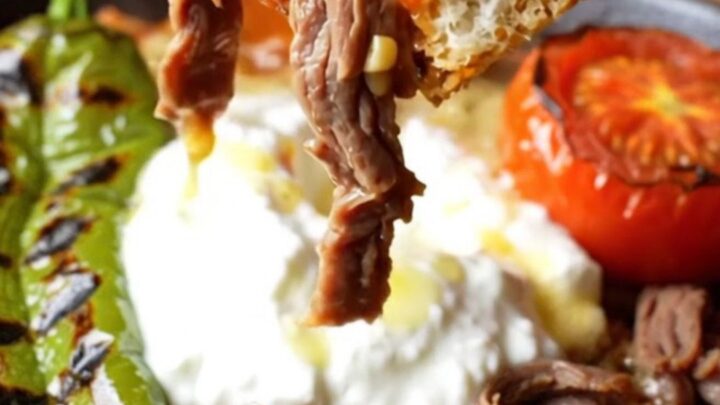
- Prep
- Cook
- Total
- Serves
- 4
Tips for success
To get the best texture, toast the pide cubes in a generous amount of butter until they are deeply golden and crisp. This creates a sturdy base that won’t collapse under the sauce.
If you prefer a lighter version, you can toast them in olive oil, but butter adds a richness that complements the dish.
When warming the shaved meat, use a wide skillet and avoid overcrowding, so the meat gets some caramelized edges rather than steaming.
If the meat is dry, add a splash of broth or a little butter to keep it moist. The goal is tender, flavorful slices that contrast with the crisp bread.
Variations
- Chicken İskender: Swap the lamb and beef for thinly sliced chicken breast or thigh. Cook the chicken thoroughly to 165°F (74°C) and follow the same assembly. The lighter meat pairs beautifully with the garlic yogurt and tomato sauce.
- Spicy Tomato Sauce: Add a teaspoon of red pepper flakes or a pinch of cayenne to the tomato sauce while it simmers. This gives the kebab a gentle heat that contrasts with the cool yogurt. Adjust the amount to suit your spice tolerance.
- Vegetarian Version: Replace the meat with sliced mushrooms or roasted eggplant, cooked until golden and tender. Use a rich tomato sauce and the same yogurt and butter finish. The dish remains satisfying and full of umami.
- Pide Chips: Instead of cubes, cut the pide into thin strips and toast them until crisp, like chips. Use them as a base for the meat and sauce, or serve them on the side for dipping into the yogurt and sauce.
Storage and make-ahead
- Fridge
- Store leftovers in an airtight container in the refrigerator for up to 3 days. The bread will soften, but the flavors remain vibrant.
- Freezer
- Freeze the cooked meat and sauce (without bread or yogurt) in a freezer-safe container for up to 2 months. Thaw overnight in the refrigerator and reheat gently.
- Reheat
- Reheat the meat and sauce in a skillet over medium heat until hot, then serve over fresh toasted pide.
Leftover İskender kebab can be stored in an airtight container in the refrigerator for up to 3 days. The bread will soften, but the flavors will still be delicious. Reheat gently in a skillet or microwave, and consider adding a fresh drizzle of butter to revive the richness.
You can prepare the components ahead: toast the pide cubes and store them in an airtight container for up to a day, make the tomato sauce and garlic yogurt in advance, and grill the peppers and tomato.
When ready to serve, warm everything and assemble. The browned butter should be made fresh just before pouring.
Serving ideas
Serve İskender kebab immediately after pouring the browned butter, while the bread is still crisp and the butter is sizzling.
Set the platter in the center of the table and let everyone scoop their own portions, making sure to include a swipe of yogurt and a piece of pepper or tomato in each forkful.
This dish is a complete meal on its own, but it pairs well with a simple green salad or a side of pickled vegetables to cut the richness. For a more traditional spread, add a bowl of plain yogurt on the side and extra pide for sopping up the sauce.
Frequently asked questions
Can this be made ahead of time?
What is the best cut of meat for this recipe?
Can the browned butter be made ahead?
What can be used instead of Turkish pide bread?
Why does the sauce split or become watery?
Turkish İskender Kebab with Sizzling Browned Butter
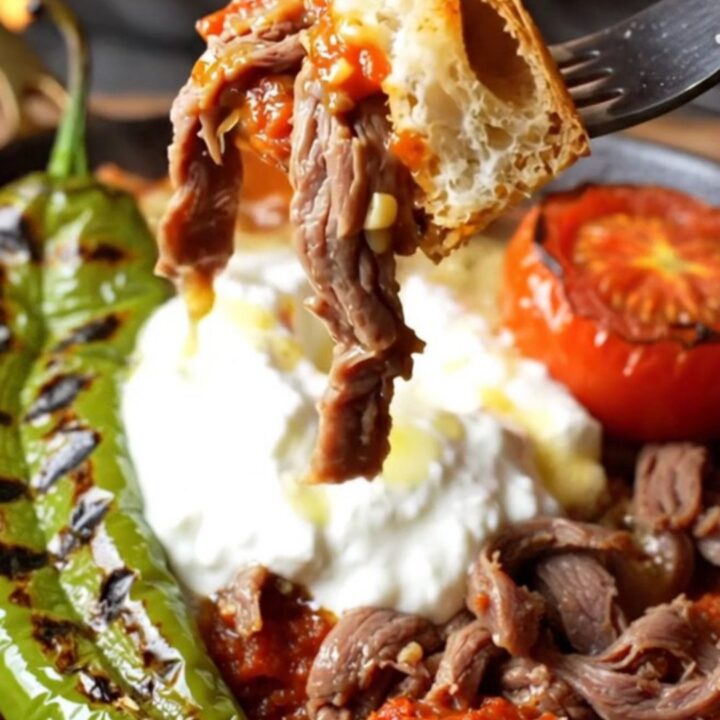
Ingredients
- 1 round Turkish pide bread, cut into 1-inch cubes
- 2 tbsp butter, for toasting the bread
- 400 g thinly shaved lamb and beef döner meat
- 200 ml rich tomato paste sauce, simmered with butter and broth
- 200 g Turkish strained garlic yogurt
- 60 g foaming browned butter, for tableside pour
- 2 green peppers, grilled
- 1 tomato, roasted
Instructions
- Heat a large skillet over medium heat and melt the 2 tbsp butter. Add the pide cubes and toss to coat. Cook, stirring frequently, until the cubes are golden and crisp on all sides, about 5 minutes. Transfer the toasted bread to a heavy oval serving platter and spread them evenly across the bottom.
- In the same skillet, add the shaved lamb and beef döner meat. Warm it over medium-high heat, stirring occasionally, until the meat is heated through and has some browned edges, about 4 minutes. If the meat is already cooked, just warm it; if raw, cook until it reaches 145°F (63°C). Let it rest for 3 minutes before slicing.
- Spoon the warm shaved meat evenly over the toasted pide cubes on the serving platter. Spread it out so every piece of bread gets a generous topping of meat.
- Warm the rich tomato paste sauce in a small saucepan over low heat. Spoon the hot sauce over the meat and bread, covering the surface evenly. The sauce should soak into the bread and meat, adding moisture and a deep tomato flavor.
- Place a large dollop of the Turkish strained garlic yogurt on one side of the platter, next to the saucy meat. Keep it distinct, not stirred in, so each bite can combine cool yogurt with hot sauce and meat.
- Arrange the grilled green peppers and roasted tomato on the platter, tucking them around the meat and yogurt. These add a smoky, charred flavor and a pop of color.
- Just before serving, heat the 60 g of foaming browned butter in a small saucepan until it is bubbling and nutty. Pour it sizzling over the entire platter, letting it hiss as it hits the hot sauce, meat, and yogurt. Serve immediately.
- To serve, scoop a forkful that includes meat, bread, tomato sauce, and a swipe of yogurt. The combination of textures and temperatures is the essence of İskender kebab. Serve the platter family-style, letting everyone build their own perfect bite.
Estimated nutrition per serving
- Calories
- 680
- Protein
- 35 g
- Carbohydrates
- 40 g
- Fat
- 40 g
Next recipe

Loaded Cheesy Jalapeño Bacon Hasselback Sweet Potatoes
See the recipe → →This recipe is based on a short cooking video and is published under the pen name Clara Weller. It was checked before publication, but errors can slip through. Nutrition, when shown, is an estimate. Read more in our editorial policy and on our food safety page.
More recipes to try

Hearty Turkish Forest Lamb Stew with Peas and Potatoes
Total time: 1 h 30 min
Crispy Garlic Butter Parmesan Chicken Cutlets with Lemon Arugula Salad
Total time: 35 min
Turkish Kuru Fasulye with Tender Veal and Buttered Rice Pilaf
Total time: 2 h 40 min
Crispy Japanese Pork Katsu Sando on Fluffy Milk Bread
Total time: 33 min
Tiny Tender Chicken Skewers with Sumac Flatbread
Total time: 2 h 25 min