Dinner · Part 3 of 3: Tips & recipe card
Seared Wagyu Steak Bites over Garlic Butter Soy Ramen in 10 Minutes Tips, FAQ & printable recipe
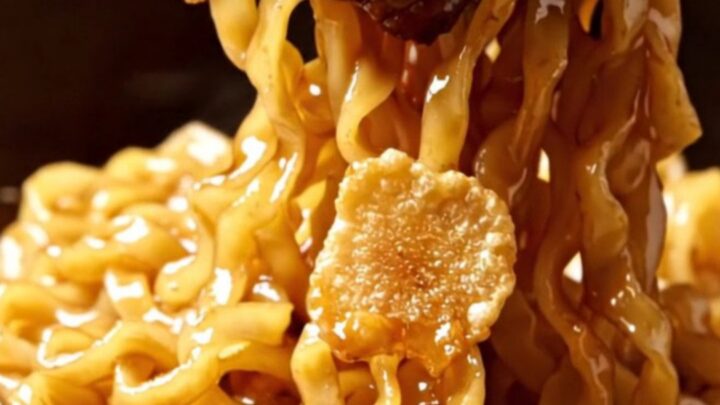
- Prep
- Cook
- Total
- Serves
- 2
Tips for success
Temperature is the whole game. Give the cast-iron skillet a full three to four minutes to preheat before the beef goes in, and confirm it with a flick of water — the drop should dance and vanish instantly.
Use the thermometer on the cubes rather than judging by eye; marbled Wagyu can look done while the center lags. And resist stirring the cubes during their first minute of contact: undisturbed contact is what builds the caramelized crust that seasons the entire pan.
Treat the pan drippings as the secret ingredient. Every browned bit and spoonful of Wagyu tallow left after searing belongs in the glaze — deglaze thoroughly with the soy sauce and mirin and scrape with a spatula, because that fond carries more flavor than any addition could.
If the glaze tightens too much before the noodles arrive, loosen it with a spoonful of the starchy noodle water rather than plain water; the starch helps it re-emulsify and cling.
Variations
- Everyday ribeye: Swap the Wagyu for a well-marbled conventional ribeye and follow the same method. The sear renders less tallow, so add half a tablespoon of butter when building the glaze to keep the noodles equally slick and rich.
- Spicy garlic chili: Stir a teaspoon of chili crisp or a pinch of red pepper flakes into the glaze with the soy sauce and mirin. The heat cuts through the butter and beef fat, turning the bowl into something closer to a late-night chili-garlic noodle.
- Extra-glossy noodles: Add one more tablespoon of butter at the glaze stage and finish the toss off the heat. The extra emulsion coats the wavy strands even more heavily and keeps the bowls glossy longer at the table.
- Ginger-shallot pan: Fry two thin slices of ginger and one sliced shallot with the garlic chips, then remove them with the garlic. The aromatics perfume the butter and tallow, giving the glaze a warmer, more layered backbone.
Storage and make-ahead
- Fridge
- Refrigerate leftovers within 2 hours, chips stored separately, and eat within 1 day for the best texture.
- Freezer
- Freezing is not recommended; the noodles turn mealy and the glaze breaks when thawed.
- Reheat
- Reheat gently in a skillet over medium-low with a splash of water, tossing until steaming, about 3 minutes.
This bowl is built to be eaten immediately, and it is at its best within minutes of the toss. Leftovers keep, but the noodles drink the glaze and the garlic chips soften as they sit. Cool any remainder for no more than 2 hours at room temperature, then cover and refrigerate. Store the garlic chips separately in a small container if possible so they keep some snap, and expect a one-day window of good quality.
Almost everything can be staged ahead; only the heat cannot. The steak can be cubed up to a day in advance and kept covered in the refrigerator, and the garlic can be sliced and held in a sealed container overnight.
The butter, soy sauce, and mirin can be measured into one bowl together. Do not fry the garlic or cook the noodles ahead — both lose their texture within the hour. With the prep done, the active cooking shrinks to roughly ten unhurried minutes.
Serving ideas
Serve the bowls the second the toss is finished: warm bowls, hot noodles, cubes still crackling at the edges.
Lift the noodles with tongs as you portion them so they pile with height and air rather than lying flat, then place the Wagyu cubes on top rather than stirring them in — the contrast between crusty beef and glossy strands is the point of the dish. Scatter the garlic chips last so they stay dry and loud.
This is a rich, complete bowl on its own, and it wants little beside it. A cold, crisp drink cuts the butter and beef fat cleanly, and a simple cucumber salad with rice vinegar would do the same if the meal were stretched to more people. Eat with chopsticks or a fork and a spoon for the pooling glaze. If serving two, portion evenly and reserve any extra glaze in the pan to spoon over at the table.
Frequently asked questions
Can a regular ribeye be used instead of Wagyu?
How is the doneness of the steak cubes checked?
Can the garlic chips be fried ahead of time?
Why do the noodles go into the glaze instead of staying in broth?
Can this be made for more than two people?
Seared Wagyu Steak Bites over Garlic Butter Soy Ramen in 10 Minutes
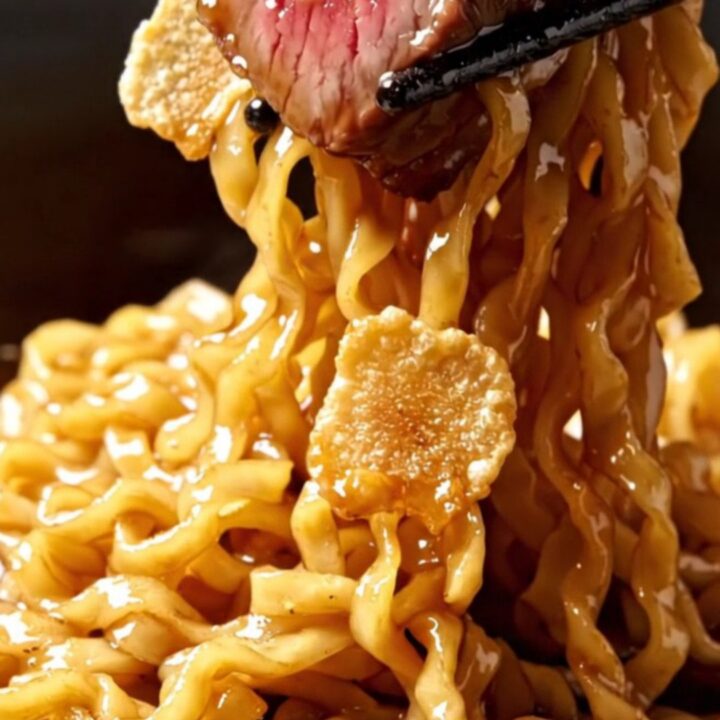
Ingredients
- 10 1/2 oz Wagyu ribeye steak, cut into 1 1/2-inch cubes
- 8 cloves garlic, sliced paper-thin
- 3 tbsp cultured butter
- 3 tbsp aged soy sauce (aged shoyu)
- 2 tbsp mirin
- 12 oz wavy ramen noodles (fresh or dried)
Instructions
- Pat the Wagyu ribeye completely dry with paper towels, then cut it into even 1 1/2-inch cubes with a sharp knife. Even pieces matter: they hit the pan at the same moment and finish together. Keep the cubes at room temperature no longer than 30 minutes while the rest of the mise en place comes together.
- Peel the garlic cloves and slice them as thin and even as the knife allows, aiming for translucent rounds. Thin slices fry into shattering, golden chips; thick ones brown unevenly and turn bitter at the edges. Work steadily and keep the slices separated so they do not clump when they meet the hot butter.
- Bring a large pot of water to a rolling boil for the ramen noodles. Hold off on adding them — the noodles cook fast and should be ready just as the sauce comes together, so they can go straight from pot to skillet while still steaming and pliable. Salt the water lightly; the soy glaze seasons the dish later.
- Set a cast-iron skillet over medium-low heat and melt the cultured butter. Add the sliced garlic and fry slowly, stirring often, until the rounds turn pale gold and crisp at the edges. Pull them out with a slotted spoon onto a plate, leaving the fragrant garlic butter in the pan to become the base of the glaze.
- Raise the heat under the same skillet until the fat shimmers, about 437°F (225°C) at the surface. Add the Wagyu cubes in a single layer without crowding and sear undisturbed for about 60 seconds, then turn each cube until browned on all sides, about 3 minutes total. Check with an instant-read thermometer for 145°F (63°C), then transfer the cubes to a warm plate and let them rest at least 3 minutes before serving.
- Transfer the seared Wagyu cubes to a warm plate and let them rest for at least 3 minutes while the noodles cook. Resting lets the juices settle back into the meat instead of pooling on the plate, so every bite stays moist and tender. Do not cover tightly or trapped steam will soften the crust you just built.
- Drop the ramen noodles into the boiling water and cook just until pliable with a slight bite at the center, usually 2 to 3 minutes for fresh and 4 for dried. Drain them in a colander and give them a quick shake so they do not carry excess water into the glaze. Keep them moving straight to the skillet.
- Return the skillet with the garlic butter and rendered Wagyu tallow to medium-high heat. Pour in the aged soy sauce and mirin and let the mixture foam and reduce for about 1 minute, stirring and scraping up the browned bits, until it turns glossy and coats the back of a spoon. Do not wander — soy glaze goes from syrupy to sticky fast.
- Add the drained noodles directly into the foaming glaze and toss with tongs for 30 to 60 seconds until every strand is slick and glossy. Divide the noodles between two warm bowls, nestle the rested Wagyu cubes on top, and scatter the crispy garlic chips over everything. Serve immediately, while the crust is still crackling.
Estimated nutrition per serving
- Calories
- 1402
- Protein
- 45 g
- Carbohydrates
- 130 g
- Fat
- 78 g
- Fiber
- 4 g
- Sugar
- 5 g
- Sodium
- 1650 mg
Next recipe

Hokkaido Miso Butter Corn Ramen with Seared Scallops in 45 Minutes
See the recipe → →This recipe is based on a short cooking video and is published under the pen name Clara Weller. It was checked before publication, but errors can slip through. Nutrition, when shown, is an estimate. Read more in our editorial policy and on our food safety page.
More recipes to try

Creamy Butternut Squash Penne with Crispy Pancetta
Total time: 50 min
Crispy Accordion Sweet Potato Wedges with Brown Butter Sage
Total time: 1 h
Crockpot Pepper Jelly Turkey Tenderloin: Sweet, Spicy, 4 Ingredients
Total time: 4 h 15 min
Slow Cooker Mushroom Swiss Potato Soup: Easy Dump-and-Go Dinner
Total time: 6 h 25 min
Crockpot Creamy Ranch Mushroom Turkey Meatballs (4 Ingredients)
Total time: 4 h 5 min