Dinner · Part 1 of 3: Ingredients
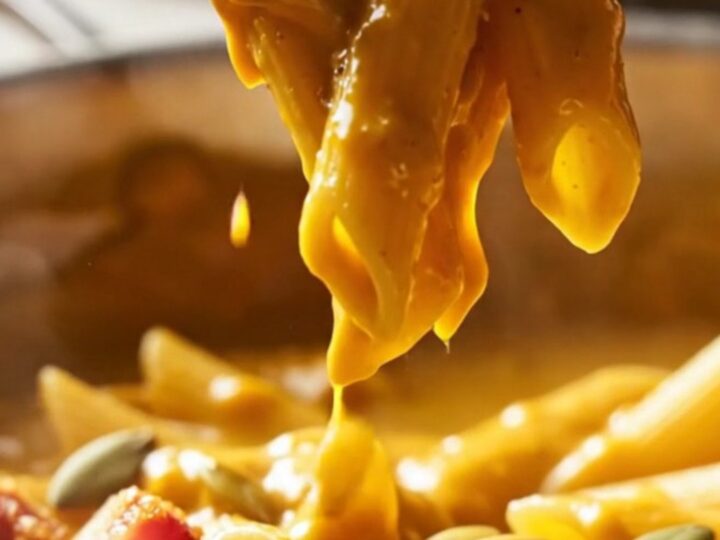
Creamy Butternut Squash Penne with Crispy Pancetta
- Prep
- Cook
- Total
- Serves
- 4
Cubed butternut squash roasts until deeply caramelized, then gets blended with goat cheese and warm stock into a sauce that clings to every ridge of penne. Crispy pancetta and fried sage leaves go on top, and toasted pumpkin seeds finish the bowl with crunch. Everything cooks in one oven and one skillet, and the sauce comes together while the pasta boils. It is the kind of fall dinner that tastes far slower than it actually is.
This penne takes its cue from the best of autumn cooking: roast the squash hard enough to concentrate its sweetness, then turn it into a silky sauce without a drop of heavy cream. Goat cheese does the thickening, melting into the hot squash and stock until the purée turns glossy. Pancetta renders during the same window the squash roasts, so the two timelines overlap and nothing sits idle.
Sage leaves fried in the pancetta fat become brittle and aromatic, and a handful of toasted pumpkin seeds adds the final snap. The result coats penne rigate the way a cream sauce does, but tastes of roasted vegetables, browned pork and warm spice. Serve it the moment the pasta leaves the pot, while the sauce is at its glossiest.
Ingredients
- 1 1/8 lb butternut squash, peeled and cut into 3/4-inch cubes
- 4 cloves garlic, peeled
- 3 tbsp olive oil
- 4 oz pancetta, diced
- 10 leaves fresh sage leaves
- 2/3 cup vegetable stock
- 3 oz chevre
- Ground nutmeg, to taste
- 12 oz penne rigate
- 1/4 cup pumpkin seeds, toasted
Why this recipe works
High heat is what makes this sauce taste like more than puréed vegetable. At 425°F the squash edges caramelize, concentrating the sugars and building the browned flavor that carries the whole dish, and the garlic roasts soft and mellow right alongside it.
Blending that hot squash with goat cheese and stock does the work cream usually does: the cheese melts into the purée and emulsifies it, giving body and a gentle tang. Keeping the simmer slow matters here, because a hard boil is what pushes cheese sauces to turn grainy. Starchy pasta water, added a few tablespoons at a time, adjusts the sauce until it flows and clings at the same time.
The pancetta works on the same principle as good bacon cookery: start it in a cold skillet so the fat renders gradually instead of seizing, and the cubes crisp all the way through while leaving behind a skillet full of flavorful fat. That fat becomes the frying medium for the sage and then the base of the sauce, so nothing is wasted.
Tossing the pasta with the sauce off the heat keeps the cheese purée from tightening, and the ridges of penne rigate grab the thick sauce exactly the way long, smooth shapes cannot. Toasted pumpkin seeds go in at the end, dry-toasted, so their crunch survives the sauce.
Notes and substitutions
Pre-cut squash from the produce section saves the hardest part of the job; look for cubes around three-quarters of an inch so they roast evenly. A log of plain goat cheese blends more smoothly than pre-crumbled, which often contains anti-caking starch. Dice the pancetta yourself if only slices are available, or ask the deli counter for a thick cut.
Penne rigate is the shape the recipe is built on, because the ridges hold the thick purée; rigatoni or casarecce are acceptable stand-ins, but smooth penne lets the sauce slide off. Choose a mild vegetable stock, since its flavor concentrates as the sauce simmers.
A countertop blender gives the silkiest purée; a food processor works but leaves the sauce slightly textured, which some cooks prefer. One sheet pan and one large skillet cover all the cooking. If the squash is done before the pancetta, let it sit on the pan loosely covered; it blends fine warm. Grate the nutmeg fresh if possible, since pre-ground loses much of its aroma within months. For a lighter color and flavor in the sauce, use half stock and half pasta water. The substitutions listed below cover the most common pantry gaps without changing the method.
- goat cheese: An equal amount of softened cream cheese or whole-milk ricotta thickens the sauce the same way; ricotta gives a milder, slightly sweeter finish.
- pancetta: Diced bacon works well: render it the same way, starting in a cold skillet, and use the fat to fry the sage leaves.
- butternut squash: Peeled, cubed sweet potato roasts in the same amount of time and blends into an equally silky, slightly sweeter purée.
- fresh sage leaves: Substitute 1 tsp dried thyme stirred into the sauce, or simply skip the fried leaves and finish with cracked black pepper.
Equipment
- sheet pan
- large skillet
- blender
- large pot
- colander
- wooden spoon
Up next · Part 2 of 3
8 steps · 35 min of cooking · what to look for at each stage
Step-by-step instructions (Part 2)