Dinner · Part 2 of 3: Instructions
Seared Wagyu Steak Bites over Garlic Butter Soy Ramen in 10 Minutes Step-by-step instructions
- Prep
- Cook
- Total
- Serves
- 2
Before you start
Before any heat goes on, set up the full lineup. Pat the Wagyu ribeye dry and cut it into even 1 1/2-inch cubes; dry meat sears, wet meat steams. Peel and paper-slice all eight garlic cloves, separating any that stick together.
Measure the butter, aged shoyu, and mirin into small bowls within reach of the stove, because the glaze comes together in under two minutes and there is no time to measure mid-foam. Fill a large pot for the noodles and set a colander in the sink.
Ingredients at a glance (6)
- 10 1/2 oz Wagyu ribeye steak, cut into 1 1/2-inch cubes
- 8 cloves garlic, sliced paper-thin
- 3 tbsp cultured butter
- 3 tbsp aged soy sauce (aged shoyu)
- 2 tbsp mirin
- 12 oz wavy ramen noodles (fresh or dried)
Instructions
Prep: cubes, chips, water
- Cube the Wagyu ribeyePat the Wagyu ribeye completely dry with paper towels, then cut it into even 1 1/2-inch cubes with a sharp knife. Even pieces matter: they hit the pan at the same moment and finish together. Keep the cubes at room temperature no longer than 30 minutes while the rest of the mise en place comes together.Look for The cubes should look uniform, with visible marbling running through every piece.Tip A slightly warm, damp blade glides through marbled beef without tearing the crust edges.
- Slice the garlic paper-thinPeel the garlic cloves and slice them as thin and even as the knife allows, aiming for translucent rounds. Thin slices fry into shattering, golden chips; thick ones brown unevenly and turn bitter at the edges. Work steadily and keep the slices separated so they do not clump when they meet the hot butter.Look for Hold a slice up to the light: it should be nearly see-through at the center.Tip A mandoline set to its thinnest setting makes quick, uniform work of all eight cloves.
- Start the noodle waterBring a large pot of water to a rolling boil for the ramen noodles. Hold off on adding them — the noodles cook fast and should be ready just as the sauce comes together, so they can go straight from pot to skillet while still steaming and pliable. Salt the water lightly; the soy glaze seasons the dish later.Look for Big, vigorous bubbles that do not fade when you stir.Tip A full pot keeps the temperature from dropping when the noodles go in, so they stay bouncy.
The phase ends with everything staged and no heat wasted. The Wagyu cubes should sit in an even layer on the board, uniformly sized, dry on the surface, with marbling visible in each one. The garlic slices should look translucent when held to the light, thin enough to shatter when fried. The pot of water should be at a rolling boil that does not fade when stirred, and the butter, soy sauce, and mirin should stand measured within arm's reach.
Sear: garlic, beef, rest
- Fry the garlic chips in butterSet a cast-iron skillet over medium-low heat and melt the cultured butter. Add the sliced garlic and fry slowly, stirring often, until the rounds turn pale gold and crisp at the edges. Pull them out with a slotted spoon onto a plate, leaving the fragrant garlic butter in the pan to become the base of the glaze.Look for Golden, not brown: the chips keep frying a touch after leaving the oil, so pull them early.Tip Low and slow is the whole trick — rushed garlic chips taste acrid and wreck the butter.
- Flash-sear the steak cubesRaise the heat under the same skillet until the fat shimmers, about 437°F (225°C) at the surface. Add the Wagyu cubes in a single layer without crowding and sear undisturbed for about 60 seconds, then turn each cube until browned on all sides, about 3 minutes total. Check with an instant-read thermometer for 145°F (63°C), then transfer the cubes to a warm plate and let them rest at least 3 minutes before serving.Look for A deep, caramelized crust forms fast; the interior stays rosy and juicy.Safe temperature 145°F (63°C) internal temperature (steaks, chops and roasts)Tip Crowding drops the pan temperature and steams the beef instead of searing it — work in two batches if needed.
- Rest the steakTransfer the seared Wagyu cubes to a warm plate and let them rest for at least 3 minutes while the noodles cook. Resting lets the juices settle back into the meat instead of pooling on the plate, so every bite stays moist and tender. Do not cover tightly or trapped steam will soften the crust you just built.Look for Only a thin ring of pink juice, not a puddle, should appear on the plate.Tip Loosely tent with foil if the kitchen is cold, leaving the edges open for airflow.
This is the phase that decides the dish. The garlic chips should be uniformly pale gold, crisp, and fragrant, never brown at the edges, and the garlic butter left behind should smell sweet and nutty.
The seared cubes should show a deep caramelized crust on every face with an interior reading 145°F (63°C), and they must rest a full 3 minutes on a warm plate — check that only a thin ring of juice, not a puddle, has formed. The pan bottom should hold a layer of tallow, butter, and fond.
Glaze: noodles and finish
- Cook the noodlesDrop the ramen noodles into the boiling water and cook just until pliable with a slight bite at the center, usually 2 to 3 minutes for fresh and 4 for dried. Drain them in a colander and give them a quick shake so they do not carry excess water into the glaze. Keep them moving straight to the skillet.Look for The strands should bend without snapping and look glossy-wet, not swollen.Tip Slightly underdone noodles finish perfectly in the hot glaze; fully cooked ones go slack.
- Build the soy-butter glazeReturn the skillet with the garlic butter and rendered Wagyu tallow to medium-high heat. Pour in the aged soy sauce and mirin and let the mixture foam and reduce for about 1 minute, stirring and scraping up the browned bits, until it turns glossy and coats the back of a spoon. Do not wander — soy glaze goes from syrupy to sticky fast.Look for The sauce thickens enough to leave a slow-closing trail across the pan bottom.Tip Those browned steak bits under the foam are pure flavor; make sure the spatula lifts every one.
- Toss, top, and serveAdd the drained noodles directly into the foaming glaze and toss with tongs for 30 to 60 seconds until every strand is slick and glossy. Divide the noodles between two warm bowls, nestle the rested Wagyu cubes on top, and scatter the crispy garlic chips over everything. Serve immediately, while the crust is still crackling.Look for The noodles shine without pooling sauce at the bottom of the bowl.Tip Warm bowls keep the butter glaze liquid and silky until the last strand is lifted.
The finish is fast and should look effortless. The noodles go into the boiling water for only 2 to 4 minutes and come out pliable with a faint bite, drained and shaken. The glaze should foam, reduce, and turn glossy within a minute, thick enough to leave a slow-closing trail on the pan.
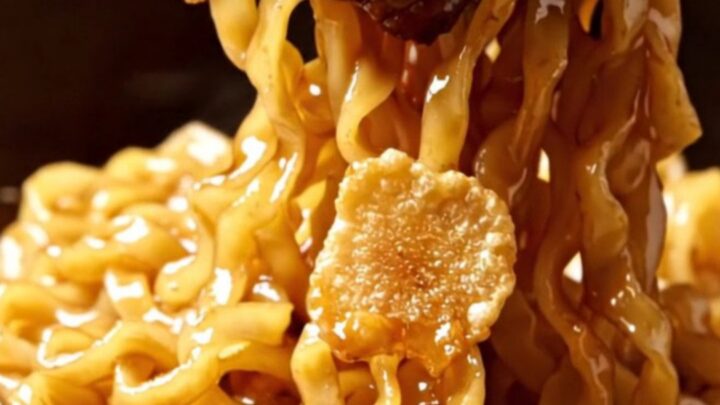
After the toss, every strand should shine with the soy-butter glaze, no pooling at the bottom of the pan. The final bowls hold lacquered noodles, glistening rested cubes, and a scatter of crisp garlic chips on top.
Common mistakes
The three failures here are all heat management. First, garlic fried over medium-high heat burns in seconds and drags bitterness into the butter — keep it at medium-low and pull the chips the moment they turn pale gold, since carryover heat finishes them. Second, crowding the pan with all the cubes at once drops the surface temperature and steams the beef grey instead of searing it; use two batches if the cubes touch.
How to tell it’s done
The Wagyu cubes are done when they read 145°F (63°C) at the center on an instant-read thermometer, with a deep caramelized crust on every face and a rosy, juicy interior — then rest them at least 3 minutes before serving.
Visually, look for even browning without grey, weeping edges, and a crust that crackles faintly when tapped with tongs. The noodles are done when they bend without snapping and carry a slight bite; they finish softening in the glaze.
- Steaks, chops and roasts: 145°F (63°C) in the thickest part, then a 3-minute rest
Up next · Part 3 of 3
4 variations · storage & make-ahead · 5 answers · printable card
Tips, FAQ & printable recipe (Part 3)← Back to the ingredients (Part 1)