Dinner · Part 1 of 3: Ingredients
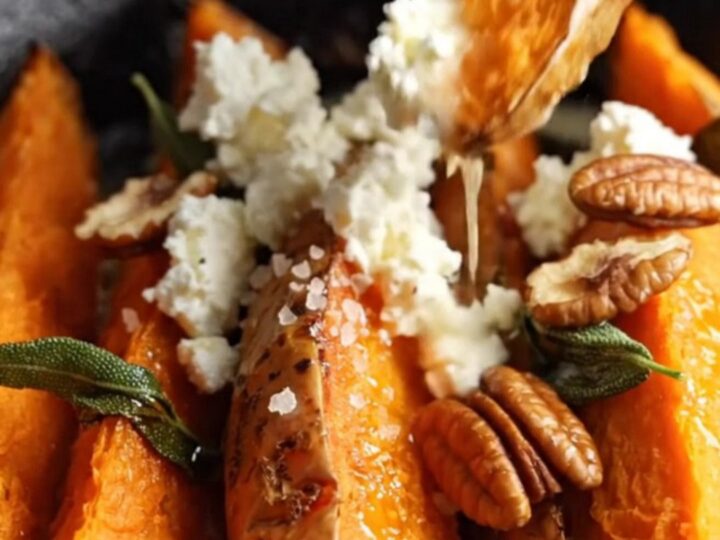
Crispy Accordion Sweet Potato Wedges with Brown Butter Sage
- Prep
- Cook
- Total
- Serves
- 4
Cut a few slits along the back of a sweet potato wedge and everything changes. Those tiny accordion ridges fan open in the oven, multiplying the surface area that touches the hot pan, so every wedge roasts up crackly and caramelized outside while the middle stays creamy. Basted with foaming brown butter, crispy sage and toasted pecans, then showered with goat cheese crumbles, this is the side dish that disappears first.
Accordion sweet potato wedges look like they took all afternoon, and they absolutely did not. The only extra work beyond an ordinary roasted wedge is a few minutes of careful knife work with a pair of chopsticks as a guide. Once the wedges hit a 425°F oven, the ridges do the rest: they crisp, they char at the tips, and they open like little fans, ready to catch every drop of the brown butter baste.
A spoonful of nutty butter, fried sage leaves and pecans goes over the top while everything is still sizzling, and crumbled goat cheese and flaky salt finish the pan. Cut them thick, slice them shallow, and roast them hot — the method is simple, but the result eats like something from a restaurant's small-plates menu.
Ingredients
- 2 medium sweet potatoes (about 1 1/2 lb), scrubbed
- 3 tbsp olive oil
- 1 tbsp maple syrup
- 1 tsp kosher salt, divided
Brown butter baste
- 4 tbsp unsalted butter (50 g)
- 10 fresh sage leaves
- 1/3 cup pecans (40 g), roughly chopped
Topping
- Flaky sea salt, to taste, for finishing
- 2 oz fresh chevre, crumbled
Why this recipe works
The accordion cut works because it multiplies surface area without thinning the wedge. A plain wedge offers one flat face to the heat, so the outside softens before it ever truly crisps.
Slice the back into 3 mm ridges and each wedge presents a dozen thin flanges that dehydrate and caramelize fast, while the uncut base keeps enough mass to stay tender and sweet. Brushing the oil and maple syrup deep into the slits coats every ridge individually, so the sugar caramelizes on each flange rather than pooling in one spot.
The brown butter baste does double duty. Browning the butter drives off water and toasts the milk solids, which concentrates flavor and means the fat can sizzle against the hot wedges instead of steaming them.
Cooking the sage leaves and pecans in that hot butter crisps the leaves into something almost chip-like and toasts the nuts, so all three elements arrive at the pan seasoned by the same fat. Finishing with flaky salt and cold goat cheese layers texture on top of texture: brittle ridges, creamy cheese, crunchy nuts.
Notes and substitutions
Choose sweet potatoes that are plump and evenly shaped, without fibrous ends; uniform middles give you wedges of matching thickness, which is the whole game here. Pecans should be raw or lightly toasted already — they finish toasting in the butter either way. Use unsalted butter so you control the seasoning; salted butter plus the kosher salt and flaky finish can tip quickly into oversalted territory.
Chopsticks are the classic guide for the accordion slits, but two wooden spoons or even pencil-thin dowels work identically; anything that stops the blade about a quarter inch short of the board.
A rimmed baking sheet is fine for roasting, but a cast-iron skillet makes a dramatic serving vessel and holds heat beautifully at the table. If goat cheese is not your thing, feta crumbles bring a similar salty tang with a firmer bite.
- Pecans: Toasted walnuts or hazelnuts work the same way; chop them coarsely so they toast evenly in the brown butter.
- Goat cheese: Crumbled feta or whipped ricotta both bring the same creamy, tangy contrast to the hot wedges.
- Fresh sage: Use 1 tsp dried rubbed sage stirred into the brown butter; add it at the end so it does not scorch.
- Maple syrup: Honey works in the same amount, brushed with the oil for the same caramelized edges.
Equipment
- Chef's knife
- Cutting board
- Two chopsticks or wooden spoons
- Pastry brush
- Rimmed baking sheet
- Cast-iron or oven-safe skillet
- Small saucepan
Up next · Part 2 of 3
8 steps · 40 min of cooking · what to look for at each stage
Step-by-step instructions (Part 2)