Dinner · Part 2 of 3: Instructions
Crispy Accordion Sweet Potato Wedges with Brown Butter Sage Step-by-step instructions
- Prep
- Cook
- Total
- Serves
- 4
Before you start
Set up the cutting station before the knife comes out: a stable board, a damp towel underneath so nothing slides, a sharp chef's knife, and two chopsticks laid out where you can grab them. Scrub the sweet potatoes under running water and dry them completely — wet skin slips under the blade.
Pull the sage leaves from their stems, roughly chop the pecans, crumble the goat cheese while it is cold, and set out the olive oil, maple syrup and kosher salt with a small bowl for whisking. Line up the baking sheet and the small saucepan for the butter. With everything staged, the accordion slicing takes ten unhurried minutes, and the oven can preheat to 425°F (220°C) while you work.
Ingredients at a glance (9)
- 2 medium sweet potatoes (about 1 1/2 lb), scrubbed
- 3 tbsp olive oil
- 1 tbsp maple syrup
- 1 tsp kosher salt, divided
- 4 tbsp unsalted butter (50 g)
- 10 fresh sage leaves
- 1/3 cup pecans (40 g), roughly chopped
- Flaky sea salt, to taste, for finishing
- 2 oz fresh chevre, crumbled
Instructions
Prep and accordion slicing
- Cut the wedgesScrub the sweet potatoes and pat them dry. Trim the ends, halve each potato crosswise, then cut each piece lengthwise into 8 thick wedges so you have about 8 sturdy wedges per potato. Aim for wedges of even thickness so they roast at the same rate.Look for Each wedge should be roughly 1 inch thick at its widest point, with flat cut faces and one rounded back.Tip A sharp chef's knife matters here; a dull blade crushes the flesh and makes ragged wedges that steam instead of crisp.
- Slice the accordion slitsLay a wedge flat side down on the board and rest two chopsticks snugly against its long sides. Slice crosswise into the curved back every 3 mm; the chopsticks stop the knife before it cuts all the way through. Repeat with every wedge, working slowly and calmly.Look for The slits should run evenly along the back, stopping about 1/4 inch short of the bottom of each wedge.Tip Keep the cut wedges in a bowl of cold water for 10 minutes to release surface starch, then dry them thoroughly for maximum crisp edges.
- Oil and seasonWhisk the olive oil with the maple syrup and 1/2 tsp of the kosher salt. Brush the mixture generously over every wedge, working it down into the slits so each ridge is coated. Arrange the wedges slit side up on a rimmed baking sheet, spaced well apart.Look for Every ridge glistens with the oil mixture and no dry patches of flesh remain on the cut faces.Tip Space the wedges at least an inch apart; crowding traps steam and softens the ridges you worked to create.
At the end of this phase you should have eight thick, even wedges per potato, each with fine 3 mm slits running along the curved back that stop short of the base. The wedges should feel intact and springy, not floppy, and no slit should have cut clean through. Every surface glistens with the oil and maple syrup mixture, and the wedges sit spaced apart on the sheet, slit side up. If any wedge split, press it back together gently — it will fuse as it roasts.
Roast and brown butter baste
- Roast the wedgesHeat the oven to 425°F (220°C). Roast the wedges on the middle rack for 35 minutes, rotating the pan once halfway through. The slits fan open as the ridges caramelize, and the tips deepen to a deep orange-brown with lightly charred edges.Look for The ridges have fanned wide, the tips are charred at the edges, and a thin knife slides into the base with no resistance.Tip If the tips darken faster than the bases cook through, tent the pan loosely with foil for the last 10 minutes.
- Brown the butter with sage and pecansWhile the wedges roast, melt the butter in a small saucepan over medium heat. Swirl often as it foams; after 3 to 4 minutes the milk solids turn hazelnut brown and smell nutty. Drop in the sage leaves and pecans and cook 1 minute more until the leaves crisp.Look for The butter smells toasty and nutty, the milk solids are golden brown, and the sage leaves are crisp but still green.Tip Pull the pan off the heat the moment the solids turn brown; butter goes from nutty to burnt in under a minute.
- Baste the hot wedgesTransfer the hot wedges to a cast-iron skillet or straight back onto the sheet. Spoon the foaming brown butter over them, letting the sage leaves, pecans and browned solids land on and between the ridges. Toss gently so every wedge catches some of the butter.Look for The butter sizzles on contact and pools briefly in the slits before soaking in; the ridges glisten.Tip Baste while the wedges are piping hot so the butter soaks into the slits instead of sitting on the surface.
The wedges come out of the oven with ridges fanned wide, tips charred at the edges, and a thin knife sliding through the base without resistance. The brown butter smells nutty and toasty, the sage leaves are crisp and dark green, and the pecans have taken on color. When the butter hits the hot wedges it should sizzle audibly and pool briefly in the slits. Before moving on, taste one ridge: it should crackle, with a creamy interior behind it.
Finish and serve
- Finish with salt and goat cheeseScatter the crumbled chevre over the hot wedges so it softens slightly from the residual heat. Finish with a pinch of flaky sea salt, letting a few flakes fall into the slits. Serve straight from the skillet while the ridges are still crisp.Look for The cheese just begins to soften at the edges, the sage is brittle, and the ridges still crackle when nudged.Tip Crumble the cheese while cold for clean, distinct crumbles that hold their shape on the hot wedges.
- Serve immediatelyBring the skillet to the table and let everyone take a wedge whole. The contrast is the point: a shattering, caramelized outside, a molten sweet interior, and buttery, salty, tangy toppings in every bite. Have napkins ready and expect the pan to empty fast.Look for A wedge snaps at the ridges when bitten and the interior gives way creamy and tender.Tip Leftover brown butter in the pan is excellent drizzled over roasted carrots or stirred into mashed potatoes the next day.
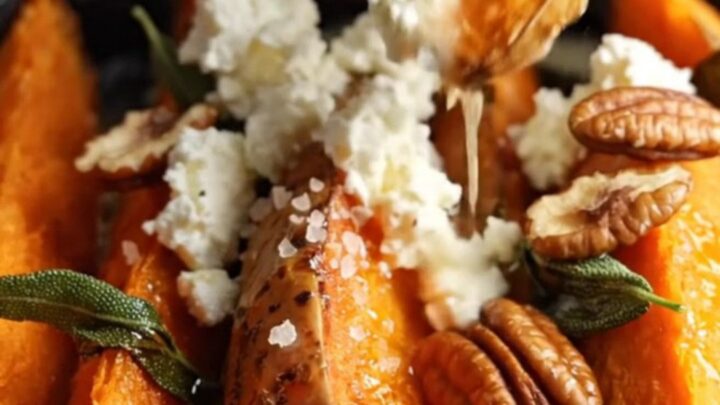
The goat cheese crumbles have softened slightly at their edges from the residual heat but still hold their shape, and flakes of sea salt catch the light on the caramelized ridges. The skillet should still be sizzling faintly when it reaches the table, the sage leaves brittle, the pecans glossy with butter.
Check the crispness one last time before serving: nudge a wedge and listen for the crackle. If the pan has sat more than ten minutes, flash it back in the hot oven for 3 to 4 minutes.
Common mistakes
The most common failure is cutting the slits too deep — if the knife goes all the way through, the wedge falls apart on the sheet, so keep the chopsticks pressed firmly against the sides. The second mistake is crowding: wedges touching each other steam instead of roast, and the ridges go leathery instead of crisp.
Undried wedges cause the same problem, so pat them dry after any water soak. Watch the butter closely; it turns from hazelnut to burnt in under a minute, and burnt butter cannot be fixed — start over with a fresh knob. Finally, do not baste cold wedges; butter applied to cool sweet potato just sits on the surface instead of soaking into the slits.
How to tell it’s done
The wedges are done when the accordion ridges have visibly fanned apart, the tips carry patches of deep char, and a thin paring knife inserted at the solid base meets no resistance. The color should move from bright orange to a burnished, deep caramel orange, and the pan should smell of toasted sugar.
There is no raw protein in this recipe, so no internal temperature is required — tenderness at the base is the test. The butter should smell nutty, never burnt, and the sage leaves should be crisp enough to crumble between two fingers. Serve within minutes of the baste; the ridges are at their crispiest while the pan is still hot.
Up next · Part 3 of 3
4 variations · storage & make-ahead · 5 answers · printable card
Tips, FAQ & printable recipe (Part 3)← Back to the ingredients (Part 1)