Dinner · Part 3 of 3: Tips & recipe card
Seared Swordfish with Tomato, Olive and Caper Skillet Sauce Tips, FAQ & printable recipe
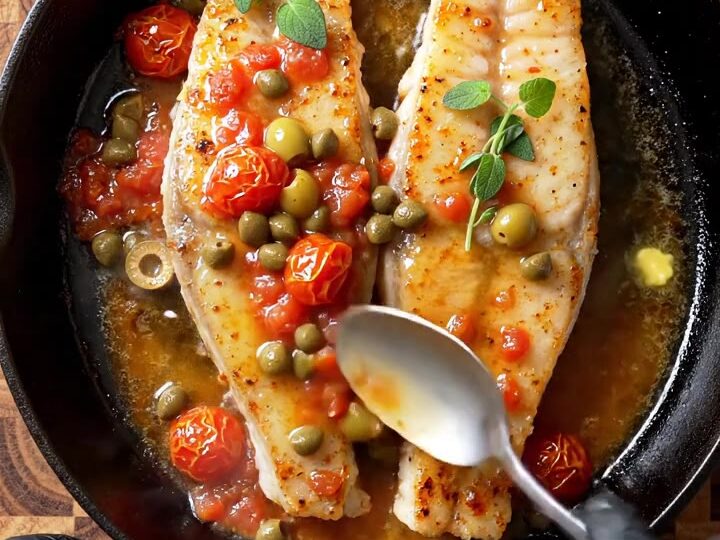
- Prep
- Cook
- Total
- Serves
- 4
Tips for success
Use fresh cherry tomatoes that are firm and fully ripe, since they blister well and release sweet juices into the sauce. If the tomatoes are very watery, drain them briefly on paper towels before adding them to the hot pan. Cut each tomato in half through the stem end so the cut side makes contact with the skillet and browns evenly.
Taste the sauce before you add the butter. Capers and olives are salty, so the sauce may need only a small pinch of kosher salt, or none at all. Add black pepper at the end. Keep the lemon half for the final squeeze, because a little fresh juice at the table lifts the whole plate and balances the richness of the butter and cheese.
Variations
- Lemon-Heavy Version: Increase the lemon by squeezing the juice of a second lemon into the pan sauce just before the butter melts. The extra acidity brightens the tomatoes and olives, giving the swordfish a sharper, fresher finish that suits warm evenings and light summer dinners.
- Extra Olive Version: Add a second handful of halved green olives and a spoonful of their brine to the pan sauce. The brine adds savoury depth, and the extra olives give each bite more briny character, which pairs especially well with the buttery pan juices and the grated aged cheese.
- Herb-Forward Version: Add a small handful of chopped flat-leaf parsley along with the basil at the end, scattering both over the swordfish. The extra green herb adds freshness and colour, making the plate look even brighter while keeping the same tomato, olive and caper sauce.
- Halibut Version: Swap the swordfish for thick halibut steaks of similar size, searing them the same way and basting until opaque. Halibut is milder and flakier, so it takes on the tomato, caper and olive flavours gently and suits guests who prefer a lighter fish.
Storage and make-ahead
- Fridge
- Store leftovers in an airtight container in the refrigerator for 1 to 2 days, and reheat gently until the fish is steaming hot.
- Reheat
- Reheat gently in a covered skillet over low heat with a splash of water, until the fish is hot all the way through.
Leftover swordfish and its sauce should be cooled for no more than 2 hours at room temperature before they go into the refrigerator. Transfer the fish and tomatoes to a shallow airtight container so they cool quickly and evenly.
Keep the grated hard aged cheese and the basil separately, since basil darkens and loses flavour once cut and stored with the warm sauce. Eat the leftovers within 1 to 2 days for the best flavour and texture, and make sure the fish is reheated until steaming hot before serving.
You can prepare most of the components up to a day in advance, which makes this dish easier to pull together on a weeknight. Halve the cherry tomatoes, pit and halve the olives, drain the capers, and store each in a separate covered container in the refrigerator. Grate the hard aged cheese and keep it sealed in a small bowl.
Season the swordfish just before cooking, not in advance, so the salt does not draw out moisture and affect the sear. Pat the steaks dry immediately before they go into the hot skillet. Keep the lemon and basil until serving, since both taste best when freshly cut. With the components ready, the cooking itself takes only about 12 minutes once the pan is hot.
Serving ideas
Serve the swordfish straight from the cast-iron skillet, placing the steaks in the centre with the blistered tomatoes, olives and capers scattered around them.
Spoon extra glossy pan sauce over each portion so every serving gets plenty of golden juices. Crusty bread is ideal for soaking up the sauce, and a simple green salad with lemon dressing makes a bright companion without competing with the fish.
Finish each plate with fresh basil leaves, a final squeeze of lemon juice over the swordfish, and a small pile of finely grated hard aged cheese on the side.
Pour a cool, crisp white wine with the meal if you like, and serve immediately while the sauce is still warm and the fish is at its best. Because the dish is simple and fresh, it works well for a relaxed weeknight dinner or a casual gathering.
Frequently asked questions
Can swordfish be cooked without a cast-iron skillet?
How do you know when swordfish is done?
Can the tomatoes and olives be prepared in advance?
What can you use in place of capers?
Why does the pan sauce look split or greasy?
Seared Swordfish with Tomato, Olive and Caper Skillet Sauce
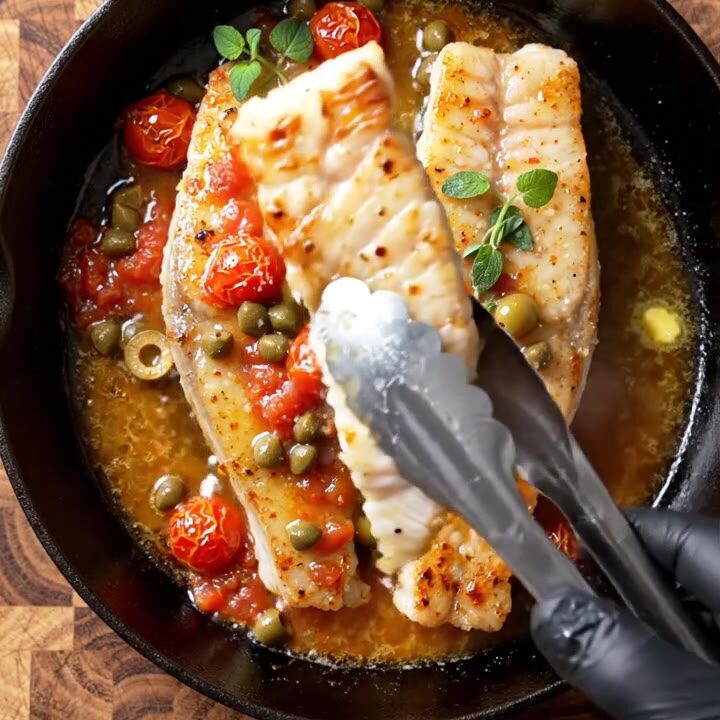
Ingredients
- 4 swordfish steaks, about 1 inch thick
- 1 lemon, halved
- 2 tbsp extra-virgin olive oil
- 1 cup cherry tomatoes, halved
- 1/2 cup green olives, pitted and halved
- 2 tbsp capers, drained
- 2 tbsp unsalted butter
- 1/2 cup finely grated hard aged cheese, such as Parmesan
- fresh basil leaves for serving
- kosher salt and black pepper, to taste
Instructions
- Pat the swordfish steaks dry with paper towels and season both sides generously with kosher salt and black pepper. Set them on a plate near the stove, and squeeze a lemon half over them just before cooking so the juice clings to the surface.
- Cut the cherry tomatoes in half and set them aside with the green olives and capers. Keep the halved lemon nearby for the final squeeze over the finished dish.
- Heat the olive oil in the cast-iron skillet over medium-high heat until it shimmers. Lay the swordfish steaks in the pan and sear them, without moving them, until the edges turn golden, about 3 to 4 minutes. Turn each steak carefully with a fish spatula.
- Push the swordfish to one side of the skillet, or set it briefly on a plate. Add the halved cherry tomatoes, green olives and capers to the pan. Cook them, stirring now and then, until the tomatoes blister and soften, about 3 to 4 minutes.
- Add the butter to the pan and let it melt into the tomatoes, olives and capers. Stir gently to form a glossy, golden pan sauce, then return the swordfish to the skillet.
- Spoon the warm pan sauce over the swordfish again and again, basting the top of each steak. Continue until the fish turns opaque all the way through and flakes easily at the thickest point, reaching 145°F (63°C) on an instant-read thermometer.
- Serve the dish straight from the skillet, with the tomatoes, olives and capers scattered around the swordfish. Tear or scatter fresh basil leaves over the top, then squeeze the remaining lemon half over the fish.
- Pile the finely grated hard aged cheese in a small mound on the side of the skillet or over the fish as a finishing garnish. Serve the swordfish hot while the sauce is still glossy.
Estimated nutrition per serving
- Calories
- 390
- Protein
- 35 g
- Carbohydrates
- 8 g
- Fat
- 24 g
- Fiber
- 2 g
- Sugar
- 3 g
- Sodium
- 780 mg
Next recipe

Brown Butter Seared Sea Scallops with Sage and Squash in One Skillet
See the recipe → →This recipe is based on a short cooking video and is published under the pen name Clara Weller. It was checked before publication, but errors can slip through. Nutrition, when shown, is an estimate. Read more in our editorial policy and on our food safety page.
More recipes to try

Crispy Eggplant Parmesan with Molten Mozzarella in One Skillet
Total time: 55 min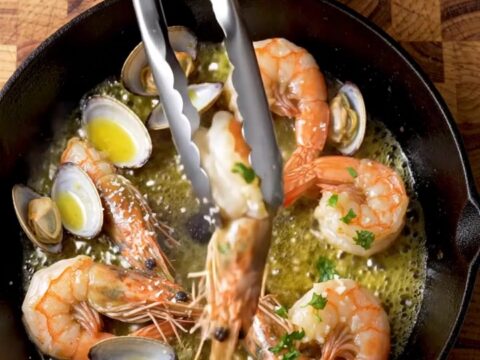
Garlic Butter Clam and Prawn Skillet in One Pan
Total time: 27 min
Truffle Four Cheese Mac and Cauliflower Skillet with Crispy Panko
Total time: 1 h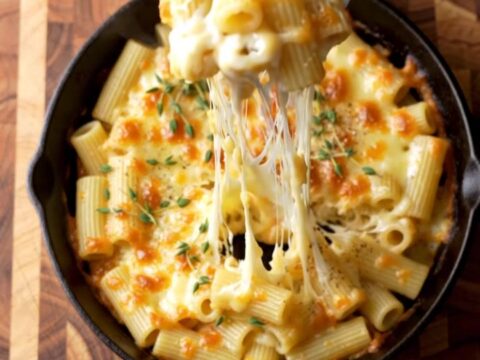
French Onion Rigatoni Skillet with Gruyere and Parmesan
Total time: 1 h 20 min
Crispy Eggplant Parmesan Skillet with Molten Mozzarella and Burrata
Total time: 1 h 30 min