Dinner · Part 1 of 3: Ingredients
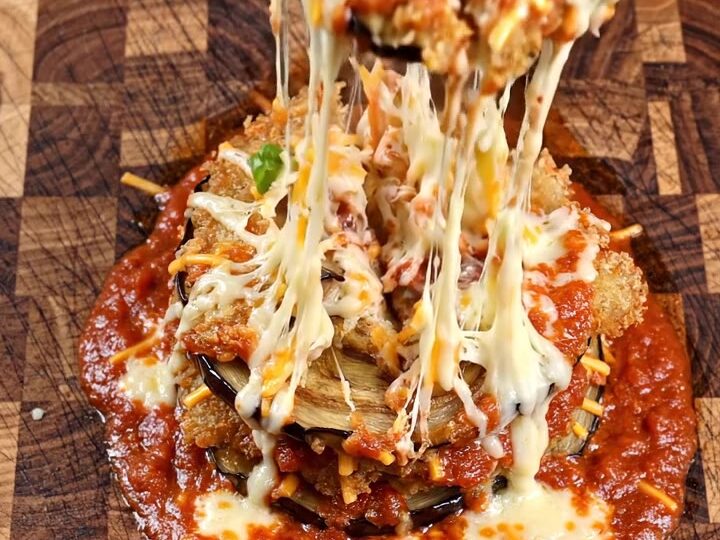
Crispy Eggplant Parmesan Skillet with Molten Mozzarella and Burrata
- Prep
- Cook
- Total
- Serves
- 4
A skillet of golden, crispy eggplant rounds, a thick layer of tomato sauce and cheese that stretches with every cut. This eggplant parmesan is built in a single cast iron pan, so it moves from the stovetop to the oven without extra dishes. Here is how to get a crust that stays crisp under the sauce and a center that melts into creamy, bubbling layers.
Eggplant parmesan has a reputation for turning soggy, but this skillet version works around that problem. The rounds are salted and dried first, then breaded and fried in a shallow layer of hot oil until they are truly crisp. Only after that do they meet the tomato sauce, mozzarella and burrata.
The result is a dish with contrast at every bite: a crisp golden coating, bright sauce, and cheese that turns molten in the oven. You will need one cast iron skillet, a cutting board, a box grater for the Parmesan, and three shallow dishes for breading. The layers are simple, but each one has a job, and the method below keeps the eggplant crisp while the cheese melts through.
Ingredients
- 1 whole eggplant (about 1 1/2 lb), sliced into 1/2-inch rounds
- 3 cloves garlic, peeled and smashed
Breading
- 1/2 cup all-purpose flour, for dredging
- 2 large eggs, beaten
- 1 cup plain dry breadcrumbs
- 1/2 cup finely grated Parmesan cheese, plus more for topping
- 1/4 cup olive oil, for frying
- 2 cups tomato sauce, store-bought or made ahead
- 8 oz block mozzarella, shredded
- 1 ball (8 oz) burrata, torn into pieces
- 1/2 cup fresh basil leaves, plus a sprig for garnish
- Kosher salt and black pepper, to taste
Why this recipe works
Salting the eggplant draws out moisture before frying, which is the main reason many versions turn limp. Patting the rounds dry afterward lets the flour, egg and breadcrumb coating grip the surface and brown properly in hot oil.
Frying in batches keeps the oil hot, so each slice absorbs less oil and comes out crisp rather than greasy. This first stage sets up the texture that the rest of the dish depends on.
The cast iron skillet holds heat evenly and moves from the stovetop straight into the oven, so the layers cook in one vessel with no transfer that could cool or smear them.
Thin layers of tomato sauce keep the eggplant above the liquid, while the cheese melts on top and softens the edges of each layer. A short rest after baking lets the cheese set enough to cut into clean wedges that hold their shape on the plate.
Notes and substitutions
Use a firm, glossy eggplant with smooth skin and no soft spots. Cut the rounds evenly, about 1/2 inch thick, so they fry at the same speed. Plain dry breadcrumbs give a fine, even coat, and a generous handful of finely grated Parmesan in the crumbs adds savory flavor and extra crunch. Mozzarella should be the block sold for shredding, since it melts smoothly and stretches well.
You need a 10-inch cast iron skillet that is safe for the oven, a sturdy cutting board, a chef's knife, a box grater and three shallow dishes for the flour, egg and breadcrumb stations.
Tongs help you lift the rounds from the hot oil without tearing the coating. If you do not own cast iron, use an oven-safe skillet of similar size. The sauce can be store-bought or made ahead, which keeps the assembly quick on a weeknight.
- plain dry breadcrumbs: Panko breadcrumbs for an even crispier coating, which also contain gluten
- burrata: extra fresh mozzarella, torn into pieces, for a milder and less creamy center
- olive oil: Avocado oil or other neutral oil with a high smoke point
Equipment
- 10-inch cast iron skillet
- cutting board
- chef's knife
- box grater
- three shallow dishes for breading
- tongs
Up next · Part 2 of 3
7 steps · 45 min of cooking · what to look for at each stage
Step-by-step instructions (Part 2)