Dinner · Part 2 of 3: Instructions
Crispy Eggplant Parmesan Skillet with Molten Mozzarella and Burrata Step-by-step instructions
- Prep
- Cook
- Total
- Serves
- 4
Before you start
Gather all the ingredients before you turn on the stove, since the breading and frying move quickly once the oil is hot. Slice the eggplant into even 1/2-inch rounds and salt them, then set them on paper towels to release moisture for about 15 minutes. Peel and smash the garlic cloves and tear the basil leaves into bite-size pieces, leaving one sprig whole for garnish.
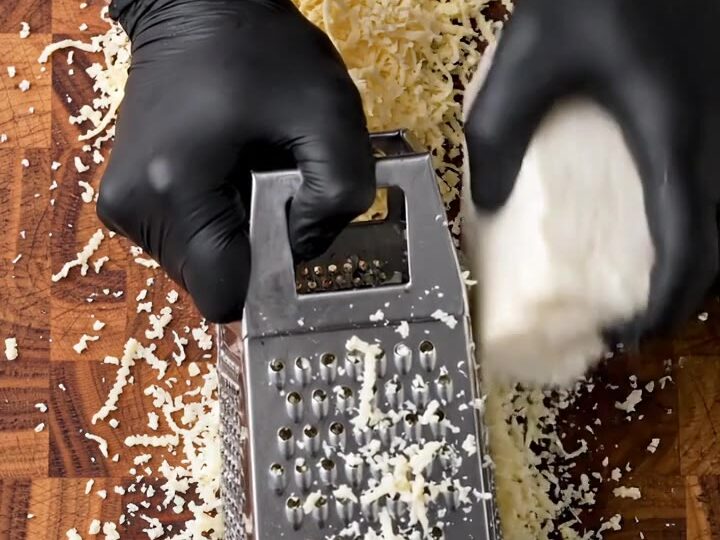
Grate the Parmesan finely and shred the mozzarella from its block. Set up three shallow dishes: seasoned flour, beaten eggs, and breadcrumbs mixed with grated Parmesan. Have a rack or a plate lined with paper towels ready for the fried rounds, and preheat your oven to 400°F (200°C) before you start frying. Keeping the stations organized prevents messy fingers and helps the coating stay even.
Ingredients at a glance (12)
- 1 whole eggplant (about 1 1/2 lb), sliced into 1/2-inch rounds
- 3 cloves garlic, peeled and smashed
- 1/2 cup all-purpose flour, for dredging
- 2 large eggs, beaten
- 1 cup plain dry breadcrumbs
- 1/2 cup finely grated Parmesan cheese, plus more for topping
- 1/4 cup olive oil, for frying
- 2 cups tomato sauce, store-bought or made ahead
- 8 oz block mozzarella, shredded
- 1 ball (8 oz) burrata, torn into pieces
- 1/2 cup fresh basil leaves, plus a sprig for garnish
- Kosher salt and black pepper, to taste
Instructions
Salt, dry and bread the eggplant
- Slice and salt the eggplantSlice the eggplant into even 1/2-inch rounds on a wooden board. Season both sides with kosher salt and set the rounds on paper towels for about 15 minutes so they release moisture, then pat them dry.Look for Beads of moisture form on the rounds and the slices feel slightly pliable.Tip Even slices cook at the same rate, so match the thickness as closely as you can.
- Prepare the garlic and breadingPeel and smash the garlic cloves and tear the basil leaves. Set up three shallow dishes: flour seasoned with salt and pepper, the beaten eggs, and the breadcrumbs mixed with the grated Parmesan.Look for The breadcrumb mix is evenly speckled with bright cheese and the eggs are smooth.Tip Grate the Parmesan finely so it toasts into the crumbs instead of burning.
The eggplant rounds have released moisture, feel slightly flexible and are patted dry. Each slice is coated in flour, then egg, then the Parmesan crumb mix, with no bare spots. The coating looks dry and even on both sides. Check that no slices are stuck together and that the breading is firm before you move on to frying. Discard excess crumbs in the dish so they do not burn in the oil, and keep the breaded rounds on a plate in a single layer so they stay dry until frying.
Fry the rounds until crisp
- Bread the eggplantDredge each slice in flour, dip it in the beaten egg, then press it firmly into the breadcrumb mixture so it is fully coated. Set the breaded rounds on a plate while you heat the oil.Look for Each round has an even, dry crust with no bare patches.Tip Shake off excess crumbs so the coating fries instead of flaking away.
- Fry the eggplant until goldenHeat the olive oil in the cast iron skillet over medium-high heat. Fry the breaded rounds in batches for 2 to 3 minutes per side until deep golden and crisp, then drain them on a rack.Look for The coating turns deep golden and the slices feel firm at the edges.Tip Keep the oil hot between batches and add a little more oil if the pan looks dry.
- Build the layers in the skilletSpoon a thin layer of tomato sauce into the cast iron skillet with the smashed garlic cloves. Arrange a layer of fried eggplant over the sauce, then add more sauce, a handful of shredded mozzarella and a few torn pieces of burrata.Look for The sauce is glossy and the eggplant sits in an even, overlapping layer.Tip Keep the sauce layer thin so the eggplant stays crisp under it.
Fry the breaded rounds in the hot olive oil for two to three minutes per side until the coating is deep golden and firm at the edges. Each slice should look evenly colored, with no pale patches and no dark, burnt spots.
Drain the rounds on a rack or paper towels so they stay crisp, and add a little oil between batches if the pan looks dry. Listen for a steady sizzle, not a violent spatter, which means the oil is hot enough without smoking. Crisp rounds at this stage are the foundation for a dish that does not turn soggy in the oven.
Layer, melt and rest
- Melt the cheese in the ovenRepeat the layers until the eggplant is used, finishing with sauce, shredded mozzarella and a sprinkle of Parmesan. Bake at 400°F (200°C) for 15 to 20 minutes until the cheese is melted and bubbling around the edges.Look for The cheese is fully melted, stretchy and bubbling along the rim of the skillet.Tip Set the skillet on the middle rack so the top melts while the base stays crisp.
- Finish with basil and restLet the skillet rest for about 10 minutes so the layers set. Scatter the torn basil leaves over the top and finish with a basil sprig, then cut into wedges to reveal the layers.Look for The cheese has firmed slightly and the layers hold their shape when cut.Tip Wait for the rest so the wedges lift cleanly instead of sliding apart.
Spread a thin layer of tomato sauce in the skillet, then add fried eggplant, more sauce, shredded mozzarella and torn burrata. Repeat until the eggplant is used, finishing with sauce, mozzarella and Parmesan. Bake at 400°F (200°C) for 15 to 20 minutes until the cheese has melted, bubbles along the rim and the top is lightly golden. Rest the skillet for about 10 minutes before cutting so the layers firm up. Check that the sauce is hot all the way through and that the cheese is fully melted before you serve.
Common mistakes
The most common problem is a soggy crust. This usually happens when the eggplant is not salted and dried, or when the oil is not hot enough, so the coating soaks up grease instead of crisping. Fry in small batches and let the oil return to temperature between them. Another mistake is burying the eggplant in too much sauce.
Keep each layer of sauce thin so the crust stays out of direct liquid. Cutting the skillet too soon is also a problem, since the layers slide apart before the cheese has set. Give the dish its full rest, and use a thin spatula to lift each wedge cleanly. Finally, do not over-grate the Parmesan into the crumbs, which can make the coating dense rather than crisp.
How to tell it’s done
The dish is done when the cheese is fully melted, stretchy and bubbling along the edges of the skillet, and the top is lightly golden in spots. The tomato sauce should be hot all the way through, with the eggplant coating still firm and crisp at the edges when you lift a slice. Look for a glossy, moist interior that holds its shape when cut.
The eggplant itself is cooked once the rounds are tender inside and golden outside, which happens during frying. Since this recipe contains no raw meat or poultry, there is no internal protein temperature to reach, but the cheese and sauce should both be steaming hot before you serve.
Up next · Part 3 of 3
4 variations · storage & make-ahead · 5 answers · printable card
Tips, FAQ & printable recipe (Part 3)← Back to the ingredients (Part 1)