Dinner · Part 1 of 3: Ingredients
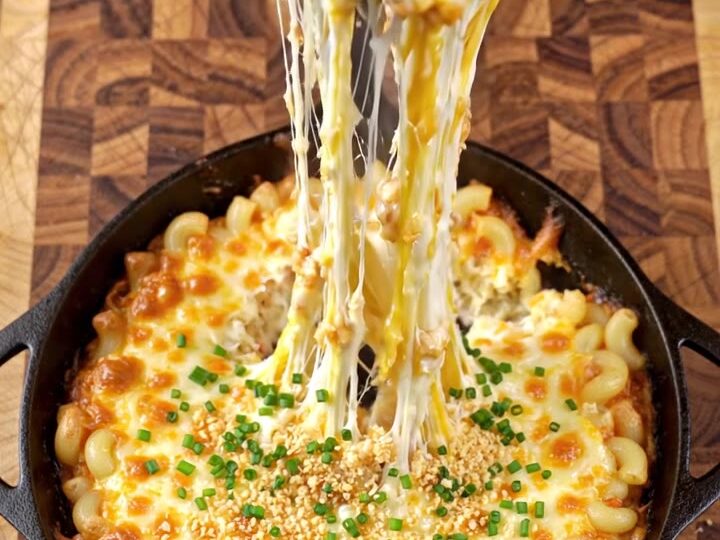
Truffle Four Cheese Mac and Cauliflower Skillet with Crispy Panko
- Prep
- Cook
- Total
- Serves
- 4
Imagine lifting a forkful of creamy, golden macaroni and watching long cheese strands stretch from the skillet. This one-pan dish pairs a glossy four cheese sauce with tender cauliflower, then finishes with a crisp panko crust. It is the comforting, cheesy dinner you can build in one cast-iron skillet with a few simple steps.
This truffle four cheese mac is built around a rich, smooth cheese sauce that coats every elbow macaroni and every floret of cauliflower. The blend combines sharp yellow cheddar with Gruyere, Parmesan and fontina, so the sauce tastes deep and nutty rather than flat.
A little truffle oil gives it an earthy aroma, and a layer of shredded cheese and golden panko on top turns it into a bubbling, crunchy casserole.
Everything is cooked and baked in a single 10-inch cast-iron skillet, so you can serve it straight from the pan. The method is simple: cook the pasta and cauliflower together, make a quick roux-based sauce, fold everything into the cheese, then bake until the edges are golden. Serve it as a main dish for four, or as a rich side next to a crisp green salad.
Ingredients
- 8 oz dry elbow macaroni
- 1 head cauliflower, broken into florets
- 2 cloves garlic cloves, minced
- fresh chives, chopped, to taste
Cheese sauce
- 8 oz sharp yellow cheddar cheese, freshly grated
- 3 tbsp unsalted butter
- 3 tbsp all-purpose flour
- 2 cups whole milk, warmed
- 4 oz Gruyere cheese, grated
- 2 oz Parmesan cheese, finely grated
- 2 oz fontina cheese, grated
- 1 tsp truffle oil
- kosher salt and black pepper, to taste
Topping
- 1/2 cup golden panko breadcrumbs
- 1/2 cup shredded yellow cheese
Why this recipe works
The cauliflower is added to the pasta water for the last few minutes, which softens it just enough to become tender without falling apart. Blanching it alongside the macaroni means both come out of the pot at the same time, ready to fold into the sauce. Their mild flavor lets the cheese stay in the spotlight, and the florets keep a pleasant bite in the finished dish.
A classic roux of butter and flour, whisked into warm milk, creates a stable sauce that will not split when the cheese goes in. Adding the cheese over low heat, a handful at a time, lets it melt evenly into a glossy, thick coating. Finishing the baked dish with more shredded cheese and panko gives you a layer of melted cheese underneath and a crisp, golden crust on top.
Notes and substitutions
Freshly grated cheese melts far more smoothly than pre-shredded cheese, which often contains anti-caking starch that keeps the sauce from becoming silky.
Grate the cheddar, Gruyere, Parmesan and fontina yourself on a box grater, and keep the Parmesan finely grated so it blends in without leaving flecks. Warm the milk before whisking so the sauce comes together without lumps.
A 10-inch cast-iron skillet is the ideal vessel: it holds heat evenly, goes straight from stove to oven, and gives you crisp edges all around. If you do not have one, use any oven-safe skillet or a 2-quart baking dish, and bake for the same time.
Truffle oil is optional but adds a distinct aroma; use it sparingly, since a teaspoon goes a long way. For a plain version, omit it and keep the cheese blend as written.
- Gruyere, fontina and Parmesan: use any melting cheeses you like, such as Monterey Jack or Gouda, keeping about 16 oz of grated cheese in total
- truffle oil: omit it, or use a pinch of finely grated black truffle for a more natural aroma
- panko breadcrumbs: plain dry breadcrumbs, though the crust will be less crisp
Equipment
- 10-inch cast-iron skillet
- large pot
- box grater
- chef's knife and cutting board
- colander
- wooden spoon
- two forks
Up next · Part 2 of 3
6 steps · 35 min of cooking · what to look for at each stage
Step-by-step instructions (Part 2)