Dinner · Part 2 of 3: Instructions
Seared Swordfish with Tomato, Olive and Caper Skillet Sauce Step-by-step instructions
- Prep
- Cook
- Total
- Serves
- 4
Before you start
Gather everything before you turn on the stove, because the swordfish needs close attention once it hits the pan. Pat the steaks dry with paper towels and season both sides with kosher salt and black pepper. Halve the cherry tomatoes, pit and halve the green olives, and drain the capers so they do not spatter in the hot oil.
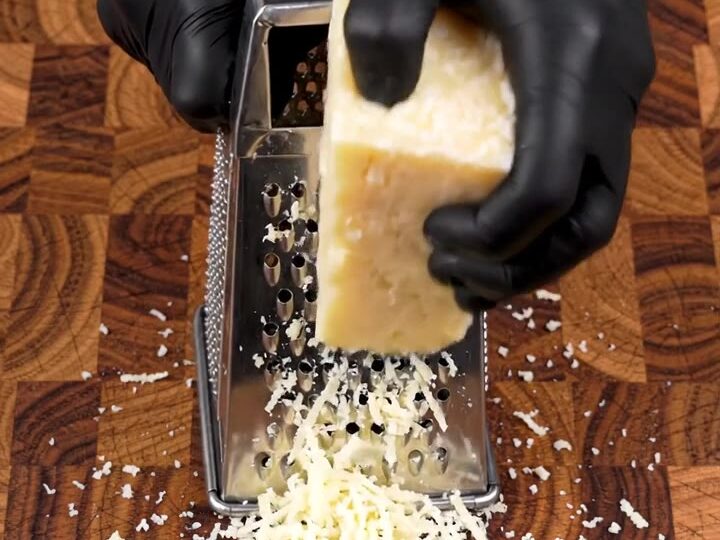
Grate the hard aged cheese finely on a box grater and set it aside in a small bowl. Halve the lemon, and tear or pick the basil leaves. Keep the swordfish refrigerated until you are ready to sear it, and do not leave it at room temperature for more than 30 minutes. Set a 12-inch cast-iron skillet on the stove so it is ready to heat, and place a fish spatula and a large spoon beside it for basting.
Ingredients at a glance (10)
- 4 swordfish steaks, about 1 inch thick
- 1 lemon, halved
- 2 tbsp extra-virgin olive oil
- 1 cup cherry tomatoes, halved
- 1/2 cup green olives, pitted and halved
- 2 tbsp capers, drained
- 2 tbsp unsalted butter
- 1/2 cup finely grated hard aged cheese, such as Parmesan
- fresh basil leaves for serving
- kosher salt and black pepper, to taste
Instructions
Sear and prepare the sauce base
- Season the swordfishPat the swordfish steaks dry with paper towels and season both sides generously with kosher salt and black pepper. Set them on a plate near the stove, and squeeze a lemon half over them just before cooking so the juice clings to the surface.Look for Steaks look dry and evenly seasoned, with no visible moisture on the surface.Tip Dry fish sears faster and browns better than wet fish. Keep the steaks in the refrigerator until you are ready to cook.
- Halve the tomatoes and olivesCut the cherry tomatoes in half and set them aside with the green olives and capers. Keep the halved lemon nearby for the final squeeze over the finished dish.Look for Tomato halves are cut cleanly and olives and capers are in a small bowl.Tip Drain the capers and pat the olives dry so the pan does not spatter when they go in.
The swordfish edges are golden and the steaks release cleanly from the pan when you lift them with a fish spatula. The tomatoes have started to blister and soften, the olives and capers are warm and fragrant, and the pan juices have begun to thicken slightly. Before you move on, check that the fish is still firm and holds its shape, and that the tomatoes are blistering rather than breaking down into a loose stew. If the pan looks dry, add a small splash of water and continue cooking. The skillet should smell of warm olive oil, tomato and briny olives, with no sharp or burnt aroma. Once the blistered tomatoes and glossy juices are in place, you can add the butter and start the sauce.
Melt the butter and baste the fish
- Sear the swordfishHeat the olive oil in the cast-iron skillet over medium-high heat until it shimmers. Lay the swordfish steaks in the pan and sear them, without moving them, until the edges turn golden, about 3 to 4 minutes. Turn each steak carefully with a fish spatula.Look for Edges turn golden and the steaks release easily from the pan.Tip Let the pan get hot before adding the fish so the steaks sear rather than steam.
- Blister the tomatoes and olivesPush the swordfish to one side of the skillet, or set it briefly on a plate. Add the halved cherry tomatoes, green olives and capers to the pan. Cook them, stirring now and then, until the tomatoes blister and soften, about 3 to 4 minutes.Look for Tomato skins split and blister while the olives and capers warm through.Tip Keep the heat at medium-high so the tomatoes blister instead of breaking down into a stew.
- Melt butter into the sauceAdd the butter to the pan and let it melt into the tomatoes, olives and capers. Stir gently to form a glossy, golden pan sauce, then return the swordfish to the skillet.Look for The butter foams, then turns the pan juices glossy and golden.Tip Add the butter once the tomatoes have blistered so it does not burn before the sauce forms.
- Baste the fish until cookedSpoon the warm pan sauce over the swordfish again and again, basting the top of each steak. Continue until the fish turns opaque all the way through and flakes easily at the thickest point, reaching 145°F (63°C) on an instant-read thermometer.Look for Fish turns opaque and flakes easily when pressed at the thickest part.Safe temperature 145°F (63°C) internal temperature (fish)Tip Baste with a large spoon so the sauce coats the top of each steak as it cooks.
The butter has melted into a glossy, golden sauce that coats the tomatoes, olives and capers. Spoon it over the swordfish, and check that the fish is turning opaque from the outside toward the centre. Press the thickest part gently with a spoon: it should flake easily and look white rather than translucent. Use an instant-read thermometer to confirm that the centre reaches 145°F (63°C).
If the sauce begins to darken too much, lower the heat slightly. The pan should smell rich and buttery, with a clean fish aroma and no burnt notes. When the fish is opaque, flaky and at the correct temperature, remove the pan from the heat so the steaks do not overcook while they rest briefly before serving.
Plate, garnish and serve
- Plate in the skilletServe the dish straight from the skillet, with the tomatoes, olives and capers scattered around the swordfish. Tear or scatter fresh basil leaves over the top, then squeeze the remaining lemon half over the fish.Look for Basil is bright green and the lemon juice glistens on the fish.Tip Squeeze the lemon just before serving so the juice stays fresh and bright.
- Finish with grated cheesePile the finely grated hard aged cheese in a small mound on the side of the skillet or over the fish as a finishing garnish. Serve the swordfish hot while the sauce is still glossy.Look for A fine pile of cheese shavings sits neatly on the plate.Tip Grate the cheese just before serving so it stays light and fluffy on the fish.
The swordfish sits in the skillet with the tomatoes, olives and capers scattered around it, and the sauce is glossy and golden. Fresh basil is bright green on top, and the lemon juice has been squeezed over the fish just before serving, so it looks fresh and vivid. The grated cheese forms a light, fine pile on the side and has not melted into the sauce. Check that the fish flakes easily and that the centre is no longer translucent. Confirm the temperature of 145°F (63°C) before serving. Serve immediately while the sauce is still warm and glossy, since basil wilts and cheese loses its texture if the dish sits for long.
Common mistakes
The most common mistake is moving the swordfish too early. If you lift or turn the steaks before the edges have formed a golden crust, they will stick to the pan and tear. Wait until the fish releases easily, then turn it once. Another frequent error is crowding the skillet: if the tomatoes, olives and capers are piled on top of the fish or packed tightly together, they steam instead of blistering, and the sauce becomes watery.
Cook them in a single layer with space around the fish. Overcooking is also easy with swordfish, which dries out quickly once it passes the point of doneness. Remove it from the heat as soon as it reaches 145°F (63°C). Finally, do not add the butter when the pan is too hot, or it will brown quickly and taste bitter.
How to tell it’s done
Swordfish is done when the flesh turns opaque all the way through and flakes easily when pressed with a fork at the thickest point. The centre should no longer look translucent or glassy. For a precise check, insert an instant-read thermometer into the thickest part of a steak, away from the pan. It should register 145°F (63°C), which is the safe internal temperature for fish.
The edges should be golden and the sauce glossy, with the tomatoes softened and blistered. If the flesh still looks pink and translucent in the middle, return it to the pan for another minute or two, basting with the sauce, and check again. Avoid cooking it past this point, because swordfish dries out and becomes dense once it is overdone.
- Fish: 145°F (63°C) in the thickest part
Up next · Part 3 of 3
4 variations · storage & make-ahead · 5 answers · printable card
Tips, FAQ & printable recipe (Part 3)← Back to the ingredients (Part 1)