Dinner · Part 1 of 3: Ingredients
Seared Swordfish with Tomato, Olive and Caper Skillet Sauce
- Prep
- Cook
- Total
- Serves
- 4
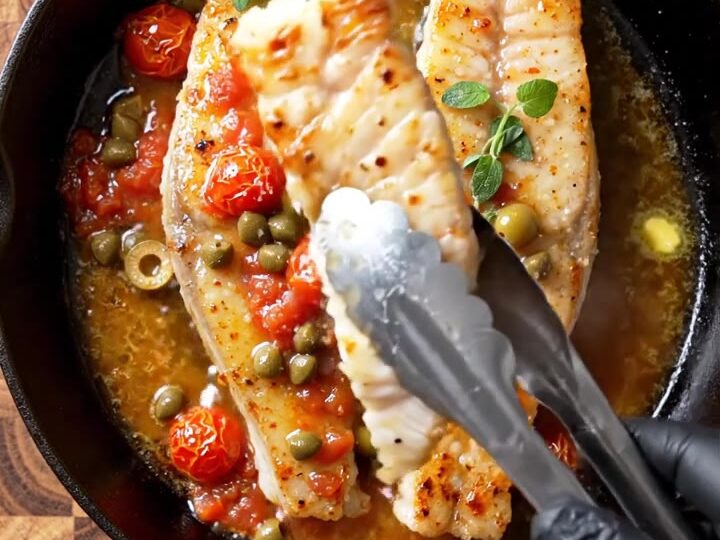
Swordfish steaks go straight into a hot cast-iron skillet, where the edges turn golden in minutes. Cherry tomatoes blister alongside green olives and capers, and a pat of butter turns the pan juices into a glossy sauce. The whole dinner comes together in one pan, from searing to serving, and needs only a few minutes of hands-on work.
This Mediterranean skillet dinner is built around thick swordfish steaks, which hold their shape and stay moist under high heat. Halved cherry tomatoes, green olives and capers cook in the same pan as the fish, so their juices and salty brightness become the sauce.
A pat of butter melts into those juices and gives the sauce its golden, glossy finish. Halved lemon adds freshness at the start and at the end, and a handful of fresh basil and a little grated hard aged cheese finish the plate. Serve it straight from the skillet with some crusty bread to spoon up the sauce.
Ingredients
- 4 swordfish steaks, about 1 inch thick
- 1 lemon, halved
- 2 tbsp extra-virgin olive oil
- 1 cup cherry tomatoes, halved
- 1/2 cup green olives, pitted and halved
- 2 tbsp capers, drained
- 2 tbsp unsalted butter
- 1/2 cup finely grated hard aged cheese, such as Parmesan
- fresh basil leaves for serving
- kosher salt and black pepper, to taste
Why this recipe works
Searing the swordfish first builds a golden crust on the edges while the centre stays tender. The high heat of a cast-iron skillet creates that browning quickly, so the fish is seared on the outside before it overcooks inside. Turning the steaks only once keeps the crust intact and the flesh firm enough to lift with a fish spatula.
Adding the tomatoes, olives and capers after the fish gives them time to blister and soften without burning. Their natural juices release into the hot oil and mix with the fat from the fish.
When the butter is melted in at the end, the mixture emulsifies into a glossy, golden sauce that clings to the fish. Basting the swordfish with that sauce keeps the top moist as the centre cooks through.
Notes and substitutions
Choose swordfish steaks about 1 inch thick so they cook through without drying out at the edges. Ask the fishmonger for center-cut pieces that are even in thickness, since thin tail ends cook faster than the thicker middle.
Pat the steaks dry before seasoning so they sear rather than steam, and keep them cold until you are ready to cook.
A 12-inch cast-iron skillet holds all four steaks in one layer and keeps the heat steady, which is why it is the best pan for this recipe. A box grater is useful for the hard aged cheese, which should be finely grated into a light pile.
A fish spatula lifts the delicate steaks without tearing them. If you do not have cast iron, use a heavy stainless steel or carbon steel skillet of similar size.
- swordfish steaks: halibut or tuna steaks of similar thickness, cooked for the same time until opaque
- hard aged cheese: aged Pecorino Romano, finely grated
- cherry tomatoes: grape tomatoes, halved
Equipment
- 12-inch cast-iron skillet
- box grater
- wooden cutting board
- fish spatula
- small bowl for the olives and capers
Up next · Part 2 of 3
8 steps · 12 min of cooking · what to look for at each stage
Step-by-step instructions (Part 2)