Dinner · Part 3 of 3: Tips & recipe card
Seared Swordfish with Tomato, Caper and Olive Skillet Tips, FAQ & printable recipe
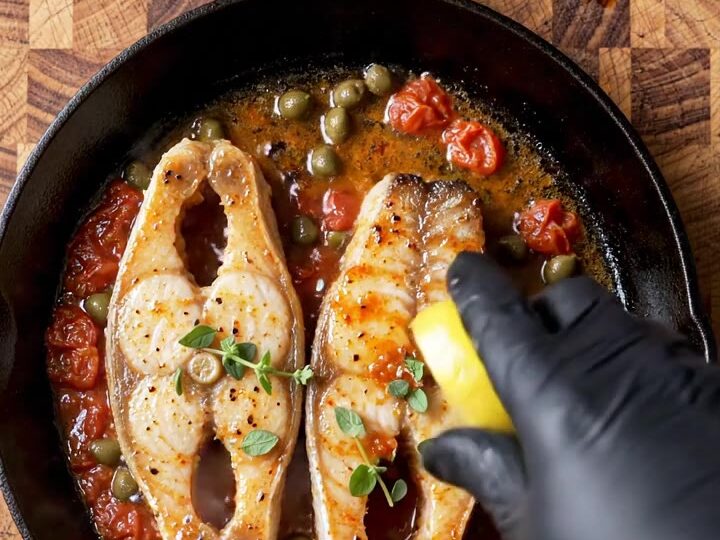
- Prep
- Cook
- Total
- Serves
- 2
Tips for success
Use fish that smells clean and fresh, with firm flesh that springs back when pressed. Swordfish steaks should look moist and have an even color without dry edges. Buy them the same day you plan to cook, and keep them cold on the way home.
Taste the sauce before you finish. Olives and capers are already salty, so add kosher salt sparingly. A little extra lemon juice at the end brightens the tomatoes and balances the richness of the butter. Adjust the seasoning in small steps so the sauce stays bright and not overly salty.
Variations
- Extra briny: Add a few more olives and a spoonful of capers for a saltier, punchier sauce. Taste before adding salt, since the brine from the olives and capers seasons the dish well on its own.
- Lemon herb: Increase the lemon juice and add extra chopped parsley and a little zest at the end. The bright citrus and fresh herbs lift the rich butter and make the dish feel lighter on the palate.
- Cheesy finish: Sprinkle generous grated hard cheese over the hot fish just before serving. It melts slightly into the warm sauce, adding a savory, nutty layer that pairs well with the olives and capers.
- Dairy-free: Replace the butter with extra olive oil and skip the hard cheese. The sauce stays glossy and flavorful, and the swordfish still develops a golden crust in the hot skillet.
Storage and make-ahead
- Fridge
- Store leftovers covered in the refrigerator for up to 2 days.
- Reheat
- Warm gently in a skillet over low heat with a splash of water until just heated through.
Leftover swordfish and sauce should be cooled for no more than 2 hours at room temperature before they go into the refrigerator. Transfer them to a shallow airtight container so they chill quickly and evenly. Keep the fish and sauce together so the fish stays moist.
Use the leftovers within 2 days for the best texture and flavor. When you reheat, do so gently over low heat, adding a spoonful of water if the sauce has thickened too much. Avoid reheating more than once, and discard any leftovers that have been out of the refrigerator for more than 2 hours in total.
You can prepare the components earlier in the day to make this dinner come together quickly. Halve the cherry tomatoes, pit the olives, drain the capers and grate the hard cheese, then store each in its own covered container in the refrigerator. Chop the herbs and wrap them in a damp paper towel.
Keep the swordfish refrigerated on a tray until you are ready to cook. Do not season the fish until just before searing, so the salt does not draw out moisture too early. The actual cooking takes only about 15 minutes, so having everything prepped means dinner is ready in less time once the pan is hot.
Serving ideas
Serve the swordfish straight from the cast iron skillet while the sauce is still glossy and the steaks are warm. Bring the pan to the table with lemon wedges and a spoon so everyone can spoon sauce over their portion.
Crusty bread is a good companion for mopping up the tomato, caper and olive sauce, and a simple green salad with a light vinaigrette balances the richness of the butter.
For a complete meal, pair the fish with steamed or roasted vegetables such as green beans, zucchini or new potatoes. A chilled dry white wine or a light rosé complements the briny olives and capers.
Keep the portions generous, since the sauce is as much a part of the dish as the fish, and make sure each plate gets a steak with plenty of tomatoes and olives on top.
Frequently asked questions
Can you substitute another fish?
Why does the tomato sauce turn watery?
How do you keep the swordfish from drying out?
Can this be made ahead for guests?
What should you serve with this dish?
Seared Swordfish with Tomato, Caper and Olive Skillet
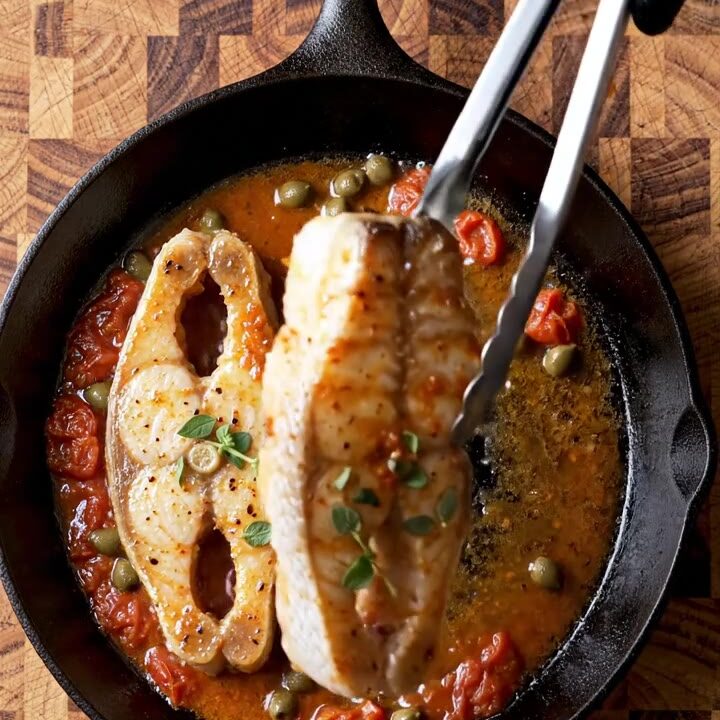
Ingredients
- 2 thick swordfish steaks, about 1 inch thick
- kosher salt, to taste
- black pepper, to taste
- 2 tbsp unsalted butter
- 2 tbsp olive oil
- 1 cup cherry tomatoes, halved
- 1/4 cup green olives, pitted
- 1/4 cup black olives, pitted
- 2 tbsp whole capers, drained
- 1 lemon, halved, plus wedges for serving
- hard cheese, finely grated, for serving, optional
- fresh green herbs, such as parsley, for garnish, to taste
Instructions
- Set the swordfish steaks on a cutting board and pat them dry with paper towels. Season both sides generously with kosher salt and black pepper. Squeeze juice from half the lemon over the fish and let it sit while the skillet heats.
- Cut the cherry tomatoes in half and set them in a bowl. Drain the capers and pit the green and black olives. Grate the hard cheese on a box grater, if using, and keep it nearby.
- Heat the olive oil and butter in the cast iron skillet over medium-high heat until the butter melts and foams. Swirl the pan so the oil and butter combine into a warm, fragrant fat.
- Lay the swordfish steaks in the skillet and sear for 3 to 4 minutes, until golden on the bottom and opaque around the edges. Add the halved tomatoes, olives and capers around the fish.
- Spoon the bubbling butter over the steaks and add a pat of butter on top of each one so it melts down the sides. Let the butter foam around the fish for about a minute.
- Simmer the tomatoes, olives and capers over medium heat for 4 to 5 minutes, until the tomatoes soften, release their juices and reduce to a jammy, slightly saucy consistency. Squeeze in a little more lemon juice if you like.
- Turn the swordfish gently with tongs and spoon the sauce over it. Cook for 2 to 4 minutes more, until the thickest part of each steak is opaque and flakes easily with a fork, reaching 145°F (63°C).
- Scatter fresh green herbs over the skillet and sprinkle with grated hard cheese if using. Serve straight from the skillet with lemon wedges on the side for squeezing over the fish.
Estimated nutrition per serving
- Calories
- 430
- Protein
- 38 g
- Carbohydrates
- 8 g
- Fat
- 26 g
- Fiber
- 2 g
- Sugar
- 3 g
- Sodium
- 980 mg
Next recipe
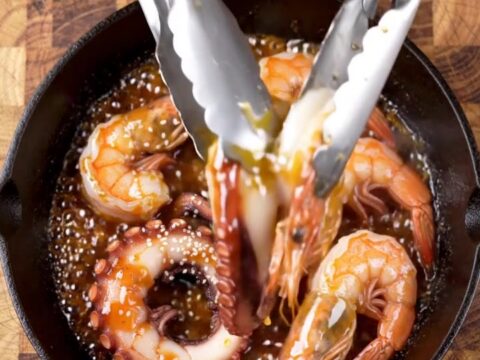
Honey Gochujang Shrimp and Charred Octopus Skillet in 30 Minutes
See the recipe → →This recipe is based on a short cooking video and is published under the pen name Clara Weller. It was checked before publication, but errors can slip through. Nutrition, when shown, is an estimate. Read more in our editorial policy and on our food safety page.
More recipes to try

French Onion Rigatoni with Gruyère in One Skillet
Total time: 1 h 20 min
Crispy Eggplant Parmesan in One Skillet, Golden and Bubbly
Total time: 1 h
Coconut Crusted Mahi Mahi with Mango Salsa in One Skillet
Total time: 30 min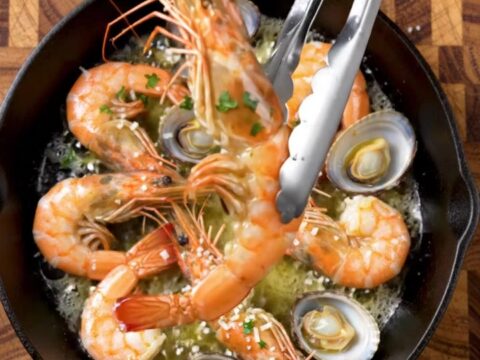
Garlic Butter Clams and Prawns in White Wine, One Skillet
Total time: 25 min
Truffle Four Cheese Mac with Crispy Panko Cauliflower Skillet
Total time: 1 h 5 min