Desserts · Part 3 of 3: Tips & recipe card
Refreshing Mango Pomelo Sago in 20 Minutes Tips, FAQ & printable recipe

- Prep
- Cook
- Total
- Serves
- 4
Tips for success
For the smoothest puree, blend the mango flesh, coconut milk, and evaporated milk until no fibers remain. If the mango is particularly fibrous, strain the puree through a fine-mesh sieve for an extra-silky texture.
Taste the puree and adjust sweetness if needed, though ripe mangoes usually provide enough natural sugar.
When boiling sago, use a pot that is large enough to allow the pearls to move freely. Stir occasionally to prevent them from sticking to the bottom.
After rinsing, toss the sago with a little cold water to keep the pearls separate until assembly. For a more intense coconut flavor, replace the evaporated milk with additional coconut milk, but note that the dessert will be less rich.
Variations
- Coconut Mango Sago: Replace the evaporated milk with an equal amount of coconut milk for a more intense coconut flavor. Omit the pomelo and top with toasted coconut flakes for added texture. This variation is richer and extra creamy.
- Tropical Fruit Sago: Swap the pomelo for diced pineapple or passion fruit pulp. The tangy fruit complements the sweet mango and creamy base. This variation adds a different tropical twist and is equally refreshing.
- Dairy-Free Mango Sago: Use full-fat coconut milk in place of evaporated milk to make the dessert dairy-free. The texture remains creamy, and the coconut flavor pairs beautifully with the mango. Ensure the coconut milk is well shaken before measuring.
- Lychee Mango Sago: Add canned lychee halves or fresh lychee flesh along with the mango and pomelo. The lychee adds a floral sweetness and juicy bite. This variation is popular in some Hong Kong dessert shops.
Storage and make-ahead
- Fridge
- Store in an airtight container in the refrigerator for up to 2 days. Stir before serving; add a splash of coconut milk if too thick.
- Freezer
- Freezing is not recommended as the texture of the sago and fruit will degrade upon thawing.
- Reheat
- This dessert is served cold and does not require reheating.
Store leftover mango pomelo sago in an airtight container in the refrigerator for up to 2 days. The sago will absorb liquid and soften over time, so the texture is best within the first day. Stir gently before serving. If the dessert becomes too thick, add a splash of coconut milk or water to loosen it.
The mango puree can be made up to 1 day ahead and stored in the refrigerator. The sago pearls can be cooked, rinsed, and kept in a bowl of cold water in the refrigerator for up to 1 day; drain well before using. Assemble the dessert just before serving to maintain the best texture.
Serving ideas
Serve mango pomelo sago chilled in individual bowls or glasses. For an elegant presentation, layer the sago and puree in a tall glass and top with mango dice and pomelo sacs.
A long spoon is ideal for reaching the bottom layers. This dessert is perfect after a spicy meal or as a refreshing afternoon treat.
Mango pomelo sago is traditionally served as a dessert, but it can also be enjoyed as a light snack. The combination of creamy, chewy, and juicy textures makes it a satisfying end to any meal.
For a more indulgent version, add a scoop of coconut ice cream on top, though this is optional and not part of the classic recipe.
Frequently asked questions
Can this dessert be made ahead of time?
What is the best type of mango for this recipe?
Can you use regular tapioca pearls instead of sago?
Why did your sago pearls turn out sticky?
Can this recipe be made without evaporated milk?
Refreshing Mango Pomelo Sago in 20 Minutes
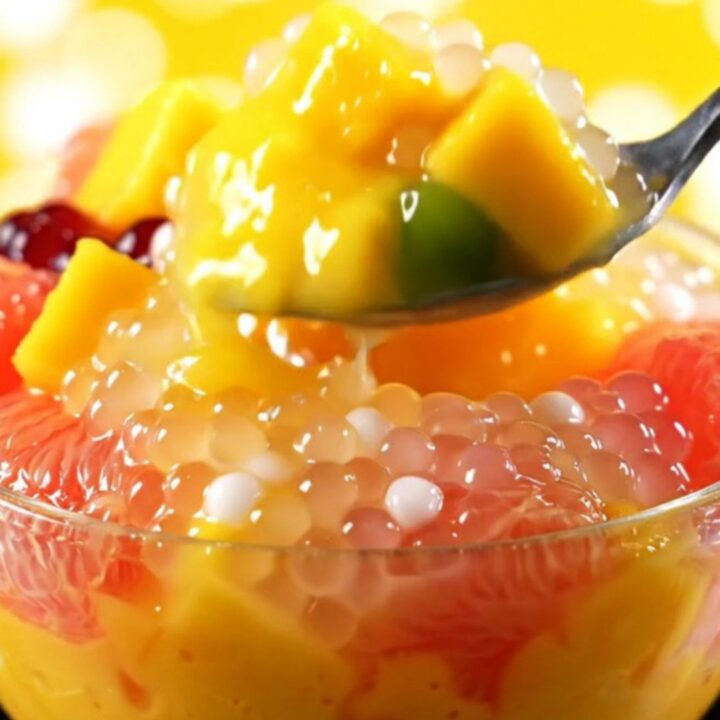
Ingredients
- 400 g ripe Carabao mango flesh (about 2 large mangoes)
- 150 ml coconut milk
- 80 ml evaporated milk
- 100 g small sago tapioca pearls
- 6 cups water
- 1 cup fresh mango dice (from 1 mango)
- 1/2 cup pomelo pulp (peeled and separated into sacs)
Instructions
- In a blender, combine 400 g ripe Carabao mango flesh, 150 ml coconut milk, and 80 ml evaporated milk. Blend on high until completely smooth and velvety, about 30 to 45 seconds. Scrape down the sides as needed to ensure no chunks remain. The mixture should be thick, pourable, and a vibrant golden yellow. Set aside in the refrigerator while cooking the sago.
- Bring 6 cups of water to a rolling boil in a medium saucepan. Add 100 g small sago tapioca pearls, stirring immediately to prevent sticking. Boil uncovered for 12 minutes, stirring occasionally. The pearls will become translucent with tiny white centers. After 12 minutes, remove the pan from heat, cover, and let rest for 10 minutes. The residual heat will finish cooking the pearls until they are fully clear.
- Pour the cooked sago into a fine-mesh strainer and rinse under cold running water, shaking gently, until the pearls are cool and no longer sticky. This removes excess starch and stops the cooking process. Let drain thoroughly for a few minutes. The pearls should be separate, chewy, and translucent.
- Divide the drained sago among four serving bowls or glasses. Spoon the chilled mango puree over the sago, filling each bowl about three-quarters full. Top with fresh mango dice and pomelo pulp, distributing evenly. The layers should be visible: sago at the bottom, creamy mango puree in the middle, and bright mango and pomelo on top.
- Refrigerate the assembled bowls for at least 15 minutes to let the flavors meld and the dessert become thoroughly chilled. Serve cold, with a spoon, so each bite includes sago, creamy mango base, and juicy pomelo sacs. The dessert is best enjoyed within a few hours of assembly.
Estimated nutrition per serving
- Calories
- 320
- Protein
- 3 g
- Carbohydrates
- 50 g
- Fat
- 13 g
Next recipe

Authentic Spanish Crema Catalana with Burnt Sugar Crust
See the recipe → →This recipe is based on a short cooking video and is published under the pen name Clara Weller. It was checked before publication, but errors can slip through. Nutrition, when shown, is an estimate. Read more in our editorial policy and on our food safety page.
More recipes to try

Whole-Lemon Blender Loaf Cake with Crackle Glaze
Total time: 1 h 15 min
Pistachio Orange Blossom Crème Brûlée
Total time: 4 h 55 min
Ultra-Soft Heavy Cream Cinnamon Rolls
Total time: 55 min
Salted Dulce de Leche Crème Brûlée: Caramel on Caramel
Total time: 6 h
Elegant Earl Grey and Lavender Crème Brûlée
Total time: 4 h 55 min