Desserts · Part 1 of 3: Ingredients
Authentic Spanish Crema Catalana with Burnt Sugar Crust
- Prep
- Cook
- Total
- Serves
- 6
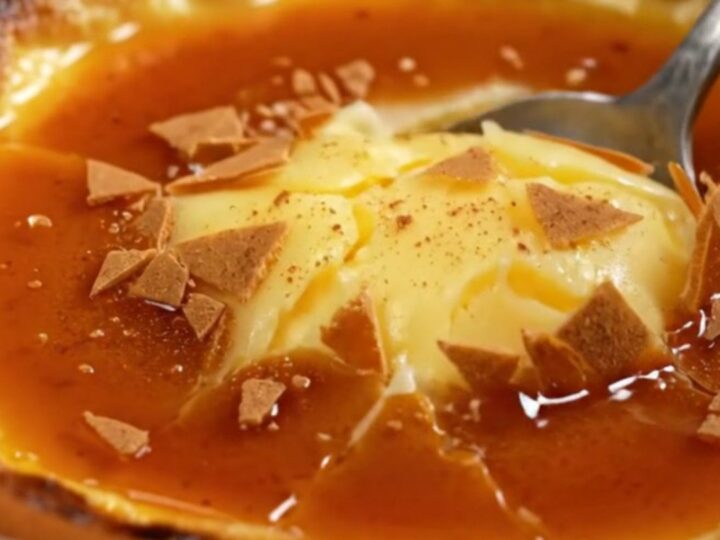
This authentic Spanish Crema Catalana delivers the classic contrast of a brittle, caramelized sugar crust and a cool, silky custard infused with lemon, orange, and cinnamon.
Made entirely on the stovetop, it requires no oven, just a few simple ingredients and a hot iron for that signature burnt sugar finish. The custard is thickened with egg yolks and cornstarch, giving it a luscious, creamy texture that sets perfectly in the refrigerator.
Crema Catalana is Spain's answer to crème brûlée, but with a lighter, more aromatic custard that relies on milk rather than cream. This version stays true to tradition, infusing whole milk with strips of lemon and orange peel and a cinnamon stick, then thickening it gently with egg yolks and a touch of cornstarch.
The custard is poured into shallow clay cazuelas, chilled until set, and finished with a layer of sugar seared by a red-hot iron. The result is a dessert with a dramatic, crackling crust and a smooth, fragrant center—perfect for ending a meal or celebrating a special occasion.
Ingredients
- 2 1/2 cups whole milk
- 1 strip lemon peel
- 1 strip orange peel
- 1 cinnamon stick
- 6 large egg yolks
- 1/2 cup granulated sugar
- 3 tbsp cornstarch
- 2 tbsp granulated sugar
Why this recipe works
The method of infusing the milk with citrus peels and cinnamon before cooking allows the flavors to meld gently without the harshness of heat.
Steeping the peels and cinnamon in warm milk extracts their essential oils, creating a fragrant base that perfumes the entire custard. This step is crucial because it builds the aromatic character that defines Crema Catalana, setting it apart from a plain vanilla custard.
Using a combination of egg yolks and cornstarch as thickeners gives the custard a stable, silky texture that sets firmly enough to hold a sugar crust. The cornstarch prevents the eggs from curdling and ensures a smooth, glossy finish. Chilling the custard for several hours allows it to fully set, so the sugar searing step can be done without disturbing the custard's structure.
Notes and substitutions
The choice of whole milk is important for a rich, creamy texture without being overly heavy. You can use 2% milk, but the custard will be slightly less indulgent. The citrus peels should be wide strips without the white pith, which can add bitterness. A cinnamon stick, not ground cinnamon, provides a warm, subtle spice that doesn't overpower the citrus.
Traditional clay cazuelas are ideal because they are shallow and wide, maximizing the surface area for the sugar crust. If you don't have them, ramekins or small oven-safe dishes work well.
The iron salamander is the traditional tool for searing the sugar, but a small metal disk or even a torch can be used. Just ensure the tool gets very hot to create a quick, even caramelization.
- whole milk: 2% milk can be used, but the custard will be slightly less rich. Avoid skim milk.
- lemon peel: Use 1/2 teaspoon dried lemon zest if fresh is unavailable.
- orange peel: Use 1/2 teaspoon dried orange zest if fresh is unavailable.
- cinnamon stick: 1/2 teaspoon ground cinnamon can be used, but the flavor will be more pronounced and less subtle.
Equipment
- Medium saucepan
- Whisk
- Fine-mesh strainer
- 6 shallow clay cazuelas or ramekins
- Iron salamander or metal disk for searing
- Rubber spatula
- Measuring cups and spoons
Up next · Part 2 of 3
9 steps · 15 min of cooking · what to look for at each stage
Step-by-step instructions (Part 2)