Dinner · Part 3 of 3: Tips & recipe card
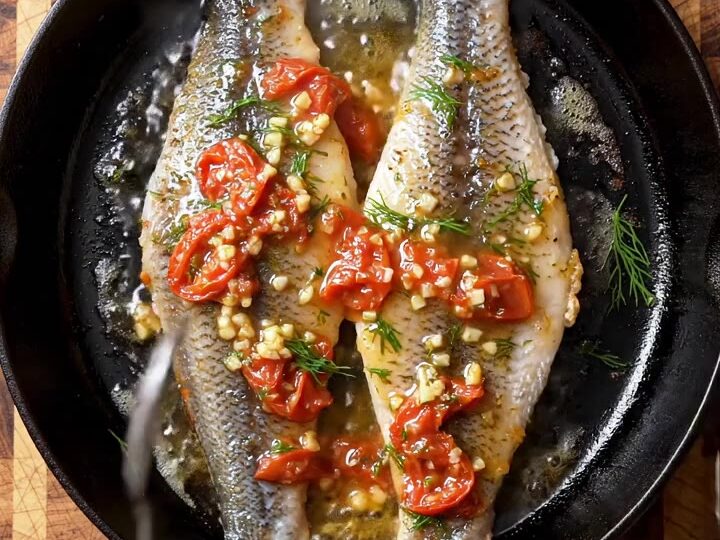
Pan-Seared Arctic Char with Garlic Herb Butter and Crispy Skin Tips, FAQ & printable recipe
- Prep
- Cook
- Total
- Serves
- 2
Tips for success
Dry the fillets thoroughly and score the skin before seasoning. A dry surface sears faster and produces the crisp, shatter-thin skin that makes this dish memorable. Season just before the fish goes into the pan so the salt does not draw out moisture while it sits.
Keep the heat controlled once the butter is in. Foaming butter is ideal for basting, but if it turns dark brown and smells bitter, the garlic and dill will taste burnt. Lower the heat slightly, or move the skillet partly off the burner, and keep spooning the sauce over the fish until it is cooked through.
Variations
- Lemon zest finish: Finely grate the zest of one lemon over the fish just before serving. The bright citrus cuts through the butter and balances the sweetness of the blistered tomatoes, without changing the dish.
- Extra garlic version: Add two more thinly sliced garlic cloves to the butter when you add the tomatoes. Cook them until golden, not dark, for a deeper, more savory sauce that clings well to the crisp skin.
- Salmon swap: Use skin-on salmon fillets of similar thickness and cook them the same way. The method stays the same, and the richer flesh pairs well with the dill and garlic butter.
- Herb trio: Add a tablespoon of chopped fresh parsley with the dill at the end. The softer herb adds freshness and color to the sauce while the crisp skin and dill keep the dish's character.
Storage and make-ahead
- Fridge
- Store cooled leftovers in an airtight container in the refrigerator for up to 2 days.
- Freezer
- Freezing is not recommended, because the skin and the tomato sauce lose their texture once thawed.
- Reheat
- Reheat gently in a skillet over low heat with a teaspoon of butter until just warmed through.
Arctic char is best eaten the same day it is cooked, while the skin is still crisp and the sauce is glossy. If you have leftovers, let the fish and tomatoes cool for no more than 2 hours at room temperature, then move them to an airtight container and refrigerate.
The skin will soften in storage, but the flavor holds well. Keep the grated cheese separate so it does not become gummy. Use the leftovers within 2 days for the best texture and flavor. Do not leave cooked fish out for longer than 2 hours, and discard anything that has been at room temperature longer than that.
Most of the work can be done in advance, which keeps the cooking itself short. Finely slice the garlic, chop the dill and grate the hard cheese up to a day ahead. Store the garlic and dill in separate covered containers in the refrigerator, and keep the grated cheese in a sealed bag. Wash and dry the cherry tomatoes and keep them chilled.
Score and season the fillets just before cooking, not the night before, because salt drawn into the flesh can change its texture. Cook the fish fresh, since arctic char is best seared and served right away. Set out the skillet, tongs and serving plates before you start so the dish can move from pan to plate without delay.
Serving ideas
Serve the crispy-skinned arctic char on warm plates, with the skin facing up so it stays crisp. Spoon the blistered cherry tomatoes, garlic and butter sauce over the top, then scatter fresh dill sprigs and a light sprinkle of the grated hard cheese.
Add a little black pepper at the table. The dish is at its best within minutes of leaving the pan, while the skin is still crackling and the cheese is just beginning to melt into the sauce.
For a complete meal, pair the fish with something that soaks up the garlic butter. Crusty bread, a bowl of steamed new potatoes or a simple green salad with a lemon vinaigrette all work well.
Choose a crisp, dry white wine or a sparkling water with lemon to balance the richness of the butter and the sweetness of the tomatoes. Keep side dishes light so the arctic char remains the focus of the plate.
Frequently asked questions
Can you use skinless arctic char for this recipe?
How do you keep the skin from sticking to the pan?
Which hard aged cheese works best with arctic char?
Can the fish be cooked in advance and reheated?
What is the safe internal temperature for arctic char?
Pan-Seared Arctic Char with Garlic Herb Butter and Crispy Skin
Ingredients
- 2 arctic char fillets, skin on (about 6 oz each)
- 4 cloves garlic, finely sliced, plus 1 more clove for the pan
- 2 tbsp fresh dill, chopped, plus sprigs for serving
- 1 cup cherry tomatoes, left whole
- 3 tbsp unsalted butter
- 1/4 cup finely grated hard aged cheese, such as Parmesan
- kosher salt and black pepper to taste
- 1 tbsp neutral oil, such as canola
Instructions
- Pat the arctic char fillets dry with paper towels. Score the skin in a few shallow diagonal cuts, season the flesh with salt and pepper, and keep the fillets chilled until the pan is hot. On the board, finely slice the garlic cloves and chop the dill, then grate the hard cheese over the board with a box grater.
- Heat the oil in the cast iron skillet over medium-high heat until it shimmers. Lay the fillets skin-side down and press gently for 10 seconds so the skin stays flat. Add the butter, then the tomatoes, garlic and dill around the fish.
- Cook without moving the fish while the skin crisps and the tomatoes soften and start to burst in the garlic butter. Spoon the foaming butter over the fillets to keep the flesh moist.
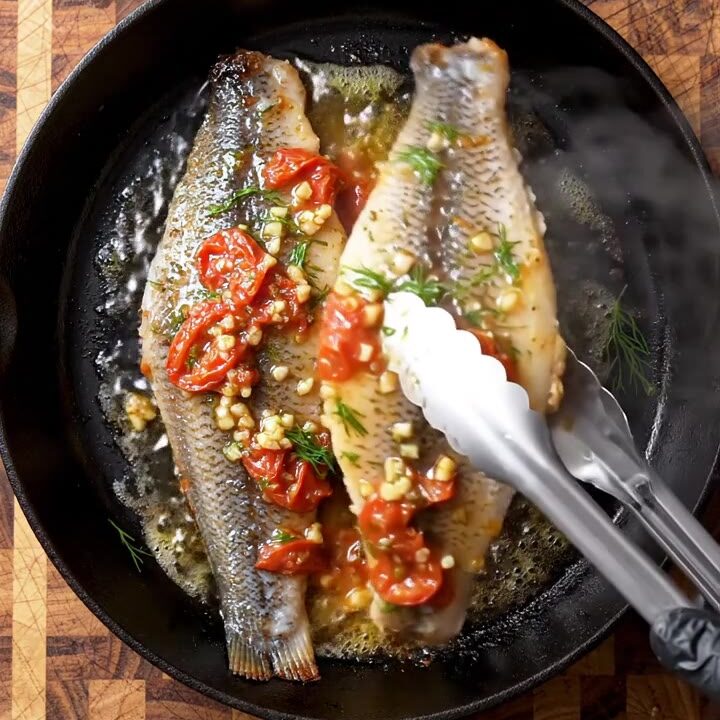
- Use metal tongs to flip the fillets carefully. Spoon the garlic butter and tomatoes over the flesh and baste for 2 to 3 minutes, until the fish is opaque, flakes easily with a fork and reaches 145°F (63°C) at the thickest part.
- Transfer the fillets to warm plates, skin side up. Spoon the pan-roasted tomatoes, garlic and butter sauce over the crispy skin, scatter with dill sprigs and finish with the grated hard cheese. Serve at once while the skin is still crisp.
Estimated nutrition per serving
- Calories
- 520
- Protein
- 38 g
- Carbohydrates
- 6 g
- Fat
- 37 g
- Fiber
- 1 g
- Sugar
- 3 g
- Sodium
- 480 mg
Next recipe

Thai Red Curry Prawns in One Skillet, Ready in 30 Minutes
See the recipe → →This recipe is based on a short cooking video and is published under the pen name Clara Weller. It was checked before publication, but errors can slip through. Nutrition, when shown, is an estimate. Read more in our editorial policy and on our food safety page.
More recipes to try

Brown Butter Seared Scallops with Butternut Squash and Sage in One Pan
Total time: 35 min
Cheesy Sweet Potato Skillet Bake in One Cast Iron Pan
Total time: 55 min
Parmesan Crusted Cod with Lemon Garlic Butter Spinach in One Skillet
Total time: 27 min
Seared Swordfish with Tomato, Caper and Olive Skillet
Total time: 30 min
Honey Gochujang Shrimp and Charred Octopus Skillet in 30 Minutes
Total time: 32 min