Dinner · Part 1 of 3: Ingredients
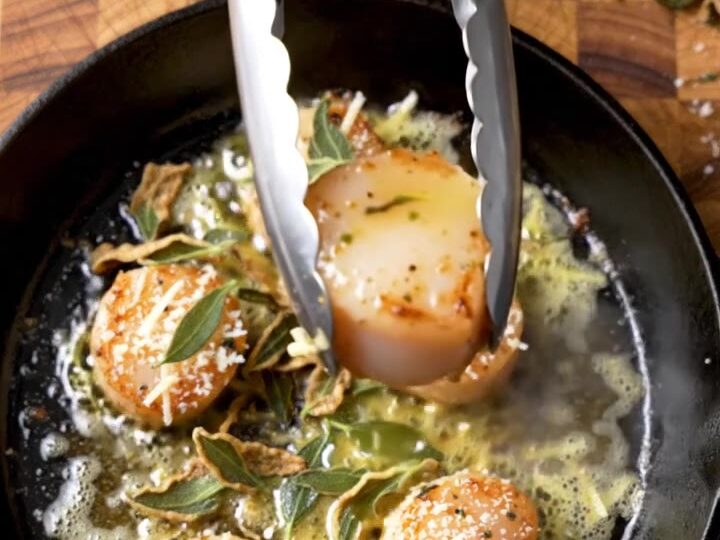
Brown Butter Seared Scallops with Butternut Squash and Sage in One Pan
- Prep
- Cook
- Total
- Serves
- 2
Few weeknight dishes feel as special as scallops seared in butter until they turn golden. Here they share a cast iron skillet with caramelized butternut squash and crisp sage, and the whole pan is finished with nutty brown butter, bright lemon and a snow of aged cheese. The result looks restaurant-level and takes less time than you might expect, so this is a dinner you can plan for a busy evening or an easy weekend.
This dish is built around contrast. Sea scallops bring a sweet, delicate flavor and a crust that crackles at the edges, while butternut squash softens into caramelized cubes that echo the warmth of the butter. Fresh sage is fried in the foaming fat until it turns crisp and fragrant, and it adds an earthy, slightly peppery note that suits both the squash and the shellfish.
A squeeze of lemon at the end cuts through the richness, and a little grated aged hard cheese adds salt and savory depth. Everything cooks in one skillet, so the flavors build in the pan and there is very little to wash afterward. Read the whole recipe before you start, because scallops and brown butter both move quickly once the heat is on.
Ingredients
- 8 fresh sea scallops, side muscle removed and patted dry
- 1 lb butternut squash, peeled and diced into 1/2-inch cubes
- 12 fresh sage leaves, plus extra for frying
- 4 tbsp unsalted butter
- 1 tbsp neutral oil, such as canola
- kosher salt to taste
- freshly ground black pepper to taste
- 1 fresh lemon, cut into wedges
- aged hard cheese, such as Parmigiano-Reggiano, for grating, to taste
Why this recipe works
Searing scallops in a very hot pan creates a golden crust through the Maillard reaction, which adds savory, toasty flavor to a mild shellfish. Patting the scallops dry before they go into the butter is essential, because surface moisture turns to steam and blocks browning. Cooking them in a single layer without crowding keeps the pan hot enough to color each side rather than simmer them in their own juices.
Butter is the heart of the method. As it melts and foams, the milk solids toast and turn amber, producing the nutty, hazelnut-like flavor that defines brown butter.
Spooning that fat over the scallops, squash and sage keeps every surface glossy and seasoned, and it carries the flavor of the browned milk solids into the food. Because the squash cooks first in the same fat, it picks up the same toasty notes and develops sweet caramelized edges.
Notes and substitutions
Choose sea scallops labeled dry rather than wet. Wet scallops have been soaked in a phosphate solution, which makes them release water in the pan and resist browning. Dry scallops cost more but sear far better, and they are worth the difference for a dish where the crust is the point.
Buy them whole and fresh, with a sweet smell and no sour or ammonia notes. If you buy them frozen, thaw them overnight in the refrigerator and dry them thoroughly before seasoning.
A 12-inch cast iron skillet is the right tool because it holds heat evenly and moves easily from the stovetop to the table. A heavy stainless steel pan works just as well if it is large enough to hold the scallops in one layer.
Use a fine grater for the cheese so the shreds are light and melt quickly over the warm food. A fish spatula, thin and flexible, slides under the scallops without tearing the crust. Keep a few paper towels close by to dry the scallops and wipe the pan between batches if needed.
- butternut squash: acorn squash or sweet potato, cut into similar cubes; cook them a few minutes longer until tender.
- aged hard cheese: Pecorino Romano or aged Asiago, grated just before serving.
- neutral oil: a second tablespoon of butter, watching closely so it does not scorch.
Equipment
- 12-inch cast iron skillet
- fine grater
- cutting board
- chef's knife
- paper towels
- fish spatula
Up next · Part 2 of 3
7 steps · 15 min of cooking · what to look for at each stage
Step-by-step instructions (Part 2)