Dinner · Part 1 of 3: Ingredients
Thai Red Curry Prawns in One Skillet, Ready in 30 Minutes
- Prep
- Cook
- Total
- Serves
- 4
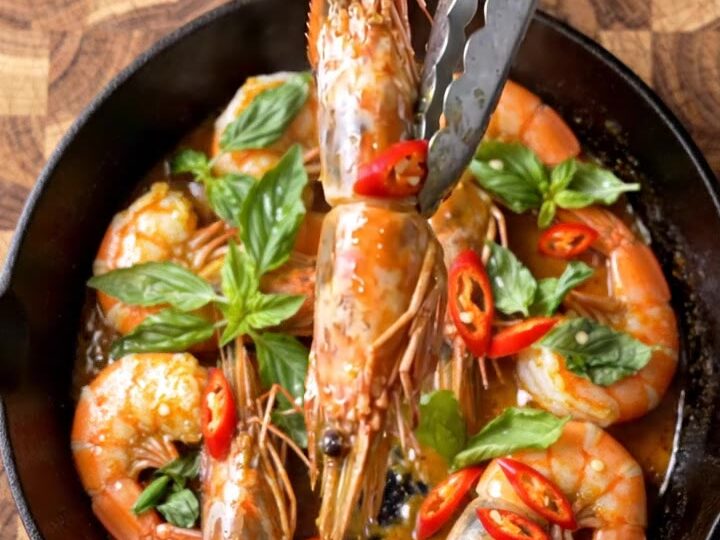
Glossy coconut curry, sweet bell peppers and tender prawns come together in one black cast-iron skillet. The sauce turns rich and orange-red as it simmers, and the prawns pick up every bit of spice. Fresh basil and halved red chilies go on at the end for a bright, fragrant finish. This is a dinner you can make on a weeknight without dirtying a pile of pans.
Thai red curry prawns are a fast, satisfying way to bring the flavors of a Thai curry shop into your own kitchen. The dish is built in a single skillet: butter melts first, then red curry paste blooms until fragrant, and coconut milk turns the paste into a silky, rich sauce. Sliced red and green bell peppers, a red tomato and sugar snap peas add color, crunch and sweetness, while the shell-on prawns cook directly in the simmering curry.
The sauce reduces and thickens around them, so every bite of prawn carries spice and coconut. A final shower of basil, halved red chilies, finely grated hard cheese and grated coconut adds freshness, salt and texture. Serve it straight from the skillet with steamed rice so the glossy sauce has somewhere to go.
Ingredients
- 1 lb large shell-on prawns, peeled and deveined
- 1 tbsp butter
- 2 tbsp red curry paste
- 1 can (13.5 oz) coconut milk
- 1 red bell pepper, sliced into thin strips
- 1 green bell pepper, sliced into thin strips
- 2 red chili peppers, halved
- 1 red tomato, cut into wedges
- 1 cup sugar snap peas
- 1/2 cup fresh basil leaves
- 2 tbsp finely grated hard cheese, for serving
- 2 tbsp grated coconut, for serving
Why this recipe works
Blooming the red curry paste in butter before adding the coconut milk is the key step. Heating the paste gently releases its aromatic oils, so the curry tastes deep and rounded rather than raw.
When the coconut milk goes in, it dilutes the paste evenly and creates a sauce that is smooth enough to coat every piece of pepper and prawn. Keeping the heat at a steady simmer prevents the coconut fat from separating, which keeps the sauce glossy from start to finish.
Adding the vegetables before the prawns lets them soften in the spiced sauce and release a little sweetness into it. The prawns go in last because they cook in only a few minutes.
Cooking them directly in the simmering curry means they absorb flavor as they turn pink and opaque, while the sauce reduces slightly and clings to them. Finishing with basil and chilies at the very end keeps their color and aroma bright, which contrasts nicely with the mellow coconut base.
Notes and substitutions
Choose large shell-on prawns for the best texture and flavor. The shells protect the flesh and add a little sweetness to the sauce when they cook, and the prawns stay juicy because they spend very little time in the heat. If you buy them peeled, look for large shrimp of the same weight and devein them before cooking. Smaller prawns cook so quickly that they can turn tough, so keep an eye on them during the final minutes of simmering.
A large black cast-iron skillet is ideal because it holds heat evenly, so the curry simmers steadily and the prawns sear gently in the sauce. Use a wooden spoon for stirring to avoid scratching the pan.
A sharp chef's knife and a box grater make the prep quick. Hard cheese such as Parmesan or Pecorino Romano adds a salty finish, and unsweetened shredded coconut, lightly toasted, can stand in for grated coconut if you cannot find the fresh version.
- hard cheese: Parmesan or Pecorino Romano for a salty finish
- large shell-on prawns: large shrimp, same weight, peeled and deveined
- grated coconut: unsweetened shredded coconut, lightly toasted
Equipment
- Large black cast-iron skillet
- Cutting board
- Chef's knife
- Box grater
- Wooden spoon
- Serving plates
Up next · Part 2 of 3
5 steps · 15 min of cooking · what to look for at each stage
Step-by-step instructions (Part 2)