Dinner · Part 3 of 3: Tips & recipe card
Miso Butter Halibut Skillet with Shiitake and Bok Choy Tips, FAQ & printable recipe
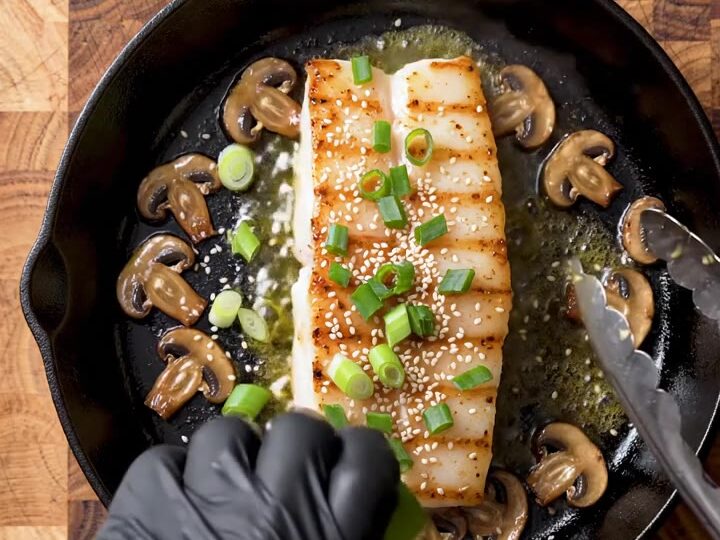
- Prep
- Cook
- Total
- Serves
- 2
Tips for success
Keep the fish cold until the pan is ready, then cook it quickly over steady heat. Dry surfaces brown better, so blot the fillets and mushrooms before they go into the butter.
Spoon the foaming butter over the top of the fish often, because basting is what gives this dish its golden color and even cooking without drying the flesh. Use a fish spatula to slide under the fillets, and avoid pressing down on them while they cook.
Make miso butter ahead when you have a few minutes. Blend equal parts softened butter and white miso until smooth, then spoon it onto parchment, roll it into a log and chill. Slice off a portion when you cook.
This keeps the flavor balanced and saves time at the stove. You can also swirl a little of the sauce from the pan over the bok choy for an even glossy finish, but do not let the mixture boil hard, as miso can turn bitter.
Variations
- Red miso version: Swap the white miso for red miso, using about half the amount, for a deeper, saltier and more robust sauce. Taste the butter before seasoning the fish, since red miso is considerably more assertive and can change the balance of the whole dish.
- Mushroom-forward skillet: Double the shiitake and add a handful of sliced cremini mushrooms for extra earthy flavor. Give them more time in the butter so they brown well, then cook the bok choy in the remaining sauce at the end.
- Greens and ginger: Add a teaspoon of finely grated fresh ginger to the miso butter and use spinach in place of bok choy for a bright, fragrant variation. Wilt the spinach for less than a minute in the sauce so it stays vivid.
- Crispy skin halibut: Choose skin-on fillets and sear them skin side down first, pressing gently for the first 30 seconds to keep the skin flat. Once the skin is crisp, flip the fish for a short time and baste the flesh side before plating.
Storage and make-ahead
- Fridge
- Store leftovers in a sealed container in the refrigerator for up to 2 days, cooled within 2 hours.
- Freezer
- Freezing is not recommended, because the halibut and bok choy lose their texture when thawed.
- Reheat
- Reheat gently in a covered skillet over low heat with a spoonful of butter until just warmed through.
Leftover halibut and vegetables should cool for no more than 2 hours at room temperature before they go into the refrigerator. Transfer the fish, mushrooms and bok choy to a shallow airtight container, spooning some of the pan sauce over the top to keep the fish moist.
Store the container in the refrigerator for up to 2 days. Keep the green onions and sesame seeds separate, because they lose their freshness once stored with the sauce. The leftover pan sauce can be kept in a small sealed jar for up to 2 days and used to dress rice or noodles.
You can prepare most of this dish ahead of time without losing quality. Slice the shiitake, separate the bok choy leaves and grate the cheese up to one day in advance, storing each in its own sealed container in the refrigerator. Make the miso butter a day or two before and keep it chilled.
Pat the halibut dry and season it just before cooking, not in advance, so the salt does not draw out moisture and the crust forms properly. Cook the fish fresh and serve it right away, since halibut is best eaten while warm and its texture changes after reheating.
Serving ideas
Serve each halibut fillet on a warm plate or straight from the skillet, with the shiitake and bok choy arranged in the buttery pan sauce around it. Spoon extra sauce over the fish so every bite is glossy and well seasoned. A bowl of steamed short-grain rice is a natural partner, because it soaks up the miso butter sauce and balances the richness of the fish.
Finish each plate with sliced green onions, toasted sesame seeds and a light sprinkle of finely grated cheese if you want extra savory depth. Add a small dish of pickled vegetables or a simple cucumber salad on the side to bring a fresh, crisp contrast. Serve immediately while the fish is hot and the mushrooms are still caramelized, because the best texture is at the moment it leaves the skillet.
Frequently asked questions
Can you use a different fish instead of halibut?
How do you make miso butter at home?
Why is basting important for the halibut?
What should you do if the mushrooms are not browning?
How long does leftover halibut keep?
Miso Butter Halibut Skillet with Shiitake and Bok Choy
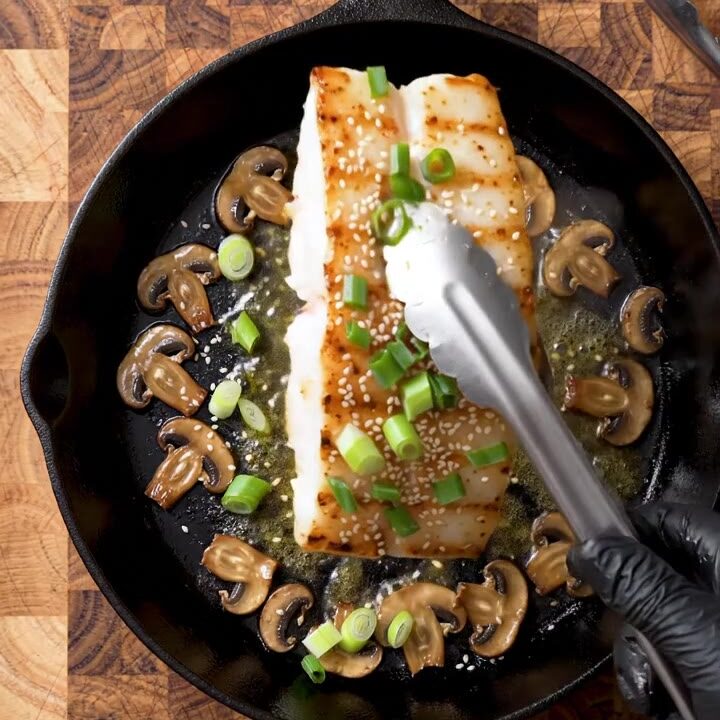
Ingredients
- 2 thick Pacific halibut fillets (about 6 oz each)
- 6 oz fresh shiitake mushrooms, stems removed and caps sliced
- 2 heads baby bok choy, halved lengthwise and leaves separated
- 3 tbsp unsalted butter, divided
- 1 tbsp miso butter (white miso blended with softened butter)
- kosher salt, to taste
- freshly ground black pepper, to taste
- 2 green onions, thinly sliced, for serving
- 1 tbsp toasted sesame seeds, for serving
- pale yellow cheese, finely grated, for serving (optional)
Instructions
- Pat the halibut fillets dry and season both sides with kosher salt and black pepper. Slice the shiitake caps, trim and slice the bok choy, and separate the leaves. Keep the fish refrigerated until the pan is hot.
- Set the cast iron skillet over medium-high heat and add a generous pat of butter, about 1 tbsp. Wait until it melts and foams slightly, then lay the seasoned halibut fillets in the pan, skin side down if the skin is on.
- Tuck the sliced shiitake around the fish in a single layer. Sear the halibut undisturbed for about 3 minutes until the edges turn golden. Spoon the melted butter over the fish and mushrooms as they cook.
- Add the remaining butter and a dollop of miso butter to the pan. Keep spooning the foaming butter over the fish and mushrooms for about 4 minutes, until the flesh turns opaque and the mushrooms are deeply browned.
- Scatter the bok choy leaves and stems into the buttery pan sauce around the fish. Cook for 1 to 2 minutes, turning the leaves so they wilt and stay bright green. Confirm the fish reaches 145°F (63°C) at its thickest point.
- Transfer one seared halibut fillet to each plate or serve it straight from the skillet. Arrange the mushrooms and bok choy in the pan sauce next to the fish. Spoon the remaining sauce over the top, then add green onions, toasted sesame seeds and the cheese if using.
Estimated nutrition per serving
- Calories
- 520
- Protein
- 38 g
- Carbohydrates
- 12 g
- Fat
- 35 g
- Fiber
- 2 g
- Sugar
- 3 g
- Sodium
- 820 mg
Next recipe

Tuscan Salmon and Scallops in Vodka Cream Sauce: One Skillet Dinner
See the recipe → →This recipe is based on a short cooking video and is published under the pen name Clara Weller. It was checked before publication, but errors can slip through. Nutrition, when shown, is an estimate. Read more in our editorial policy and on our food safety page.
More recipes to try
Pan-Seared Sea Bass with Chimichurri and Charred Corn in One Skillet
Total time: 25 min
Butternut Squash Sage Lasagna Skillet in One Pan
Total time: 1 h 10 min
Thai Coconut Curry Prawns in One Skillet, Fresh and Glossy
Total time: 37 min
Baked Zucchini Lasagna Rolls in One Skillet
Total time: 1 h
Parmesan Crusted Cod with Lemon Garlic Butter in One Skillet
Total time: 27 min