Dinner · Part 1 of 3: Ingredients
Thai Coconut Curry Prawns in One Skillet, Fresh and Glossy
- Prep
- Cook
- Total
- Serves
- 4
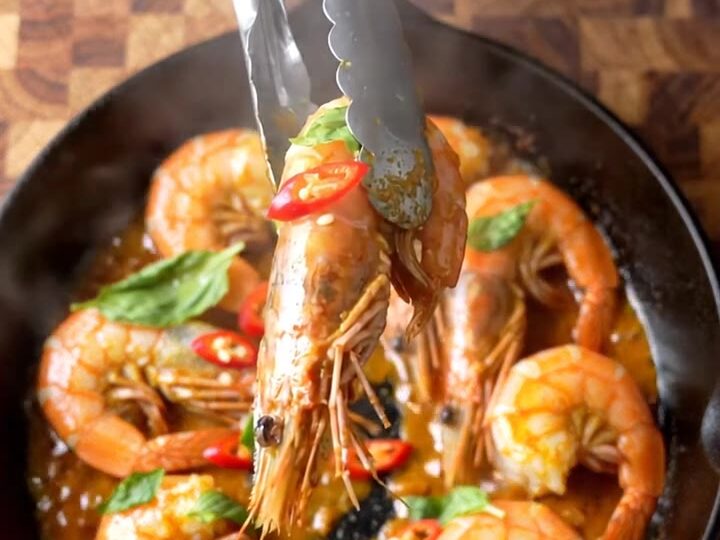
Glossy orange-red coconut curry, plump prawns curled in the sauce, and fresh basil folded in at the end. This Thai coconut curry prawns recipe is built in one cast iron skillet, so the flavors stay in the pan from the first bloom of curry paste to the final garnish. It is a quick dinner that tastes like a special occasion.
Thai coconut curry prawns bring together red curry paste, rich coconut milk and sweet, tender prawns in one skillet. Freshly grated coconut gives the sauce a soft texture and a clean, fragrant flavor that bottled coconut cannot match.
Sliced red bell pepper and snow peas add color and crunch, while whole basil leaves finish the dish with a bright herbal lift. The method is simple: bloom the paste, build the sauce, cook the prawns and fold in the vegetables. You serve everything straight from the cast iron, which keeps the curry hot and gives the table a rustic, generous look.
Ingredients
- 1 lb raw prawns, peeled and deveined
- 1 fresh coconut, grated into fine shreds
- 2 tbsp neutral oil
- 3 tbsp red curry paste
- 1 red bell pepper, thinly sliced
- 1 can (13.5 oz) full-fat coconut milk
- 1 cup snow peas, trimmed
- 1/2 cup fresh basil leaves, plus extra for garnish
- 1 red chili, sliced, for serving
Why this recipe works
Blooming red curry paste in hot oil is the key step in Thai curry cooking. Frying the paste for about a minute releases its aromatic oils from the chilies, lemongrass and spices, so the flavor becomes deep and rounded instead of raw. The paste also turns the oil a deep red, which is the first sign that the base of the curry is ready for liquid.
Coconut milk and freshly grated coconut work together in the sauce. The milk carries the heat and body of the curry, while the grated coconut adds fine texture and extra sweetness that thickens the sauce slightly.
Simmering gently, rather than boiling hard, keeps the coconut milk smooth and glossy. Adding the prawns to the simmering sauce lets them cook quickly and absorb the curry without becoming tough.
Notes and substitutions
Choose raw prawns of a medium size, peeled and deveined, so they cook through in about three to four minutes once they go into the curry. Full-fat coconut milk gives the richest sauce.
Look for red curry paste sold as a jar or tub in the Asian aisle of American supermarkets, and use it at the amount listed. Fresh coconut is the ingredient that makes this version special, but grating a whole coconut takes time, so plan for it.
The cast iron skillet holds heat evenly and goes from the stove to the table without a transfer, which keeps the curry hot. A 12-inch pan gives the prawns enough room to toss without crowding.
A box grater is the easiest tool for fine coconut shreds. If you cannot find a fresh coconut, use unsweetened desiccated coconut instead, toasted lightly in the skillet first to bring out its nutty aroma.
- fresh coconut: 1 1/2 cups unsweetened desiccated coconut, toasted lightly in the skillet first
- prawns: peeled and deveined shrimp of similar size, cooked until pink and opaque
- snow peas: sugar snap peas, sliced on the diagonal
Equipment
- 12-inch cast iron skillet
- Wooden cutting board
- Box grater
- Chef's knife
- Tongs
- Liquid measuring cup
Up next · Part 2 of 3
7 steps · 12 min of cooking · what to look for at each stage
Step-by-step instructions (Part 2)