Dinner · Part 2 of 3: Instructions
Thai Coconut Curry Prawns in One Skillet, Fresh and Glossy Step-by-step instructions
- Prep
- Cook
- Total
- Serves
- 4
Before you start
Gather every ingredient and tool before you turn on the heat, because the curry moves quickly once the paste hits the oil. Keep the raw prawns refrigerated until you are ready to cook them, and take them out of the fridge for no more than 30 minutes before cooking. Peel and devein the prawns, pat them dry with paper towels, and slice the red bell pepper and red chili.
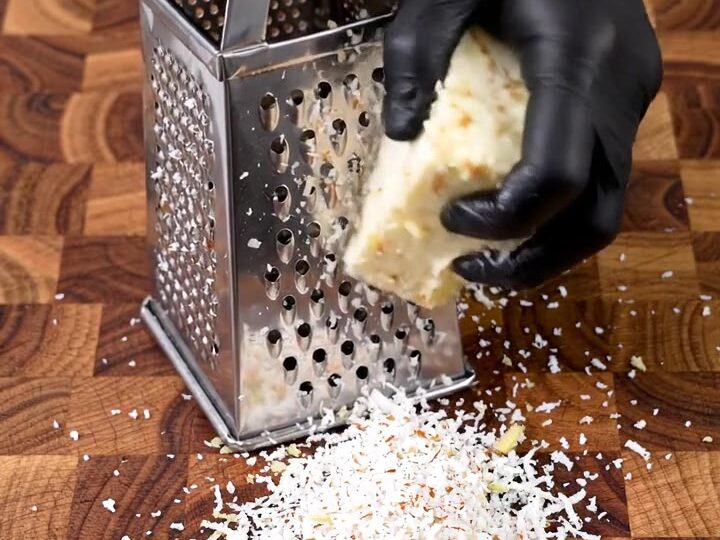
Trim the snow peas and pick the basil leaves from their stems. Crack the coconut, remove the flesh, peel off the brown skin and grate the white meat on a box grater into fine shreds. Set the shreds aside in a bowl. Measure the red curry paste, coconut milk and oil, and place each item by the stove.
Ingredients at a glance (9)
- 1 lb raw prawns, peeled and deveined
- 1 fresh coconut, grated into fine shreds
- 2 tbsp neutral oil
- 3 tbsp red curry paste
- 1 red bell pepper, thinly sliced
- 1 can (13.5 oz) full-fat coconut milk
- 1 cup snow peas, trimmed
- 1/2 cup fresh basil leaves, plus extra for garnish
- 1 red chili, sliced, for serving
Instructions
Bloom the paste and build the base
- Prepare the prawns and vegetablesKeep the prawns refrigerated until you are ready to cook. Peel and devein them, then slice the red bell pepper thinly, trim the snow peas and pick the basil leaves from their stems. Set everything within reach of the skillet.Look for Prawns are firm, cold and dry, and every vegetable is cut before the pan goes on the heat.Tip Pat the prawns dry so they sear and do not steam in the curry.
- Grate the fresh coconutCrack the coconut, remove the flesh from the shell and peel off the brown skin. Grate the white flesh on the small holes of a box grater into fine shreds, then set the shreds aside in a bowl.Look for Fine white shreds fall in soft, fluffy piles, with no brown skin left behind.Tip Work over a bowl so the coconut water and shreds are collected together.
At the end of this phase the oil is deep red and fragrant, the red bell pepper has softened slightly and the coconut milk has come to a gentle simmer. The grated coconut should be evenly spread through the sauce, which looks glossy and orange-red.
Smell the curry for a toasty, aromatic note, and check that the paste is not sticking or burning at the bottom of the pan. Lower the heat if the sauce begins to spatter hard. Only move on when the sauce is smooth and simmering gently, with no dry pockets of paste left in the skillet and no harsh raw smell remaining in the air.
Cook the prawns in the simmering curry
- Bloom the curry pasteHeat the oil in the cast iron skillet over medium heat. Add the red curry paste and stir for about 1 minute, pressing it into the oil until it turns fragrant and darker in color.Look for The paste smells toasty and aromatic, and the oil turns a deep red.Tip Keep stirring so the paste does not scorch on the bottom of the pan.
- Build the coconut sauceAdd the sliced red bell pepper and stir for 1 to 2 minutes. Pour in the coconut milk, bring it to a gentle simmer, then stir in the grated coconut until the sauce turns a fragrant orange-red.Look for The sauce looks glossy and orange-red, with the coconut shreds evenly dispersed.Tip Simmer gently so the coconut milk does not separate or boil over.
- Cook the prawns in the curryAdd the prawns to the simmering curry and toss them through the sauce. Cook until they turn pink and opaque all the way through and their internal temperature reaches 145°F (63°C), about 3 to 4 minutes.Look for Prawns curl into tight C shapes, turn bright orange-pink and look opaque with no grey center.Safe temperature 145°F (63°C) internal temperature (shellfish)Tip Do not overcook, or the prawns become rubbery.
At the end of this phase the prawns have turned pink and opaque, curled into tight C shapes and reached 145°F (63°C) at the thickest part. The sauce should cling to them and look glossy, with no grey or translucent centers left in any prawn. Cut one prawn open to confirm it is white inside. Keep the heat at a steady simmer so the prawns cook evenly without tightening. Move on only when all the prawns are fully cooked, because undercooked shellfish is unsafe, and the sauce is still hot and fragrant enough to finish the dish.
Fold in vegetables and serve from the skillet
- Finish with snow peas and basilFold the snow peas and most of the basil leaves into the curry near the end, stirring for 1 minute until the peas turn bright green and the basil just wilts. Adjust the sauce so it coats the prawns evenly.Look for Snow peas are bright green and crisp-tender, and the basil is fragrant and softened.Tip Add the basil at the very end so its aroma stays fresh.
- Garnish and serve from the skilletScatter the remaining basil leaves and the sliced red chili over the curry. Serve the prawns straight from the skillet, lifting them with tongs so the glossy curry is visible.Look for The curry looks glossy, the prawns are curled and the garnish is bright green and red.Tip Serve the dish right away while the curry is hot and the basil is fresh.
At the end of this phase the snow peas are bright green and crisp-tender, the basil has just wilted into the sauce and the curry is fragrant and glossy. The sliced red chili and remaining basil should sit on top, bright and fresh. Taste a spoonful of the sauce to confirm it is balanced, with salt and heat in harmony. Check that the snow peas are not overcooked or limp. Serve immediately while the skillet is hot and the basil still smells green and fresh, and lift the prawns with tongs so the curry looks shiny on the plate.
Common mistakes
The most common mistake is overcooking the prawns. Once they curl tightly and turn opaque, they cook quickly, and a few extra minutes make them rubbery and dry. Another mistake is boiling the coconut milk hard, which can make the sauce separate and look greasy. Keep the simmer gentle from the moment the milk goes in.
Burning the curry paste is also common when the heat is too high during the bloom, so stir constantly and lower the flame if the paste starts to darken too quickly. Finally, adding the basil too early dulls its aroma and turns it dark, so fold it in only at the end. Taste before serving, because curry paste brands vary in salt and heat, and adjust the balance with a little more paste or a squeeze of lime if you have one.
How to tell it’s done
The prawns are done when they turn bright orange-pink, curl into tight C shapes and look opaque all the way through, with no grey or translucent centers. Cut the thickest prawn in half to check it. The internal temperature should reach 145°F (63°C) for shellfish, which is the safe minimum.
The sauce should be glossy, lightly thickened by the coconut and clinging to the prawns, and it should be hot all the way through. The snow peas should stay bright green and crisp-tender, and the basil should be just wilted and fragrant. If any prawn still looks grey or stays straight, cook it for another 30 seconds and check again before serving.
- Shellfish: 145°F (63°C) in the thickest part
Up next · Part 3 of 3
4 variations · storage & make-ahead · 5 answers · printable card
Tips, FAQ & printable recipe (Part 3)← Back to the ingredients (Part 1)