Dinner · Part 3 of 3: Tips & recipe card
Gochujang Honey Shrimp and Charred Octopus Skillet in One Pan Tips, FAQ & printable recipe
- Prep
- Cook
- Total
- Serves
- 2
Tips for success
Use the cast iron skillet on medium-high heat for the octopus and let the pieces rest undisturbed for a minute so they char. Moving them too early keeps them pale and soft. Save the sliced scallion whites for the pan and the green rings for the top, since the whites hold up to heat and add a mild onion-like flavor while the greens stay bright and fresh.
Taste the gochujang before adding honey, since brands vary a lot in heat and sweetness. If the paste is very spicy, use a little more honey; if it is mild, add a pinch of extra gochujang. The glaze should taste balanced, sweet, savory and slightly hot, with the ginger coming through clearly. Adjust in small steps and stir each time so you do not overshoot the sweetness.
Variations
- Extra spicy: Add an extra half tablespoon of gochujang with the glaze and a pinch of red pepper flakes at the end. The heat builds gradually, so taste as you go and balance it with a little more honey if the sauce becomes too sharp.
- Milder glaze: Use a mild gochujang and a little more honey for a gentler, sweeter glaze. This suits guests who prefer less heat, and the ginger and scallions still keep the flavor fresh and clear.
- Shrimp only: Leave out the octopus and cook the shrimp alone in the same cast iron skillet, using twice the amount of shrimp. Keep the same order of ginger, garlic and glaze, and finish with the scallions for the same caramelized result.
- Sesame finish: Sprinkle toasted sesame seeds over the skillet just before serving for a nutty crunch and a little extra shine. Add them after the glaze has coated the seafood so they stay crisp on top.
Storage and make-ahead
- Fridge
- Store leftovers in an airtight container for up to two days, and cool them for no more than two hours before refrigerating.
- Freezer
- Freezing is not recommended, since the shrimp and octopus become rubbery and the glaze loses its gloss after thawing.
- Reheat
- Reheat gently in a skillet over medium heat with a splash of water, stirring until just warm, and do not let the shrimp boil or overcook.
This dish is best eaten within minutes of coming off the heat, while the shrimp are tender and the glaze is glossy. If you have leftovers, let them cool for no more than two hours at room temperature, then transfer them to an airtight container and refrigerate.
Keep the octopus and shrimp in the same container so they absorb the glaze as they chill, but separate the scallion greens if you want them to stay bright.
Cooked seafood keeps in the refrigerator for up to two days, though the shrimp will become firmer as they sit. Avoid leaving the skillet on the stove or on the counter for long periods, because the glaze continues to thicken and can stick to the pan.
You can prepare most of the components up to a day ahead, which shortens the cooking time considerably on the night you serve. Slice the scallions, mince the garlic, and grate the ginger, then store each in a separate small container in the refrigerator. Measure out the gochujang and honey into a bowl and cover it so it is ready to stir in.
Cut the cooked octopus into tentacle pieces and keep it refrigerated in a sealed container. Keep the raw shrimp in the refrigerator until you are ready to cook, and never leave them out at room temperature for longer than thirty minutes. The glaze itself is best made fresh in the skillet, because honey can darken and the sauce loses its gloss if reheated.
Serving ideas
Serve the dish straight from the cast iron skillet on a folded towel or a trivet, so the glaze stays warm and the pan makes a striking centerpiece.
Offer steamed white rice on the side to soak up the sticky sauce, along with a few pieces of crisp lettuce or cucumber for a cool contrast to the heat. Keep extra scallion greens in a small bowl so guests can add more if they like the fresh bite.
For a relaxed dinner, pair the skillet with plain steamed rice and a simple cucumber salad dressed with rice vinegar and a pinch of salt. Set out small bowls and forks or chopsticks, and keep a stack of napkins nearby, because the glaze is sticky and the seafood is best eaten with the hands free. Serve immediately while the octopus still has its char and the shrimp are tender.
Frequently asked questions
Can you use octopus from a jar or a can instead of fresh?
How do you know when the shrimp are fully cooked?
Why does the glaze taste bitter or burnt?
Can you make this dish with less gochujang?
What should you serve with this skillet dinner?
Gochujang Honey Shrimp and Charred Octopus Skillet in One Pan
Ingredients
- 8 oz cooked octopus, cut into tentacle pieces
- 1/2 lb raw shrimp, peeled and deveined
- 1 tbsp unsalted butter
- 1 tbsp neutral oil, such as vegetable or canola
- 3 cloves garlic, minced
- 1 tbsp fresh ginger, finely grated
- 2 tbsp gochujang
- 1 tbsp honey
- 3 scallions, sliced into rings, whites and greens separated
Instructions
- Pat the shrimp dry and keep them chilled until ready to cook. Cut the cooked octopus into bite-size tentacle pieces. Slice the scallions, keeping the whites and greens apart, mince the garlic, and finely grate the ginger on a box grater so its pulp collects in a small pile.
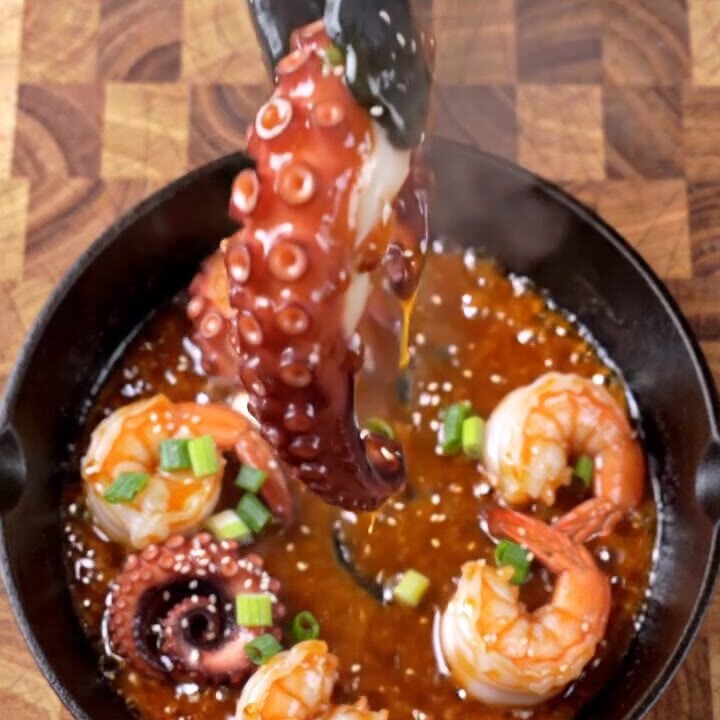
- Heat the cast iron skillet over medium-high heat and melt the butter with the oil. Add the octopus pieces first and let them char until browned at the edges. Add the shrimp and turn them until they turn pink and opaque, cooking until they reach 145°F (63°C) inside.
- Lower the heat slightly and add the minced garlic and grated ginger. Stir for about 30 seconds until fragrant, taking care not to scorch the garlic in the hot butter and oil.
- Stir in the gochujang and honey until smooth. Let the mixture bubble and reduce for about a minute, until it turns glossy and thickens enough to coat the shrimp and octopus.
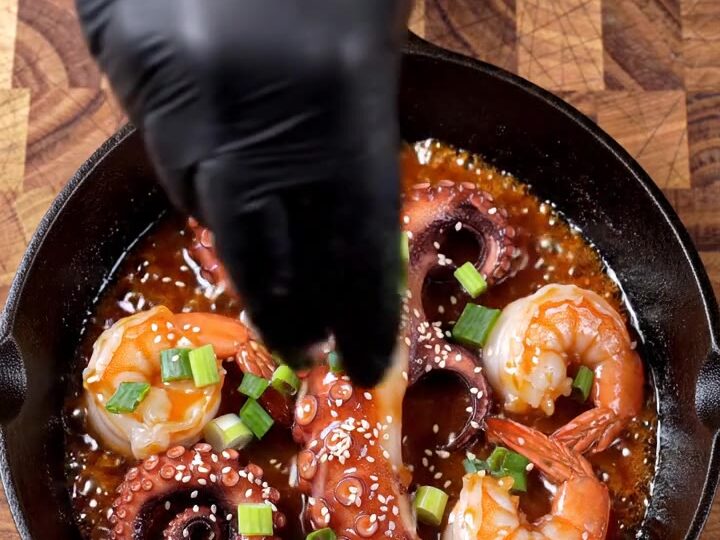
- Scatter the sliced scallion whites over the top and toss the shrimp and octopus with tongs until every piece is evenly glazed. Finish with the green scallion rings and serve immediately from the skillet while the glaze is still sticky.
Estimated nutrition per serving
- Calories
- 340
- Protein
- 36 g
- Carbohydrates
- 18 g
- Fat
- 12 g
- Fiber
- 1 g
- Sugar
- 10 g
- Sodium
- 1100 mg
Next recipe
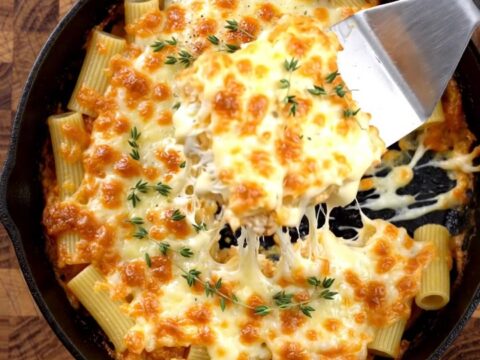
French Onion Rigatoni Skillet: One Pan, Golden Cheese Crust
See the recipe → →This recipe is based on a short cooking video and is published under the pen name Clara Weller. It was checked before publication, but errors can slip through. Nutrition, when shown, is an estimate. Read more in our editorial policy and on our food safety page.
More recipes to try

Coconut Crusted Mahi Mahi with Mango Salsa in One Skillet
Total time: 30 min
Garlic Butter Clams and Prawns Skillet with White Wine
Total time: 25 min
Crispy Smashed Potatoes with Molten Raclette Cheese Skillet
Total time: 35 min
Four Cheese Macaroni with Crispy Panko Cauliflower Skillet
Total time: 1 h
Cajun Blackened Salmon with Creamy Gulf Shrimp Skillet
Total time: 40 min