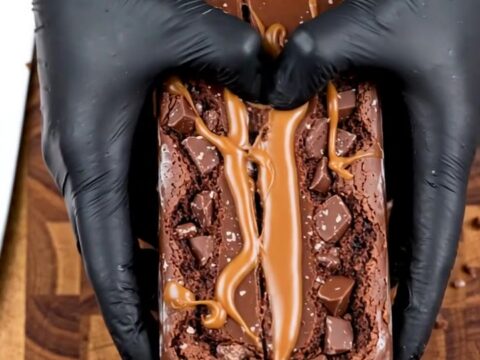
Desserts · Part 3 of 3: Tips & recipe card
Dubai-Style Dark Chocolate Pistachio Kataifi Bars with Halva Tips, FAQ & printable recipe
- Prep
- Cook
- Total
- Serves
- 12
Tips for success
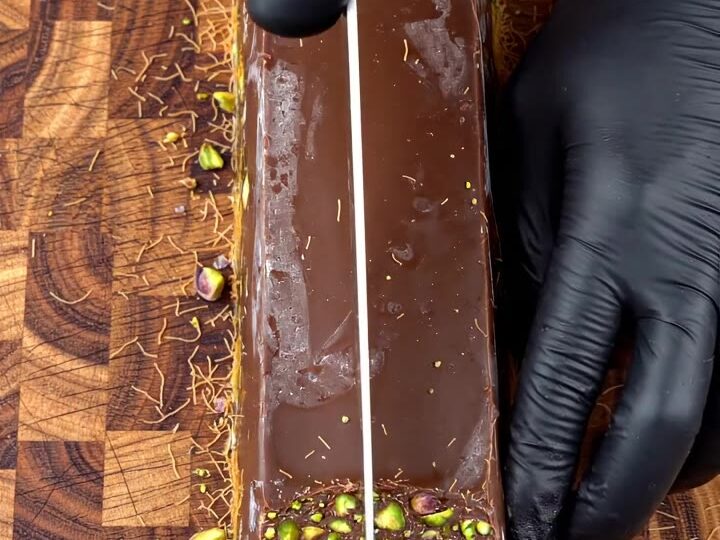
For clean bars, use a sharp knife warmed briefly under hot water and dried before each cut. Wipe the blade between slices so the chocolate surface stays glossy and the layers stay distinct. Cut on a cool, flat surface and work with confident, single pressing motions rather than sawing back and forth.
Grate the chocolate while it is cold and firm, and keep the shavings in a bowl nearby until the moment you need them. Warm chocolate tends to smear and clump on the board, while chilled chocolate produces fine shavings and tidy curls. Work quickly during the garnish stage so the melted chocolate does not set before the toppings are added.
Variations
- Rose and cardamom: Stir a pinch of ground cardamom and a few drops of rose water into the melted chocolate before pouring. The floral scent pairs well with pistachio and halva, giving the bars a fragrant, classic flavor profile.
- Extra nut crunch: Replace the almonds with additional chopped pistachios or toasted hazelnuts for a different nut profile. Keep the amount the same so the base still packs tightly and slices cleanly.
- Tahini halva: Swap pistachio halva for tahini halva or plain sesame halva for a toastier, more savory sweetness. Use the same weight and chunk size so the layers stay balanced.
- Lighter chocolate: Use semisweet chocolate with a little less cacao for a sweeter, softer bar. Choose a chocolate that melts smoothly and sets glossy so the top stays shiny after chilling.
Storage and make-ahead
- Fridge
- Keep the bars in an airtight container in the refrigerator for up to one week, away from strong odors.
- Freezer
- Freeze the uncut slab wrapped tightly in parchment and foil for up to two months, then thaw it in the refrigerator before cutting.
- Reheat
- No reheating is needed. Let refrigerated bars stand at room temperature for about 10 minutes before serving.
Store the bars in an airtight container in the refrigerator, with a sheet of parchment between layers if you stack them. Keep the container away from strong-smelling foods, since chocolate absorbs odors easily.
Bring the bars to room temperature for about 10 minutes before serving so the chocolate softens slightly and the base stays pleasantly crisp. Discard any bars that show signs of spoilage, such as an off smell or moisture beading on the surface.
You can make the slab a day in advance. Assemble the base, pour the chocolate, add the garnish and chill it until firm, then cover the pan tightly and keep it in the refrigerator. Cut the bars just before serving for the cleanest edges.
The kataifi keeps its crunch best when the bars are not left out at room temperature for long periods. If you need to prepare parts earlier, toast the nuts and sesame seeds and chop the halva up to two days ahead, storing them in airtight containers at cool room temperature.
Serving ideas
Serve the bars on a small plate at room temperature, with a few extra pistachio pieces scattered over the top for color.
A cup of strong coffee or unsweetened mint tea pairs well with the sweetness of the halva and the richness of the dark chocolate. Arrange them on a wooden board for a striking presentation at a dinner party or with afternoon drinks.
These bars also suit a dessert platter alongside fresh fruit, such as sliced oranges or pomegranate seeds, which add brightness against the rich chocolate.
Wrap individual bars in parchment or cellophane for gifts or take-home treats. Offer a small knife on the side so guests can cut their own pieces, which keeps the layers intact and the presentation clean.
Frequently asked questions
Can you use a different type of pastry instead of kataifi?
Why does the chocolate top sometimes look dull after setting?
How long should the bars chill before cutting?
Can the bars be made without a grater?
Is it safe to store the bars at room temperature?
Dubai-Style Dark Chocolate Pistachio Kataifi Bars with Halva
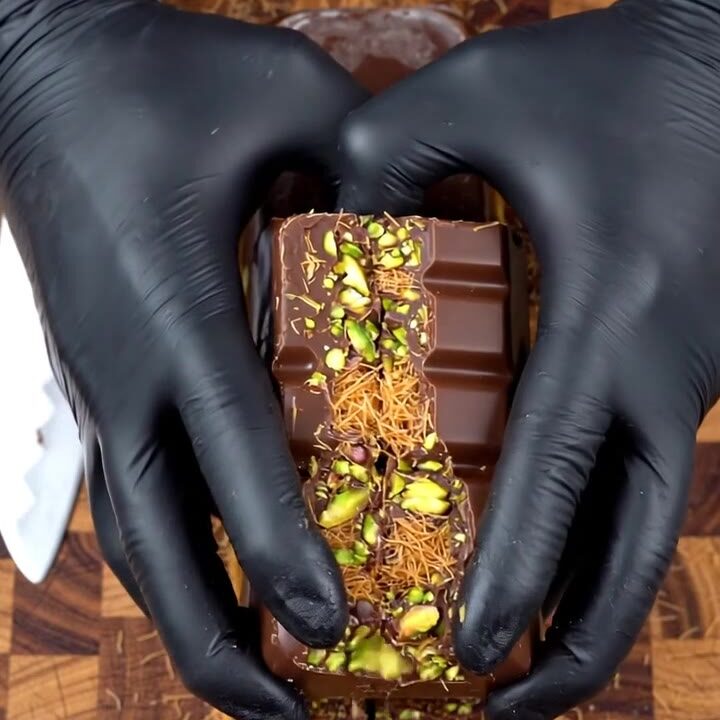
Ingredients
- 8 oz kataifi pastry, shredded
- 4 tbsp unsalted butter, melted
- 1 cup shelled pistachios, whole and chopped
- 1/2 cup sliced almonds, chopped
- 2 tbsp toasted sesame seeds
- 4 oz pistachio halva, in chunks
- 1/2 cup thick caramel sauce
- 12 oz dark chocolate, plus 1 bar for grating, divided
- 1/4 cup crushed green pistachios
- fine sea salt, to taste
Instructions
- Spread the shredded kataifi across the cutting board and toss it with the melted butter and a pinch of salt until evenly coated. Scatter the whole and chopped pistachios, the almonds and the sesame seeds over the pastry.
- Break the halva into chunks and scatter them over the nut mixture. Spoon the caramel sauce over the top and press everything together firmly with your gloved hands until it forms one layered mixture.
- Hold the dark chocolate bar over the board and grate it with a box grater, letting fine shavings and curls fall onto the work surface. Set aside about 4 ounces of the grated chocolate for finishing.
- Line the rectangular pan with parchment paper, letting it overhang the sides. Transfer the nut and kataifi mixture into the pan and press it down firmly and evenly to form a compact base.
- Melt the remaining dark chocolate in a heatproof bowl set over barely simmering water, stirring until smooth. Pour the melted chocolate generously over the base and spread it evenly to the edges.
- Scatter the reserved grated chocolate, chopped pistachios and halva pieces over the chocolate, then dust with the crushed green pistachios. Refrigerate the pan until the chocolate is firm.
- Lift the slab out using the parchment overhang and place it on the cutting board. Cut it with a sharp knife into twelve neat rectangular bars, wiping the blade between cuts for clean edges.
Estimated nutrition per serving
- Calories
- 420
- Protein
- 7 g
- Carbohydrates
- 38 g
- Fat
- 27 g
- Fiber
- 3 g
- Sugar
- 26 g
- Sodium
- 90 mg
Next recipe

Caramel Apple Croissants with Chocolate Shavings and Whipped Cream
See the recipe → →This recipe is based on a short cooking video and is published under the pen name Clara Weller. It was checked before publication, but errors can slip through. Nutrition, when shown, is an estimate. Read more in our editorial policy and on our food safety page.
More recipes to try
Mango Coconut Passionfruit White Chocolate Bark Bars with Nuts
Total time: 2 h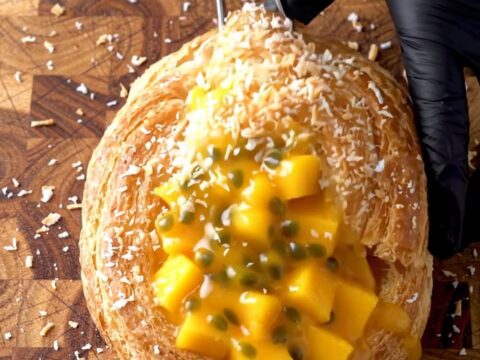
Tropical Mango Danish with Passionfruit Cream: Flaky, Golden and Ready in About One Hour
Total time: 55 min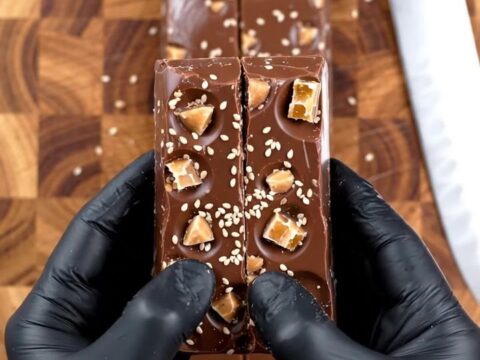
Honeycomb Dark Chocolate Bark Bars for Easy Make-Ahead Treats
Total time: 1 h 25 min
Chai-Spiced Pear Cake with Salted Caramel Mascarpone
Total time: 2 h 5 min
Chocolate Almond Kringle: Flaky Braided Danish Ring with Dark and Milk Chocolate
Total time: 1 h 30 min