Desserts · Part 1 of 3: Ingredients
Mango Coconut Passionfruit White Chocolate Bark Bars with Nuts
- Prep
- Cook
- Total
- Serves
- 16
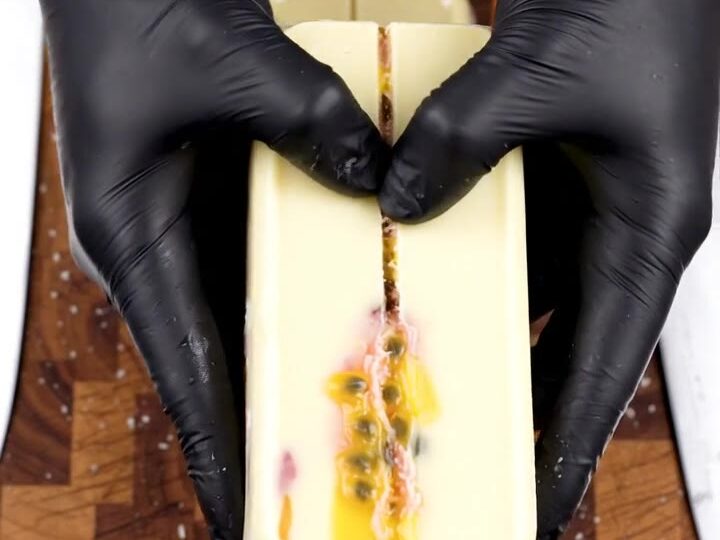
Crunchy toasted nuts, chewy dried mango and sweet coconut sit in a smooth layer of white chocolate, then a bright streak of passionfruit runs across the top. This bark is quick to build, needs no oven, and cuts into neat bars that look far more finished than the effort they take.
These white chocolate bars are a simple, no-bake dessert built on one strong idea: a thin layer of melted white chocolate becomes a base for crunchy nuts, dried mango and coconut. Chopping the nut mix by hand gives you a mix of sizes, from fine crumbs to larger pieces, so every bite has some texture.
Grated white chocolate adds soft curls that melt into the surface, and passionfruit pulp brings a sharp tropical note that cuts through the sweetness. Once the bark sets, you lift it from the tray and cut it into bars. The whole process takes less than half an hour of hands-on work, and the rest of the time is simply waiting for the chocolate to firm up.
Ingredients
Nut and fruit mix
- 1/4 cup whole almonds, roughly chopped
- 1/4 cup hazelnuts, roughly chopped
- 1/4 cup macadamia nuts, roughly chopped
- 1/4 cup pecans, roughly chopped
- 1/2 cup dried mango pieces, chopped
- 1/3 cup unsweetened shredded coconut
Bark
- 12 oz white chocolate, chopped, plus a small block for grating
Topping
- 2 tbsp toasted coconut flakes
- 3 ripe passionfruit, pulp only
Why this recipe works
White chocolate is the right base for this bark because it is sweet, creamy and sets with a clean snap when cooled. Spreading it while it is still fluid means the nuts, mango and coconut can sit on the surface rather than sink into it.
When you scatter the toppings onto soft chocolate, they bond as it cools, so each piece stays in place when you cut the bars. Thin layers also set faster and more evenly than thick ones, which is why the tray should be spread to an even depth before anything else goes on.
Passionfruit pulp is drizzled last because its acidity and water content would seize or dull the chocolate if it were stirred in early. Laid on top in streaks, it stays bright and shows clearly against the white surface.
The contrast between sweet chocolate, tart fruit and toasted nuts is what keeps each bite interesting, so every element earns its place in the bark. The method keeps the fruit and nuts whole enough to read as distinct ingredients.
Notes and substitutions
Choose nuts that are raw or lightly toasted and unsalted, since the white chocolate is already sweet. Chopping them by hand, rather than using pre-chopped pieces, gives a better range of sizes. The nut list includes almonds, hazelnuts, macadamia nuts and pecans, but you can use any combination of two or three of them if you prefer, as long as the total volume stays the same. Keep the coconut unsweetened to balance the chocolate.
You need a rimmed baking tray, about 9 by 13 inches, lined with parchment so the bark lifts out cleanly. A box grater produces the fine white chocolate curls, and a large chef's knife is the best tool for both chopping the nuts and cutting the finished bark into bars.
A microwave-safe bowl or a double boiler works for melting the chocolate. If you use white candy melts or white baking chips instead of bar chocolate, expect a sweeter, softer result, and check that they melt smoothly before you pour them out.
- white chocolate: white chocolate baking chips or white candy melts, though the flavor will be sweeter and less buttery
- passionfruit pulp: strained passionfruit juice mixed with a little confectioners' sugar, for a smoother drizzle
- dried mango: dried apricots, chopped, for a similar chewy and golden contrast
Equipment
- Large chef's knife
- Wooden cutting board
- Box grater
- Rimmed baking tray (about 9 by 13 inches)
- Parchment paper
- Microwave-safe bowl or double boiler
- Small sieve
Up next · Part 2 of 3
7 steps · 5 min of cooking · what to look for at each stage
Step-by-step instructions (Part 2)