Desserts · Part 1 of 3: Ingredients
Tropical Mango Danish with Passionfruit Cream: Flaky, Golden and Ready in About One Hour
- Prep
- Cook
- Total
- Serves
- 6
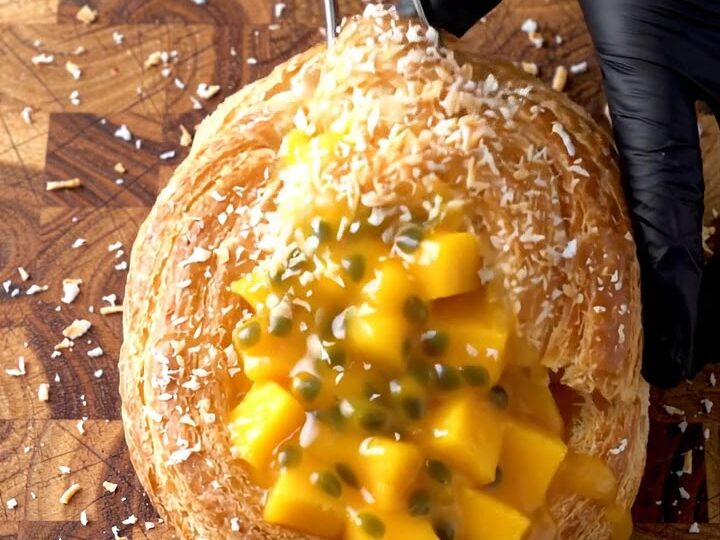
Imagine a flaky golden pastry opening to a cool, silky cream, sweet fanned mango and a sharp burst of passionfruit.
This tropical danish looks like a bakery treat, yet it comes together from one sheet of puff pastry, a bowl of cream and a few fresh fruits. Read on for the steps, the timing and the small details that make the pastry rise high and stay crisp.
This tropical mango danish brings together three textures in one bite: the crisp, buttery layers of puff pastry, a smooth passionfruit cream and juicy mango. The method is simple. You cut the pastry into rectangles, spread the cream, fan the mango and spoon over the passionfruit, then bake until the edges puff and turn deep golden.
A finishing layer of diced mango, extra passionfruit and toasted coconut adds freshness and crunch just before serving. Because the pastry is store-bought, the work stays focused on the fruit and the cream, and the result looks impressive on a wooden board.
Ingredients
Pastry
- 1 sheet store-bought puff pastry, thawed
Filling and topping
- 2 ripe mangoes, peeled and pitted
- 3 ripe passionfruit, halved
Passionfruit cream
- 4 oz cream cheese, softened
- 1/2 cup heavy cream, cold
- 1/4 cup confectioners' sugar
Topping
- 1/4 cup shredded coconut, toasted
Pastry
- 1 egg, beaten, for brushing
Why this recipe works
Puff pastry rises in the oven because its thin layers of butter turn to steam as they bake.
Scoring a border around each rectangle lets the edges lift and puff while the centre stays flat, which gives the danish a tray-like base to hold the filling. Keeping that border dry is what allows it to turn golden and crisp rather than soggy.
The cream is built from softened cream cheese, confectioners' sugar and whipped heavy cream. The cream cheese gives a firm, tangy base, while the whipped cream makes the filling light and smooth. Folding the two together keeps the cream airy, so it does not weigh down the pastry or spread into the edges during baking.
Notes and substitutions
Choose ripe mangoes that give slightly when pressed and smell sweet at the stem. Firm mangoes are harder to cut into clean cubes and fan neatly. Passionfruit should be wrinkled and heavy for its size, because the pulp of ripe fruit is juicier and more fragrant. Buy a little extra fruit in case some passionfruit is too dry.
Use a sturdy rimmed baking tray lined with parchment so the pastry does not stick or slide. A box grater and a chef's knife help with the coconut and the fruit, and a fine-mesh sieve lets you drain any extra juice from the mango before it goes on the pastry.
Gloves keep the mango juice off your hands and make the cutting cleaner. If you prefer, mascarpone can replace the cream cheese for a softer cream, and passionfruit pulp without seeds can be used when fresh fruit is out of season.
- cream cheese: mascarpone, for a softer and less tangy cream
- heavy cream: whipping cream with at least 30 percent fat
- fresh passionfruit: 1/3 cup passionfruit pulp without seeds, drained
Equipment
- Rimmed baking tray
- Parchment paper
- Box grater
- Chef's knife
- Cutting board
- Mixing bowl
- Whisk or hand mixer
- Fine-mesh sieve
Up next · Part 2 of 3
6 steps · 20 min of cooking · what to look for at each stage
Step-by-step instructions (Part 2)