Dinner · Part 3 of 3: Tips & recipe card
Crusty No-Knead Dutch Oven Sourdough Bread Tips, FAQ & printable recipe
- Prep
- Cook
- Total
- Serves
- 12
Tips for success
For the most dramatic crust, make sure your Dutch oven is preheated for a full 30 minutes before baking. That intense heat is what gives the bread its immediate oven spring and crackling crust. Use a sharp razor blade or lame to score the dough—it should glide through without dragging.
If the dough sticks to the blade, dip it in water or flour. When you transfer the dough to the hot pot, don't be shy: lower it in confidently, but carefully, using the parchment paper as handles.
Let the bread cool completely on a wire rack before slicing. This is crucial—cutting too early will result in a gummy, dense crumb. If you want a softer crust, wrap the cooled loaf in a clean kitchen towel.
For a crisper crust, store it cut-side down on a cutting board. To reheat, place slices in a toaster or under a broiler for a minute or two, and the crust will crackle again. Serve with good salted butter and maybe a sprinkle of flaky sea salt.
Variations
- Seeded Sourdough: Add 1/4 cup each of toasted sesame seeds, sunflower seeds, and poppy seeds to the dough with the flour. For extra crunch, roll the proofed loaf in a mixture of seeds before scoring.
- Whole Wheat Sourdough: Replace 150 grams of the bread flour with whole wheat flour. The loaf will be denser but more flavorful. Increase the water by 25 grams to keep the dough hydrated.
- Rosemary Garlic Sourdough: Fold 1 tablespoon of chopped fresh rosemary and 2 minced garlic cloves into the dough during the stretch and fold phase. The aroma is incredible.
- Cheddar Jalapeño Sourdough: Fold 1 cup of shredded sharp cheddar cheese and 2 diced jalapeños into the dough during the stretch and fold phase. Use a generous hand with the cheese for a gooey crumb.
Storage and make-ahead
- Fridge
- Store the bread in a paper bag at room temperature for up to 2 days. Do not refrigerate—it will dry out faster.
- Freezer
- Slice and freeze in a zip-top bag for up to 3 months. Toast directly from frozen.
- Reheat
- Reheat slices in a toaster or oven at 350°F (175°C) for 5 minutes to refresh the crust.
Store the bread at room temperature in a paper bag or wrapped in a kitchen towel for up to 2 days. The crust will soften slightly, but the crumb stays moist. For longer storage, slice the bread and freeze it in a zip-top bag for up to 3 months. To refresh, toast the slices directly from the freezer or reheat in a 350°F (175°C) oven for 5 to 10 minutes.
The dough can be prepared up to 24 hours ahead. After shaping, place it in the refrigerator for a cold proof of 8 to 24 hours. The longer proof develops more flavor and makes the dough easier to handle. You can also freeze the shaped, unbaked dough for up to 1 month. Thaw it in the refrigerator overnight, then let it come to room temperature for about 1 hour before scoring and baking.
Serving ideas
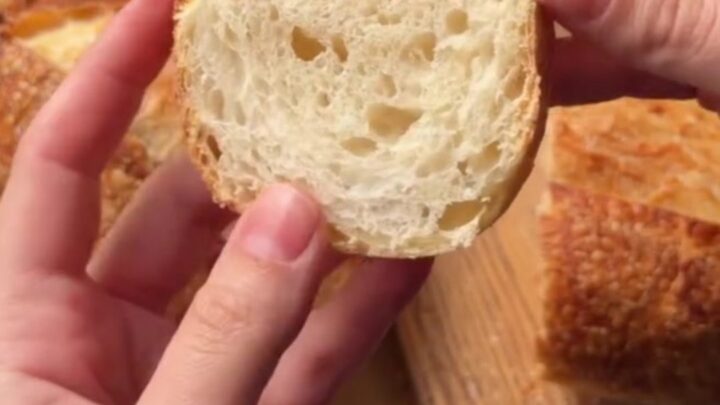
This sourdough is a showstopper on any table. Serve it warm with a generous pat of salted butter, letting it melt into the craggy crumb. It's perfect alongside soups, stews, or salads, and it makes exceptional toast for breakfast.
The crust is so crisp that it cracks when you squeeze it, and the interior is tender and chewy. For a simple appetizer, slice it thinly and top with olive oil and flaky sea salt.
For a more indulgent treat, spread the warm slices with honey or fig jam. The tangy bread pairs beautifully with creamy cheeses, cured meats, or roasted vegetables.
It also makes fantastic sandwiches—the sturdy crumb holds up to hearty fillings without getting soggy. Leftover bread can be turned into croutons, breadcrumbs, or a bread pudding. No matter how you serve it, this loaf is sure to impress.
Frequently asked questions
Why is the crust not crackling?
Can the dough be over-proofed?
What is the best way to score the dough?
Can this recipe be made without a Dutch oven?
Why is the crumb gummy?
Crusty No-Knead Dutch Oven Sourdough Bread

Ingredients
- 100 g active sourdough starter
- 350 g warm water
- 500 g bread flour
- 10 g sea salt
- salted butter, for serving
Instructions
- In a large mixing bowl, combine the active sourdough starter and warm water. Stir until the starter is mostly dissolved. Add the bread flour and sea salt. Mix with a spatula or your hand until a shaggy dough forms and no dry flour remains. Cover the bowl with a damp cloth or plastic wrap and let it rest for 30 minutes.
- Perform a series of stretch and folds every 30 minutes for the first 2 hours. To stretch and fold, reach under one side of the dough, pull it up and over to the opposite side, then rotate the bowl and repeat. Do this 4 times around the bowl. Then let the dough rest, covered, at room temperature for 4 to 6 hours, until it is puffy, has increased in volume by about 50%, and shows bubbles on the surface.
- Turn the dough out onto a lightly floured surface. Gently shape it into a round boule by folding the edges toward the center, then flipping it seam-side down and rotating it against the counter with cupped hands to create surface tension. Place the dough seam-side up into a floured proofing basket or a bowl lined with a floured kitchen towel. Cover and refrigerate for at least 8 hours, or up to 24 hours.
- Place a Dutch oven with its lid on in the oven. Preheat the oven to 450°F (232°C). Let the Dutch oven heat for at least 30 minutes so it is screaming hot. Meanwhile, remove the dough from the refrigerator and let it sit at room temperature while the oven heats.
- Carefully remove the hot Dutch oven lid. Place a sheet of parchment paper over the dough, then invert the proofing basket to release the dough onto the parchment. Score the dough with a sharp razor blade or lame: make a single long slash about 1/2 inch deep along the top, or create a cross or ear pattern. The score should be confident and decisive.
- Use the parchment paper to carefully lift the scored dough and lower it into the hot Dutch oven. Place the lid on and bake at 450°F (232°C) for 20 minutes. The steam trapped inside the pot will help the bread rise and form a glossy, crackly crust.
- Remove the lid and continue baking for 25 to 30 minutes, until the crust is deeply caramelized, dark golden brown, and blistered. The internal temperature of the bread should register 205°F (96°C) to 210°F (99°C) on an instant-read thermometer. If the crust is browning too quickly, tent loosely with foil.
- Carefully lift the bread out of the Dutch oven using the parchment paper and transfer to a cooling rack. Let cool for at least 1 hour before slicing. This allows the crumb to set; slicing too early will result in a gummy interior. When ready to serve, slice thick or thin, and spread with salted butter while the bread is still warm.
Estimated nutrition per serving
- Calories
- 220
- Protein
- 7 g
- Carbohydrates
- 45 g
- Fat
- 1 g
Next recipe

One-Pot Stuffed Shells and Meatballs Skillet
See the recipe → →This recipe is based on a short cooking video and is published under the pen name Clara Weller. It was checked before publication, but errors can slip through. Nutrition, when shown, is an estimate. Read more in our editorial policy and on our food safety page.
More recipes to try

Crispy Chicken Alfredo Sandwich with Garlic Ciabatta
Total time: 35 min
Ultra-Crispy Buttermilk Chicken Tenders
Total time: 30 min
Cheesy Roasted Tomato Tagliatelle with Mozzarella Pull
Total time: 30 min
Smoky Sheet Pan Chicken Kebab Wraps with Garlic Yogurt Sauce
Total time: 45 min
Crispy Panko Chicken Caesar Smash Tacos
Total time: 27 min