Dinner · Part 1 of 3: Ingredients
Crusty No-Knead Dutch Oven Sourdough Bread
- Prep
- Cook
- Total
- Serves
- 12
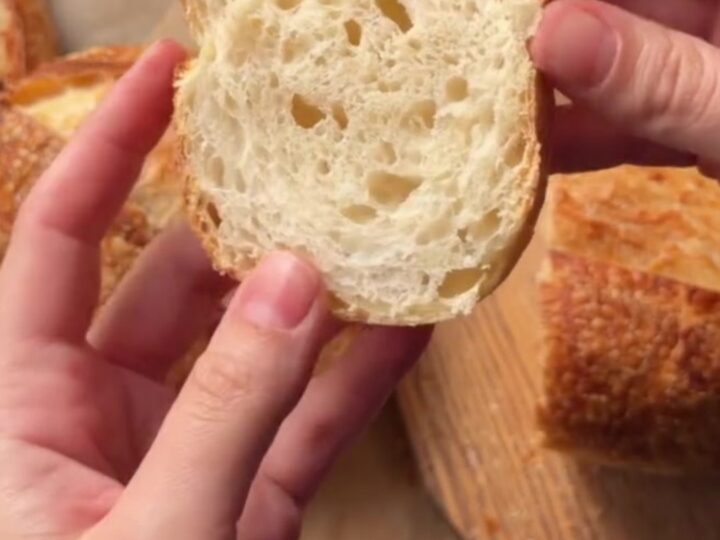
This is the sourdough loaf that makes everyone stop mid-conversation. The moment the knife hits the crust, it shatters with a loud, crackling crunch, revealing a steaming, honeycomb crumb that is open, airy, and begging for a thick swipe of salted butter. It's the kind of bread that turns a simple dinner into an event, and the best part? There's no kneading, no complicated shaping, and no fuss. Just a handful of pantry staples, a Dutch oven, and a little patience.
This no-knead Dutch oven sourdough delivers a bakery-worthy loaf with a blistered, crackling crust and an open, airy crumb. The method relies on a long, slow fermentation to develop flavor and structure, then a screaming-hot Dutch oven to trap steam and create that dramatic oven spring. The result is a bread that looks and sounds impressive—think artisan boules from your favorite bakery—but is surprisingly low-effort.
Mix the dough, let time do the work, and bake. The recipe uses just four ingredients: active starter, warm water, bread flour, and sea salt. No special equipment, no stand mixer, no kneading. The Dutch oven does the heavy lifting, mimicking a professional steam-injected oven. Whether you're a seasoned sourdough baker or a curious beginner, this loaf will become a staple.
Ingredients
- 100 g active sourdough starter
- 350 g warm water
- 500 g bread flour
- 10 g sea salt
For serving
- salted butter, for serving
Why this recipe works
The magic of this recipe lies in the combination of a long, cold fermentation and the intense heat of a preheated Dutch oven. The cold proofing slows down the yeast activity, allowing the dough to develop complex, tangy flavors and a strong gluten network without any kneading.
This is what creates the open, honeycomb crumb that is the hallmark of great sourdough. The dough becomes extensible and easy to shape, yet holds its structure during baking, resulting in a lofty, well-risen loaf.
The Dutch oven is the unsung hero. Preheating it to a screaming 450°F (232°C) and then baking the dough covered traps the moisture released by the dough, creating a steamy environment. This steam keeps the crust soft and elastic during the first phase of baking, allowing the bread to expand fully.
When the lid is removed, the dry heat of the oven then caramelizes the crust, turning it a deep, dark golden brown and creating that crackling, blistered exterior that shatters with every slice.
Notes and substitutions
The key to a successful loaf is an active, bubbly starter. If your starter isn't doubling in size within 6 to 8 hours of feeding, it may need more time or a few more feedings to become vigorous. Use warm water (about 90°F/32°C) to help the fermentation start, but not too hot or it will kill the yeast.
Bread flour is preferred for its higher protein content, which gives the crumb more structure and chew. Sea salt adds flavor and helps regulate fermentation; fine table salt can be used but reduce the amount slightly.
A Dutch oven with a tight-fitting lid is essential. A 5- to 7-quart cast-iron or enameled cast-iron pot works perfectly. The pot must be safe to heat empty at 450°F (232°C). If you don't have a Dutch oven, you can use a heavy oven-safe pot or a covered clay baker. Use parchment paper to lower the dough into the hot pot—it makes the transfer safe and easy. A razor blade or lame is ideal for scoring; a sharp knife will work in a pinch, but a lame gives the cleanest slash.
- bread flour: All-purpose flour works, but the crumb will be slightly less open and the crust less chewy.
- active sourdough starter: If using a young or less active starter, increase the bulk fermentation time until the dough is puffy and has visible bubbles.
- sea salt: Fine table salt can be used, but reduce the amount to 8 g because it is more concentrated.
Equipment
- Large mixing bowl
- Dutch oven with lid
- Parchment paper
- Razor blade or lame
- Cooling rack
Up next · Part 2 of 3
8 steps · 45 min of cooking · what to look for at each stage
Step-by-step instructions (Part 2)