Breakfast · Part 3 of 3: Tips & recipe card
Crispy Pesto Eggs on Brioche Toast Tips, FAQ & printable recipe
- Prep
- Cook
- Total
- Serves
- 1
Tips for success
For the crispiest crust, ensure the skillet is truly cold before spreading the pesto. This allows the oil to heat gradually and the cheese to melt and then brown, rather than seizing.
Use a thin, even layer of pesto; too much will make the crust greasy and soft. Grate the Parmesan finely so it melts quickly and integrates with the pesto, creating a cohesive crust that lifts off the pan in one piece.
To achieve a perfectly runny yolk while ensuring the whites are set, cook the eggs over medium heat and resist the urge to flip them.
If the whites are taking too long, cover the skillet for the last 30 seconds to trap steam and gently cook the tops. Always let the eggs rest for a minute off the heat before slicing, allowing the yolk to settle and the crust to firm slightly.
Variations
- Spicy Pesto Eggs: Add a pinch of chili flakes to the pesto before spreading, or drizzle with chili oil after cooking. The heat complements the basil and nutty Parmesan, giving the dish a fiery kick.
- Veggie Pesto Eggs: Thinly slice cherry tomatoes or sautéed spinach and place them on the brioche before adding the pesto eggs. This adds freshness and color, turning the dish into a more substantial meal.
- Cheesy Pesto Eggs: Swap the Parmigiano-Reggiano for a mix of mozzarella and Parmesan for a stretchier, gooier crust. Add a few fresh basil leaves on top before serving for extra aroma.
- Herb Pesto Eggs: Use a cilantro or parsley pesto instead of basil for a different herbal profile. The method remains the same, but the flavor shifts to a brighter, more peppery note.
Storage and make-ahead
- Fridge
- Store leftover pesto eggs in an airtight container in the refrigerator for up to 1 day. The crust will soften, but the flavors remain.
- Freezer
- Freezing is not recommended, as the texture of the eggs and crispy crust will degrade significantly.
- Reheat
- Reheat leftover pesto eggs in a nonstick skillet over low heat for 2 to 3 minutes, flipping once, to re-crisp the crust.
This dish is best enjoyed immediately, as the crispy crust will soften upon standing. If you must store leftovers, refrigerate in an airtight container for up to 1 day. Reheat in a skillet over low heat to crisp the crust again, but note that the yolk will likely be fully set after reheating.
The components can be prepped ahead: measure the pesto and grate the Parmesan, storing them separately in the refrigerator. Toast the brioche just before serving.
The eggs should be cooked fresh to maintain the runny yolk and crispy crust. If making for a crowd, set up multiple skillets or cook in batches, keeping the finished toasts warm in a low oven.
Serving ideas
Serve the pesto eggs immediately after cooking, while the crust is still shatteringly crisp and the yolk is warm and glossy.
Place the toast on a plate and cut into it with a sharp knife so the yolk spills over the crispy edges. A sprinkle of flaky sea salt and extra red pepper flakes can enhance the flavors, but the dish is complete as is.
Pair this with a simple green salad or roasted tomatoes for a more substantial meal. It also works well as a brunch centerpiece, served alongside fresh fruit or a cold glass of orange juice. For a heartier version, add a slice of prosciutto or avocado on the side, but keep the focus on the crispy pesto eggs.
Frequently asked questions
Can this recipe be made without brioche?
Why does the pesto burn instead of crisping?
Can the eggs be cooked until the yolks are firm?
What is the best way to slide the eggs onto the toast?
Can this recipe be doubled for two servings?
Crispy Pesto Eggs on Brioche Toast
Ingredients
- 30 g fresh Genovese basil pesto
- 25 g finely grated Parmigiano-Reggiano
- 2 large organic eggs
- 1 thick slice toasted brioche
- Crushed red pepper flakes, for serving
Instructions
- Place a cold ceramic or nonstick skillet on the counter. Spread the 30 g of fresh Genovese basil pesto evenly across the bottom of the skillet. Sprinkle the 25 g of finely grated Parmigiano-Reggiano over the pesto, covering the surface in a thin, even layer.
- Crack the 2 large organic eggs directly on top of the pesto and Parmesan mixture, spacing them apart so they do not run into each other. Season with a pinch of salt if desired, though the Parmesan adds saltiness.
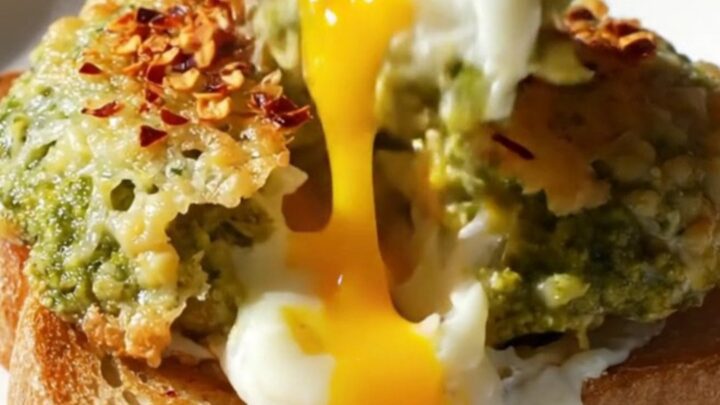
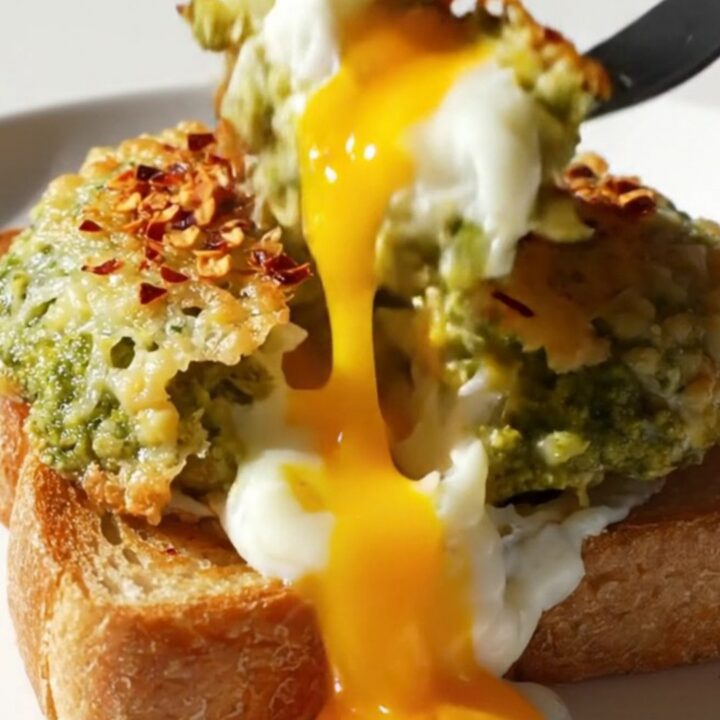
- Place the skillet over medium heat and cook for 3 to 4 minutes. The basil oil will separate and sizzle, frying the eggs while the pine nuts and Parmesan toast into a nutty, crispy emerald-and-gold crust. Cook until the egg whites are fully set and the Parmesan is deeply golden and lacy at the edges.
- Gently press the yolk with a spatula to check its consistency. For a soft, creamy yolk, remove the skillet from heat when the yolk is still slightly soft to the touch but the white is fully set. For a firmer yolk, cook an additional minute. To ensure food safety, cook until the yolk reaches 160°F (71°C).
- While the eggs cook, toast the thick slice of brioche until golden and crisp. Slide the entire pesto-egg crisp onto the toasted brioche, using a spatula to lift the lacy Parmesan crust without breaking it.
- Sprinkle crushed red pepper flakes over the top for a touch of heat. Slice into the runny yolk so it flows over the crispy pesto crust and brioche. Serve immediately while the crust is crisp and the yolk is still warm and glossy.
Estimated nutrition per serving
- Calories
- 550
- Protein
- 22 g
- Carbohydrates
- 35 g
- Fat
- 35 g
Next recipe
One-Skillet Turkish Menemen with Eggs and Feta
See the recipe → →This recipe is based on a short cooking video and is published under the pen name Clara Weller. It was checked before publication, but errors can slip through. Nutrition, when shown, is an estimate. Read more in our editorial policy and on our food safety page.
More recipes to try
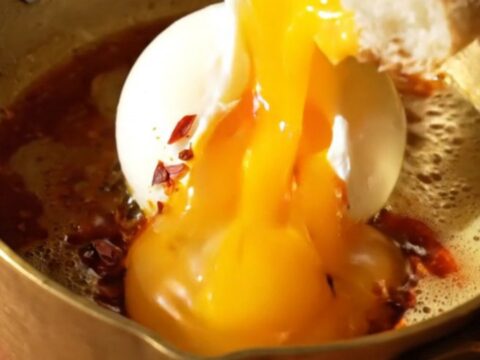
Turkish Poached Eggs with Garlic Yogurt and Aleppo Butter
Total time: 15 min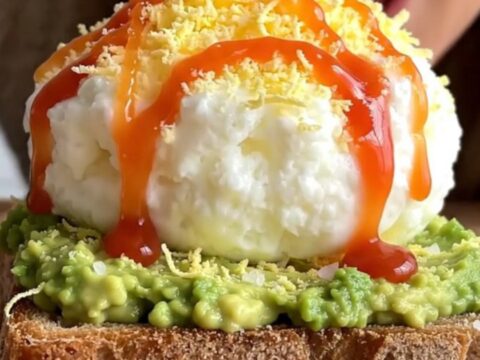
Creamy Avocado and Grated Egg Sourdough Toast
Total time: 5 min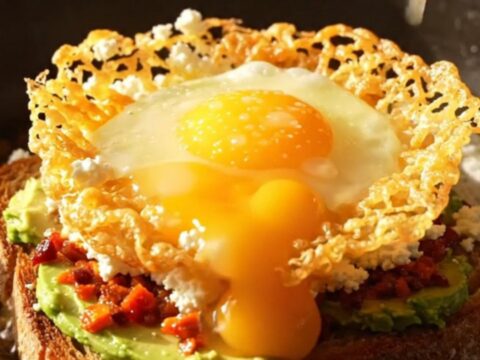
Crispy Chili Feta Egg on Sourdough
Total time: 8 min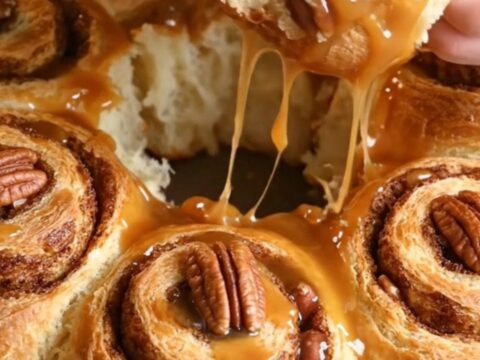
Sticky Pecan Pie Upside-Down Cinnamon Rolls
Total time: 43 min
Crème Brûlée Stuffed Brioche French Toast
Total time: 23 min