Desserts · Part 3 of 3: Tips & recipe card
Creamy Caramel Cheesecake with Graham Crust Tips, FAQ & printable recipe
- Prep
- Cook
- Total
- Serves
- 12
Tips for success
Room temperature is not a suggestion in this recipe — it is the technique. Cream cheese that is still cool in the middle will never beat fully smooth, and the small lumps that survive mixing show up as grainy flecks in every slice.
Set the bricks out a full hour ahead, or cut them into chunks to speed things up. The same goes for the eggs and sour cream: cold additions shock the batter and can leave streaks that never fully blend in.
Treat the caramel as a finishing move, not a make-ahead step. Warm it gently just until it pours like thick honey and spread it in a single confident pass; caramel that is too hot turns thin and slides off the edges, while caramel that is too cold drags and tears the surface.
If a crack ever does appear despite the water bath, the caramel layer covers it completely — one more reason the topping earns its place.
Variations
- Salted caramel top: Finish the caramel layer with a light sprinkle of flaky sea salt just after spreading. The salt sharpens the caramel and balances the sweet filling, and it looks striking against the glossy surface.
- Chocolate crust: Swap the graham crackers for chocolate wafer crumbs in the same quantity. The cocoa-dark base makes the white filling stand out dramatically and pairs naturally with the caramel topping.
- Individual jars: Bake the filling in a shallow pan, cut it into pieces, and layer crust crumbs, filling and caramel in small glass jars for a spoonable version — the exact layered look, no springform needed.
- Pecan crunch finish: Scatter toasted chopped pecans over the wet caramel before it sets. They add a toasty crunch against the creamy layers and a flavor that belongs with caramel.
Storage and make-ahead
- Fridge
- Covered and refrigerated, the cheesecake keeps up to 5 days; add the caramel topping within 4 hours of serving for the glossiest finish.
- Freezer
- Freeze the untopped cake, wrapped in plastic and foil, up to 2 months. Thaw overnight in the refrigerator, then add the warm caramel topping before serving.
- Reheat
- No reheating needed — serve chilled. Warm only the caramel sauce briefly before spreading or drizzling it over each slice.
Keep the cheesecake in the springform ring or on a flat plate, loosely covered, in the refrigerator. Leftovers should be chilled within two hours of serving. Covered well, the cake keeps its texture for up to 5 days, though the crust softens slightly after day three. Store the caramel-topped cake as is; the topping holds its gloss under wrap without weeping noticeably.
This is an ideal make-ahead dessert because the chilling is not waiting time — it is part of the recipe. Bake the cake up to 2 days before serving: cool it fully, cover it and refrigerate it without the topping.
Add the warm caramel layer up to 4 hours before guests arrive, or spread it at the table for a fresh, glossy finish. The crust can also be baked a day ahead and held at room temperature, covered, before the filling goes in.
Serving ideas
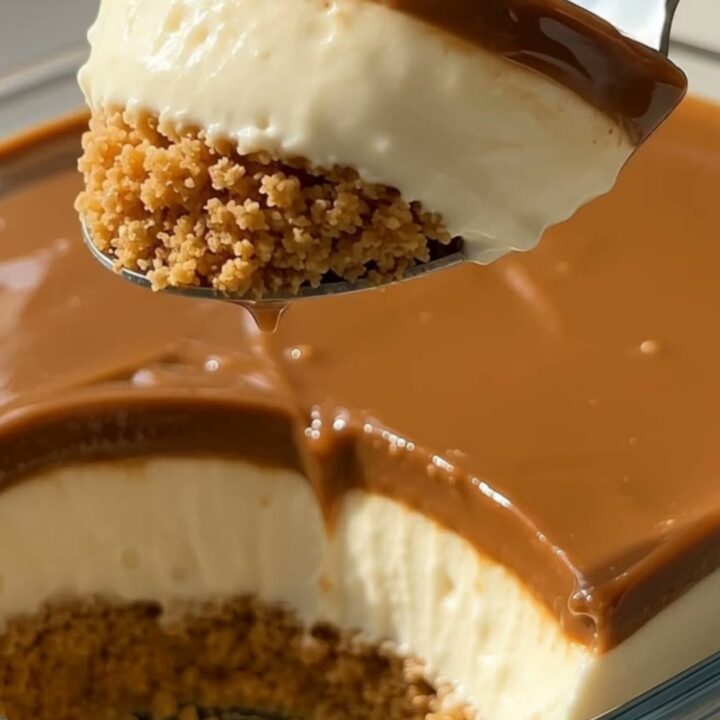
Serve the cheesecake cold, straight from the refrigerator, when the layers are at their sharpest and the filling at its creamiest. A sharp knife wiped with a hot, damp cloth between cuts gives bakery-clean slices, each one showing the full stack: dark graham base, white filling, glossy caramel. A thin metal spatula lifts each piece out without breaking the crust underneath.
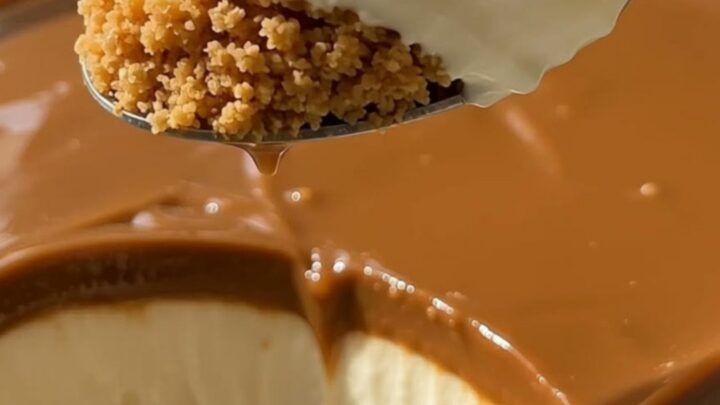
The slices in the video show exactly the goal — a neat portion lifted with a spoon, three layers visible, the caramel catching the light. Portion the cake with a standard 12-slice cut for generous wedges, or cut it into 16 slim pieces for a dessert table.
Offer the remaining caramel sauce in a small pitcher on the side for anyone who wants an extra drizzle, and keep the cake chilled until the moment the plates go down.
Frequently asked questions
Why did the top crack, and how is it prevented?
Can this cheesecake be made ahead?
How does the water bath work without leaking?
Can the caramel topping be homemade instead of store-bought?
Why does the filling need room-temperature ingredients?
Creamy Caramel Cheesecake with Graham Crust
Ingredients
- 1 1/2 cups graham cracker crumbs (about 12 full sheets, crushed fine)
- 5 tbsp unsalted butter, melted
- 1/4 cup granulated sugar
- 2 lb cream cheese, softened to room temperature
- 3/4 cup granulated sugar
- 3 large eggs, at room temperature
- 1 cup sour cream, at room temperature
- 1 tsp vanilla extract
- 3/4 cup caramel sauce, store-bought or made ahead
Instructions
- Heat the oven to 325°F (163°C). Wrap the outside of the springform pan tightly in two layers of heavy-duty aluminum foil, pressing the foil up the sides so no water sneaks in. Set a kettle of water to heat for the bath later.
- Stir the graham cracker crumbs, melted butter and 1/4 cup of sugar together until every crumb looks damp. Press the mixture firmly into the bottom of the pan with the flat bottom of a measuring cup, working it into an even, compact layer.
- Bake the crust for 10 minutes, then set it on a rack. Keep the oven at 325°F (163°C). Let the crust cool while the filling is mixed so the heat does not start setting the cream cheese before it goes in the pan.
- Beat the softened cream cheese on medium speed for 2 minutes, scraping the bowl twice, until it looks completely smooth. Add the 3/4 cup of sugar and beat 1 minute more. Stop and scrape the beaters and the bottom of the bowl — hidden lumps now mean lumps in every slice.
- Add the eggs one at a time, mixing on low just until the last streak of yolk disappears after each addition. Stir in the vanilla. Low speed and a light hand matter here: too much air baked into the batter rises in the oven and cracks as it cools.
- Add the sour cream and fold it in on the lowest speed or by hand with the spatula, stopping as soon as the batter looks even. Pour the filling over the cooled crust and smooth the top. Tap the pan once on the counter to release any large air bubbles.
- Set the springform inside the roasting pan, place both in the oven, then pour the hot kettle water into the roasting pan to reach 1 inch up the sides. Bake 55 to 65 minutes, until the edges are set and the very center reads 160°F (71°C) on an instant-read thermometer.
- Turn the oven off, crack the door open and leave the cheesecake inside for 30 minutes. Lift it from the water bath, remove the foil and cool to room temperature, about 1 hour. Then refrigerate at least 4 hours, overnight for the cleanest slices.
- Run a thin knife around the inside of the pan, then release the spring and lift off the ring. Warm the caramel sauce briefly until it pours like thick honey, and spread it over the top, letting it drift toward the edges without dripping down the sides.
- Wipe a sharp knife with a hot, damp cloth between cuts and slice straight down, lifting each piece out with the blade or a thin spatula. Serve the slices chilled, each one showing the crumbly crust, the creamy white filling and the glossy caramel layer.
Estimated nutrition per serving
- Calories
- 530
- Protein
- 9 g
- Carbohydrates
- 42 g
- Fat
- 36 g
- Fiber
- 1 g
- Sugar
- 30 g
- Sodium
- 380 mg
Next recipe
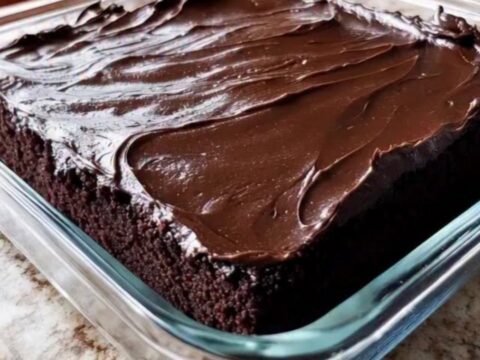
Chocolate Wacky Cake: One-Pan, Egg-Free and Ready in an Hour
See the recipe → →This recipe is based on a short cooking video and is published under the pen name Clara Weller. It was checked before publication, but errors can slip through. Nutrition, when shown, is an estimate. Read more in our editorial policy and on our food safety page.
More recipes to try
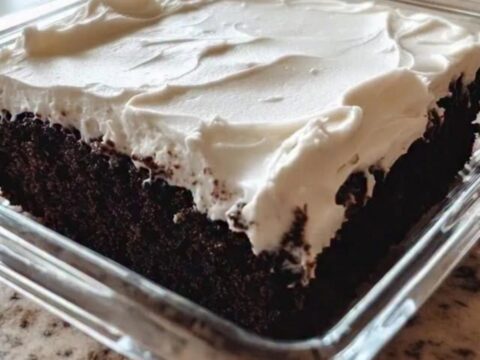
Wacky Cake with Creamy Vanilla Frosting (One Bowl, No Eggs)
Total time: 1 h 50 min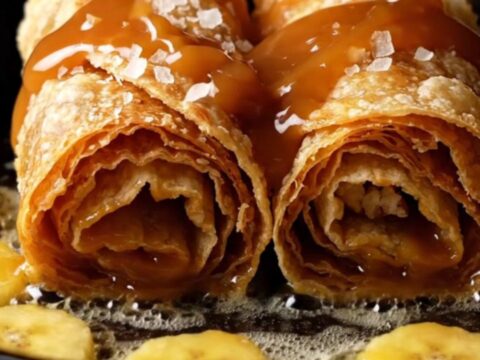
Crispy Dulce de Leche Banana Foster Roll-ups in 30 Minutes
Total time: 30 min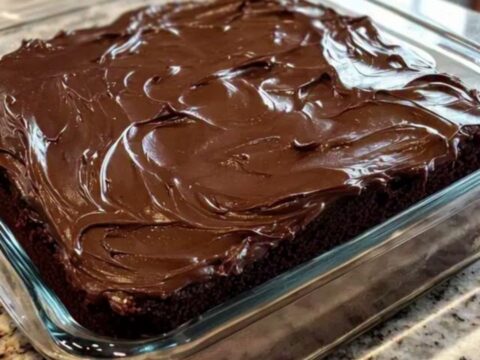
Chocolate Wacky Cake — One-Pan, No Eggs, Ready in an Hour
Total time: 1 h 35 min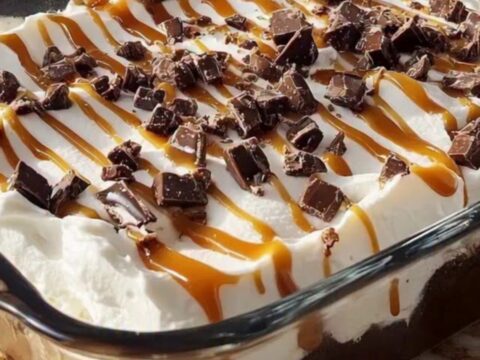
Better Than Sex Cake with Caramel and Toffee in One Dish
Total time: 1 h 15 min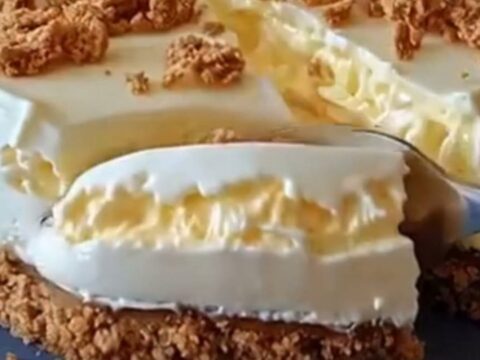
No-Bake Condensed Milk Cheesecake (Foolproof, Creamy)
Total time: 4 h 25 min