Desserts · Part 1 of 3: Ingredients
Chocolate Wacky Cake — One-Pan, No Eggs, Ready in an Hour
- Prep
- Cook
- Total
- Serves
- 9
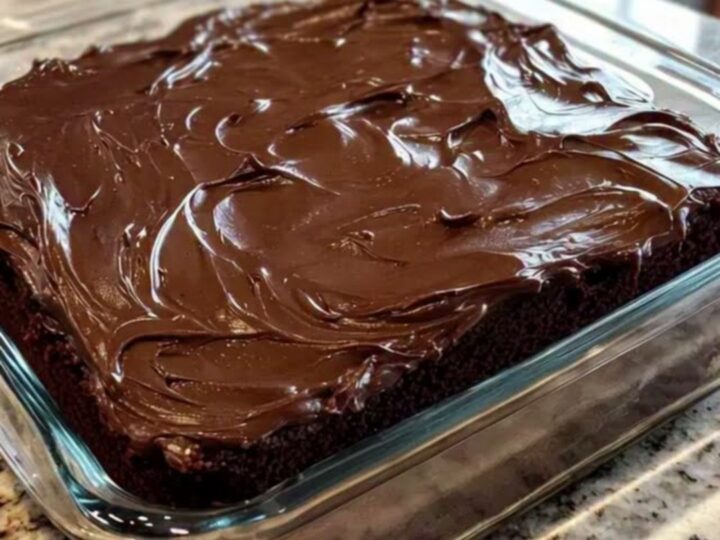
Wacky cake — also called crazy cake or depression cake — is the cleverest chocolate trick in American home baking: a deep, dark, genuinely moist chocolate cake with no eggs, no milk and no butter in the batter. Everything mixes right in the baking dish, the vinegar and baking soda do the lifting, and a generous layer of glossy cocoa buttercream on top makes every square taste far richer than the effort involved.
This recipe makes one 8x8-inch cake, cut into nine generous squares, in about an hour and a half from cupboard to plate — and only about fifteen minutes of that is active work. The batter comes together entirely inside the baking pan: dry ingredients whisked in place, three little wells pressed into the mix, oil, vinegar and vanilla poured into them, water over the top, and a thirty-second stir.
While the cake bakes and cools, a quick cocoa buttercream comes together with a hand mixer in one bowl. The result is tender, deeply moist crumb that lifts cleanly from the dish, crowned with a thick, super rich frosting that clings to the fork. It is the ideal cake for a crowded weeknight schedule, an unplanned dessert request, or a pantry that happens to be short on eggs.
Ingredients
Cake
- 1 1/2 cups all-purpose flour
- 1 cup granulated sugar
- 1/4 cup unsweetened cocoa powder
- 1 tsp baking soda
- 1/2 tsp kosher salt
- 1/3 cup vegetable oil
- 1 tbsp white vinegar
- 1 tsp vanilla extract
- 1 cup water, cool
Cocoa frosting
- 1/2 cup unsalted butter, softened
- 1/4 cup unsweetened cocoa powder
- 2 cups confectioners' sugar, sifted
- 3 tbsp whole milk, plus more if needed
- 1 tsp vanilla extract
Why this recipe works
The magic of wacky cake is chemistry, not luck. Baking soda needs acid to work, and in most cakes that acid arrives in the form of buttermilk or brown sugar. Here, a tablespoon of white vinegar provides it directly: the moment the vinegar meets the baking soda in the pan, carbon dioxide starts forming, and the batter goes into the oven while that reaction is still lively.
Because there are no eggs to structure the crumb, the flour and cocoa take that job, and the oil — liquid at every temperature — keeps the cake soft even straight from the refrigerator.
Mixing in the pan is not just nostalgia; it also protects the rise. Every stir pops bubbles and develops gluten, so the traditional method — dry whisked, wells made, wet added, one quick stir — minimizes both. The water is added all at once over everything, so the stirring starts the instant the fizz is at its peak.
And because the pan is the mixing bowl, no batter is lost to a spatula scraping a separate bowl: every bit of the mix ends up baked. The frosting earns its place too: beating the butter alone first, then the cocoa, then the sugar, builds a glossy, dense buttercream that stays thick on top of the moist crumb instead of sliding off, with just enough milk to loosen it for spreading.
Notes and substitutions
Use unsweetened natural cocoa powder, not Dutch-processed: the baking soda in this recipe is calibrated for natural cocoa's acidity, and swapping them can flatten both the rise and the flavor. White vinegar is traditional and flavorless in the finished cake — apple cider vinegar or lemon juice work equally well. Any neutral oil will do; vegetable, canola and light olive oil all leave the same tender crumb.
For the frosting, butter should be softened but still cool to the touch, around 65°F (18°C); butter that is too warm makes a greasy frosting, while cold butter leaves lumps. Sift the confectioners' sugar if it is clumpy.
An 8x8-inch glass dish, like the one in the video, bakes gently and presents beautifully at the table; a metal pan is fine but check for doneness a few minutes early. A hand mixer makes quick work of the frosting, though a sturdy whisk and some elbow grease will do it.
- white vinegar: Apple cider vinegar or fresh lemon juice works exactly the same way — the acid is what activates the baking soda and gives the cake its lift.
- vegetable oil: Any neutral liquid oil is fine: canola, safflower or light olive oil all keep the crumb tender and moist.
- whole milk: In the frosting, heavy cream makes it even silkier; a plant-based milk such as oat or almond works if a dairy-free frosting is needed.
- unsalted butter: Salted butter can be used — simply omit the pinch of salt called for in the frosting notes.
Equipment
- 8x8-inch square glass or metal baking dish
- whisk
- spatula
- toothpick
- mixing bowl
- hand mixer
- wire cooling rack
Up next · Part 2 of 3
10 steps · 35 min of cooking · what to look for at each stage
Step-by-step instructions (Part 2)