Dinner · Part 3 of 3: Tips & recipe card
Cajun Blackened Salmon with Creamy Gulf Shrimp Skillet Tips, FAQ & printable recipe
- Prep
- Cook
- Total
- Serves
- 2
Tips for success
Keep your salmon and shrimp very dry before seasoning. Moisture on the surface steams the fish and prevents the spice crust from forming, so pat them thoroughly with paper towels just before they go into the hot skillet.
Ventilation matters too, because blackening creates a lot of smoke. Turn on your range hood before heating the cast iron, and open a window if your kitchen is small. Blackening is a fast process, so have all your ingredients chopped and within reach before you start.
Grate the cheese yourself from a block if you can. Pre-shredded cheese contains anti-caking starches that can make the sauce grainy when it melts. A fine metal grater produces a fluffy mound that melts quickly into the cream.
Add the cheese off the most intense heat, and stir gently until it disappears into the sauce. If the sauce becomes too thick, a splash of cream or a tablespoon of water loosens it and restores a silky texture without diluting the flavor.
Variations
- Spicy Shrimp Skillet: Add a pinch of cayenne pepper with the Cajun seasoning and a few dashes of hot sauce to the cream for extra heat. The shrimp will carry the spice, while the cream softens the bite and keeps the sauce balanced and smooth.
- Parmesan Cheese Finish: Replace the Monterey Jack with finely grated Parmesan for a sharper, nuttier flavor. Add it off the heat so it melts evenly, and taste the sauce before adding any extra salt because Parmesan is naturally salty.
- Garlic Herb Butter: Stir two extra minced garlic cloves and a teaspoon of dried thyme into the butter before the salmon goes in. The herb butter adds an aromatic layer that complements the blackened crust without changing the dish.
- Lighter Cream Sauce: Use half-and-half instead of heavy cream for a thinner sauce with less richness. Simmer it a little longer so it reduces and coats the shrimp, and stir in the cheese slowly to keep the texture silky.
Storage and make-ahead
- Fridge
- Store cooled leftovers in an airtight container in the refrigerator for up to two days.
- Freezer
- Freezing is not recommended, because the cream sauce can separate and the shrimp and salmon become tough and watery after thawing.
- Reheat
- Reheat gently in a skillet over low heat with a splash of cream, stirring until warm, to keep the sauce smooth and the fish tender.
Leftovers should be cooled within two hours of cooking, then transferred to a shallow airtight container and refrigerated. Keep the salmon and the shrimp in sauce in separate containers if possible, because the fish can dry out and the shrimp can overcook when reheated together.
Label the container with the date so you know how long it has been stored. Use leftovers within two days for the best texture and flavor. Do not leave the skillet sitting on the stove at room temperature while you eat, and avoid stirring the cheese into hot sauce that is cooling slowly in a deep pot.
You can get much of this dish ready in advance without losing quality. Dice the bell peppers and celery, mince the garlic, and store the vegetables in separate covered containers in the refrigerator for up to one day. Grate the cheese the same day you cook, since it dries out when stored in the open.
Season the salmon and shrimp with Cajun spice, cover them, and refrigerate for up to two hours before cooking, keeping them cold until the skillet is hot. The sauce itself is best made fresh, because the cream can separate if reheated repeatedly. Prepping ahead turns the cooking into a fast, quiet ten minutes at the stove.
Serving ideas
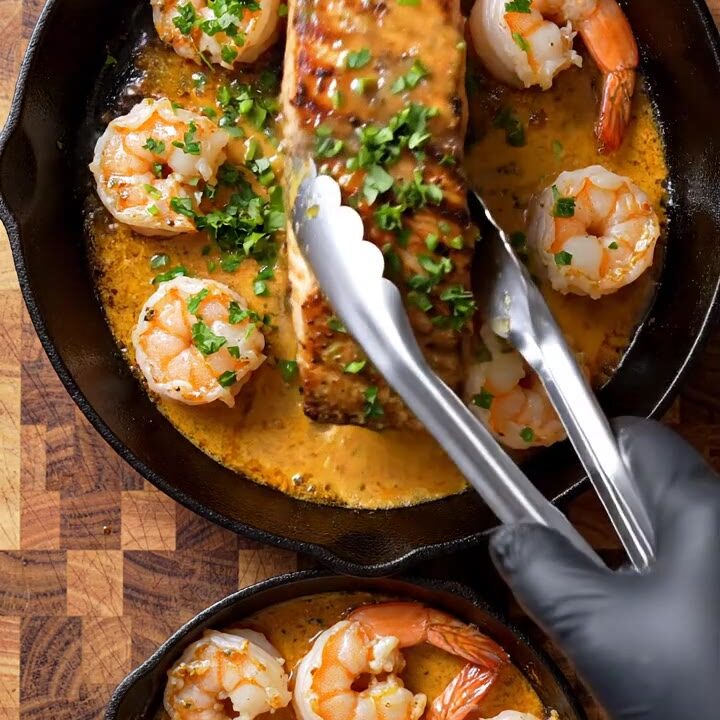
Serve the blackened salmon whole in the center of the table, with the shrimp arranged around it in the creamy sauce. Set a lime half beside the fish so each diner can squeeze it over the salmon, which adds a sharp brightness against the rich cream. Scatter extra parsley over the top just before serving so the green stays fresh and vivid against the dark crust.
A smaller skillet of shrimp in sauce works well as a second serving dish, so the table has plenty of sauce to spoon over the rice or bread. Pair the meal with a crisp green salad or steamed green beans for contrast. Serve immediately while the crust is still crisp and the sauce is hot, since both are best within minutes of leaving the stove.
Frequently asked questions
Can the salmon be blackened without a cast-iron skillet?
Why does the cream sauce sometimes turn grainy?
Can the shrimp be substituted with another seafood?
How do you know the salmon is cooked through without overcooking it?
What should you serve with this Cajun dish?
Cajun Blackened Salmon with Creamy Gulf Shrimp Skillet
Ingredients
- 2 thick salmon fillets, about 6 oz each, skin removed
- 3/4 lb large raw shrimp, peeled and deveined
- 2 tbsp Cajun seasoning, divided
- 3 tbsp unsalted butter
- 1/2 cup diced red and green bell pepper
- 1/2 cup diced celery, plus leafy tops for garnish
- 2 cloves garlic, minced
- 1 cup heavy cream
- 1/2 cup shredded cheese, such as Monterey Jack or mild cheddar
- fresh flat-leaf parsley, chopped, for serving
- 1 lime, halved
Instructions
- Pat the salmon fillets dry and season both sides with half of the Cajun seasoning. Pat the shrimp dry and toss them with the remaining seasoning. Keep the proteins chilled until the skillet is hot.
- Dice the red and green bell peppers and the celery. Mince the garlic. Set the vegetables aside in separate small piles so they are ready for the skillet.
- Grate the cheese on a fine metal grater to make a fluffy mound of shredded cheese. Keep it covered in the refrigerator until it goes into the sauce.
- Heat the black cast-iron skillet over medium-high heat for 3 minutes. Add 2 tbsp butter, then lay the salmon in the skillet. Sear 3 to 4 minutes per side until the outside is dark, blackened and golden, and the fish flakes at the center.
- Move the salmon to one side of the skillet. Add the remaining butter, then the bell peppers, celery and garlic. Cook 2 minutes, then add the shrimp in a single layer and cook 2 to 3 minutes, turning once, until they are pink and opaque.
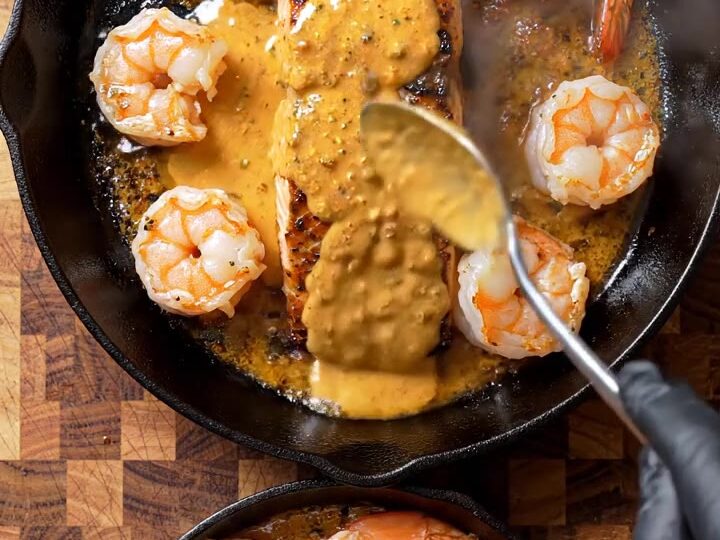
- Pour in the heavy cream and let it simmer over medium heat for 3 to 4 minutes, spooning the sauce over the salmon and shrimp, until it thickens slightly and coats a spoon.
- Sprinkle the grated cheese over the sauce and let it melt into the skillet for about 1 minute, stirring gently. Remove from the heat, then squeeze lime over the salmon and scatter chopped parsley on top.
- Serve the salmon whole with the shrimp arranged around it in the creamy sauce. Spoon the remaining shrimp and sauce into a smaller skillet to serve alongside, and offer the lime half for extra brightness.
Estimated nutrition per serving
- Calories
- 780
- Protein
- 52 g
- Carbohydrates
- 14 g
- Fat
- 56 g
- Fiber
- 2 g
- Sugar
- 3 g
- Sodium
- 1200 mg
Next recipe
Miso Butter Seared Halibut with Mushrooms and Bok Choy
See the recipe → →This recipe is based on a short cooking video and is published under the pen name Clara Weller. It was checked before publication, but errors can slip through. Nutrition, when shown, is an estimate. Read more in our editorial policy and on our food safety page.
More recipes to try
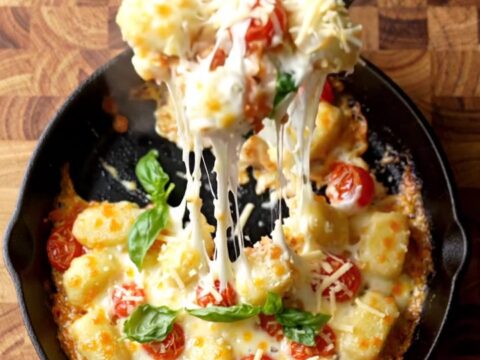
Blistered Tomato Gnocchi with Melted Brie in One Skillet
Total time: 35 min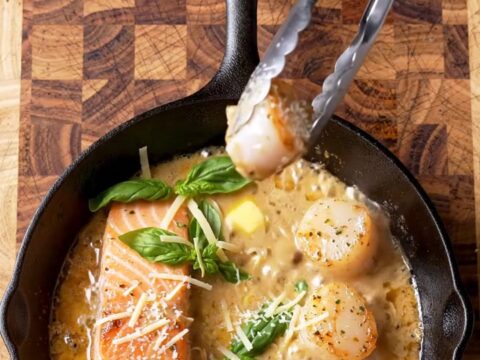
Tuscan Salmon and Scallops in Vodka Cream Skillet
Total time: 40 min
Crispy Jalapeño Corn Fritters with Melted Cheddar and White Sauce
Total time: 45 min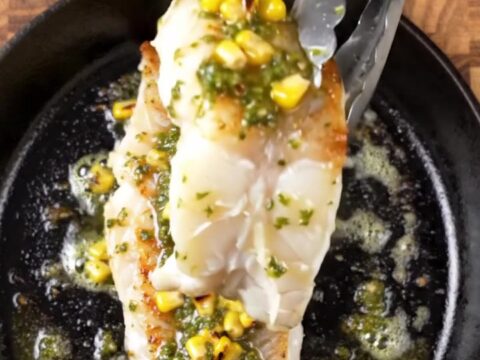
Pan-Seared Sea Bass with Corn and Herb Butter in One Skillet
Total time: 25 min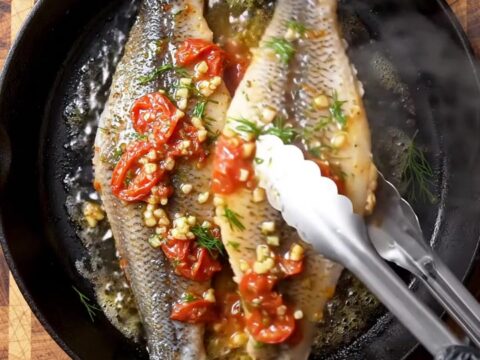
Pan-Seared Arctic Char with Garlic Herb Butter and Crispy Skin
Total time: 22 min