Dinner · Part 1 of 3: Ingredients
Tuscan Salmon and Scallops in Vodka Cream Skillet
- Prep
- Cook
- Total
- Serves
- 4
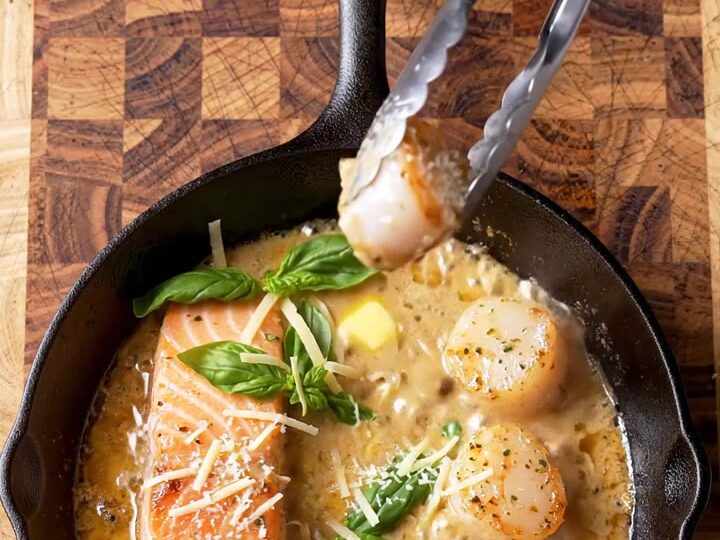
Imagine a cast-iron skillet of salmon and sea scallops sitting in a smooth, rosy tomato sauce, finished with golden Parmesan and fresh basil. This Tuscan-style seafood dinner brings restaurant warmth to the table in one pan and less than an hour of your time, with only a few steps between you and a rich, comforting plate.
This Tuscan salmon and scallops skillet is built around a simple vodka cream sauce. Butter softens whole garlic cloves, then tomato sauce, vodka and heavy cream turn into a smooth, rosy-orange base for the seafood. Thick salmon portions and fresh sea scallops nestle into the bubbling sauce, where they cook gently and absorb its flavor.
Parmesan, dried Italian herbs and a handful of fresh basil finish the dish. Because everything happens in the same skillet, you serve straight from the pan with very little cleanup, and the sauce that clings to the seafood is ready to spoon over rice, pasta or crusty bread.
Ingredients
- 1 lb thick salmon fillet, cut into portions
- 8 oz fresh sea scallops, patted dry
- 2 tbsp unsalted butter
- 4 cloves garlic cloves, whole
- 1 cup tomato sauce
- 1/4 cup vodka
- 1 cup heavy cream
- 1/2 cup finely grated Parmesan cheese, divided
- 1 tsp dried Italian herbs
- fresh basil leaves for serving
- kosher salt and black pepper to taste
Why this recipe works
The method starts with butter and whole garlic because fat carries flavor from the aromatics into the sauce gently, without browning them.
Adding the vodka first and letting it bubble for a short moment cooks off the raw alcohol bite and leaves a clean, slightly sharp note that balances the sweetness of the tomato sauce. The vodka also helps the cream and tomato blend into a stable, smooth emulsion instead of separating into a thin, grainy liquid.
Simmering the seafood directly in the sauce is the key step. Salmon and scallops cook through gently in the simmering liquid, so the flesh stays tender and moist rather than drying out in a hot pan.
The sauce thickens slightly as it reduces around the fish and shellfish, and the proteins release a little flavor back into it. That exchange is why the finished dish tastes unified rather than like separate pieces of seafood on top of a sauce.
Notes and substitutions
Choose thick salmon fillets with even thickness so the portions cook at the same rate. Skin-on portions are fine if you prefer to leave the skin on, but remove it before serving if you do not want it. For the scallops, look for fresh sea scallops labeled dry, which have not been soaked in a sodium solution; they sear better and do not weep so much liquid into the sauce. Patting them dry with paper towels before cooking is essential.
A 12-inch cast-iron skillet holds the seafood in one layer and retains heat well, which keeps the sauce bubbling at a steady rate. A box grater is the best tool for Parmesan, since finely grated cheese melts smoothly into the cream.
Use a wooden spoon to stir the sauce, and tongs to lift the salmon and scallops onto plates. If you do not have cast iron, a heavy stainless steel skillet of similar size works well, though the sauce may need a little more stirring to keep from sticking.
- vodka: Use extra tomato sauce or a splash of chicken broth; the sauce will taste slightly less sharp but still creamy.
- sea scallops: Use large peeled shrimp, adding them with the salmon and cooking until pink and opaque.
- dried Italian herbs: Use dried oregano or a pinch of dried basil in the same amount.
Equipment
- 12-inch cast-iron skillet
- Box grater
- Wooden spoon
- Paper towels
- Tongs
- Cutting board and sharp knife
Up next · Part 2 of 3
8 steps · 20 min of cooking · what to look for at each stage
Step-by-step instructions (Part 2)