Desserts · Part 3 of 3: Tips & recipe card
Authentic Spanish Crema Catalana with Burnt Sugar Crust Tips, FAQ & printable recipe
- Prep
- Cook
- Total
- Serves
- 6
Tips for success
For the best texture, chill the custards uncovered so that a skin does not form on the surface, which can interfere with the sugar crust.
If you prefer a thicker crust, you can use a slightly thicker layer of sugar, but be careful not to make it too thick, as it can be difficult to crack and may not caramelize evenly. Use a fine-mesh sieve to dust the sugar evenly for a professional finish.
The iron salamander should be heated until it is red-hot, but if it is too hot, it can burn the sugar quickly. Practice on a small amount of sugar first to gauge the heat.
If you don't have an iron, a kitchen torch works well, but it will produce a slightly different texture. Serve the crema catalana within 10 minutes of searing, as the crust will soften as it sits.
Variations
- Vanilla Crema Catalana: Replace the cinnamon stick with 1 vanilla bean, split lengthwise, and scrape the seeds into the milk. Proceed with the recipe as directed, infusing the milk with the vanilla pod and seeds. The custard will have a rich, floral vanilla flavor.
- Orange Blossom Crema Catalana: Add 1 tablespoon of orange blossom water to the custard mixture after straining, before pouring into the dishes. This adds a delicate floral aroma that complements the citrus peels. Reduce the orange peel to just 1 strip to avoid overpowering the floral note.
- Espresso Crema Catalana: Add 1 tablespoon of instant espresso powder to the milk during the infusion step. Stir well to dissolve. The coffee flavor pairs beautifully with the caramelized sugar crust, creating a bittersweet contrast.
- Lavender Crema Catalana: Add 1 teaspoon of dried culinary lavender to the milk during the infusion step. Strain it out before adding to the yolks. The lavender adds an aromatic, slightly sweet note that enhances the citrus and cinnamon.
Storage and make-ahead
- Fridge
- Store leftover crema catalana in the refrigerator for up to 3 days. The sugar crust will soften; for best results, sear fresh sugar before serving.
- Reheat
- Do not reheat crema catalana, as it will lose its texture. Serve cold with a freshly seared sugar crust.
Leftover crema catalana can be stored in the refrigerator for up to 3 days, but the sugar crust will soften over time. To keep the crust crisp, it is best to sear the sugar just before serving.
If storing, cover the dishes with plastic wrap or a lid after they have chilled, but note that the custard may absorb odors from the fridge.
The custards can be prepared and chilled up to 2 days in advance. Keep them covered in the refrigerator after they have set. The sugar topping should be added and seared just before serving to maintain the crisp crust. If you need to transport them, keep them chilled and sear the sugar at the destination.
Serving ideas
Serve crema catalana as a finale to a Spanish-inspired meal, or as a refreshing dessert on a warm evening.
The contrast of textures—the crackling sugar crust and the silky custard—makes it a memorable treat. For an elegant presentation, place each cazuela on a small plate with a spoon for cracking the crust.
This dessert is best enjoyed immediately after searing, while the sugar crust is still crisp and the custard is cold. It pairs wonderfully with a small glass of sweet wine or a strong espresso. The citrus and cinnamon flavors make it a versatile dessert that can be served year-round.
Frequently asked questions
Can crema catalana be made without a kitchen torch or iron?
Why does the custard sometimes have lumps?
Can this recipe be made with a non-dairy milk alternative?
How long does the sugar crust stay crisp?
Can crema catalana be made ahead of time?
Authentic Spanish Crema Catalana with Burnt Sugar Crust
Ingredients
- 2 1/2 cups whole milk
- 1 strip lemon peel
- 1 strip orange peel
- 1 cinnamon stick
- 6 large egg yolks
- 1/2 cup granulated sugar
- 3 tbsp cornstarch
- 2 tbsp granulated sugar
Instructions
- Pour the whole milk into a medium saucepan. Add the strip of lemon peel, strip of orange peel, and the cinnamon stick. Place the saucepan over medium heat and bring the milk to a gentle simmer, stirring occasionally. Once small bubbles appear around the edges, remove the pan from the heat and let the milk steep for 10 minutes to infuse the citrus and cinnamon flavors.
- In a medium bowl, whisk the egg yolks with the granulated sugar until the mixture is pale and thick, about 2 minutes. Add the cornstarch and whisk until completely smooth and no lumps remain. The mixture should fall from the whisk in a thick ribbon.
- Slowly pour about 1 cup of the hot infused milk into the egg yolk mixture while whisking constantly. This raises the temperature of the yolks gradually, preventing them from scrambling. Continue whisking until the mixture is fully combined and smooth.
- Pour the tempered yolk mixture back into the saucepan with the remaining infused milk. Place over medium heat and cook, stirring constantly with a whisk or rubber spatula, until the custard thickens to a pudding-like consistency. This should take 5 to 7 minutes. The custard is ready when it coats the back of a spoon and leaves a clear trail when you run a finger through it.
- Remove the saucepan from the heat. Strain the custard through a fine-mesh strainer into a large measuring cup or bowl to remove the citrus peels and cinnamon stick. Discard the solids. Divide the custard evenly among 6 shallow clay cazuelas or ramekins, filling each about three-quarters full. Tap each dish gently on the counter to release any air bubbles.
- Place the filled cazuelas on a tray and refrigerate uncovered for at least 4 hours, or until the custards are fully set and cold. They should be firm enough to hold a sugar crust without sinking. Do not cover them while chilling, as condensation can form on the surface and prevent the sugar from caramelizing properly.
- Just before serving, sprinkle about 1 teaspoon of granulated sugar evenly over the surface of each chilled custard. Tilt and tap the dish to spread the sugar in an even, thin layer that covers the entire surface. Shake off any excess sugar that does not adhere.
- Heat a small iron salamander or a metal disk over a gas flame or in a broiler until it is red-hot. Carefully place the hot iron directly onto the sugar layer of one custard and hold it there for 5 to 10 seconds, until the sugar melts and caramelizes into a deep amber crust. Repeat with the remaining custards, reheating the iron between each.
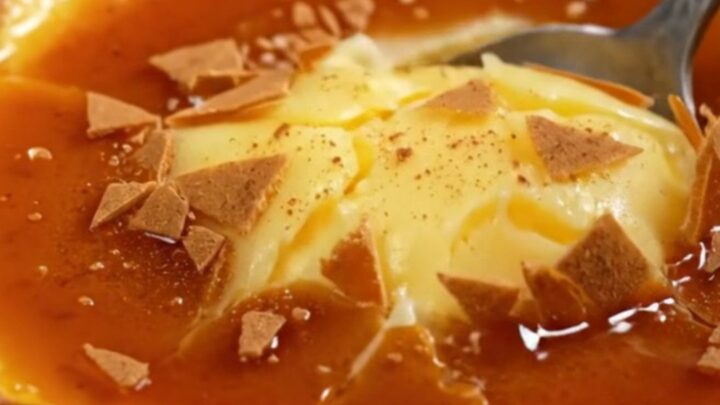
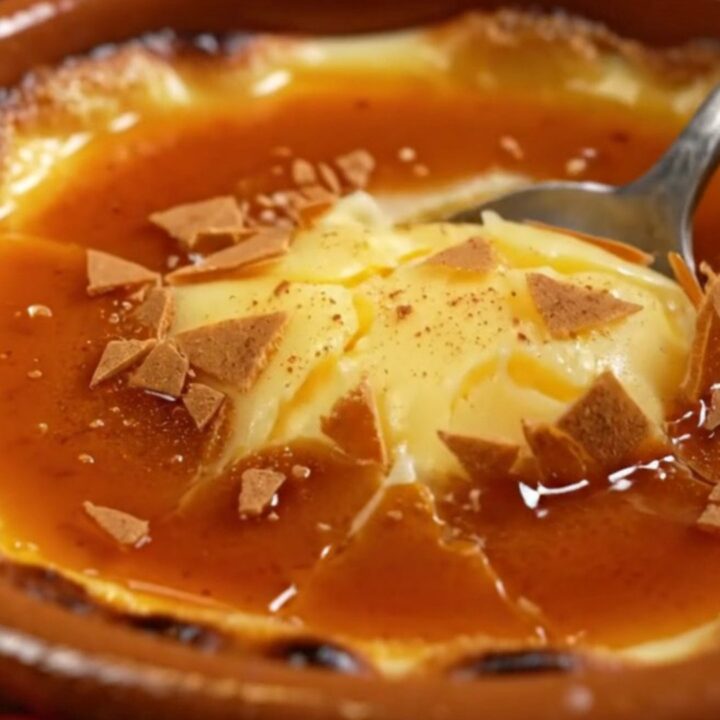
- Let the custards sit for 1 minute to allow the caramel to harden and set. Serve immediately, while the crust is still crisp and the custard is cold. To eat, crack the sugar crust with the back of a spoon and scoop up the custard with the caramel shards.
Estimated nutrition per serving
- Calories
- 210
- Protein
- 6 g
- Carbohydrates
- 30 g
- Fat
- 8 g
Next recipe
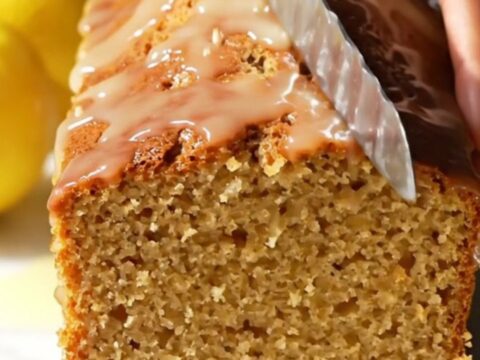
Whole-Lemon Blender Loaf Cake with Crackle Glaze
See the recipe → →This recipe is based on a short cooking video and is published under the pen name Clara Weller. It was checked before publication, but errors can slip through. Nutrition, when shown, is an estimate. Read more in our editorial policy and on our food safety page.
More recipes to try
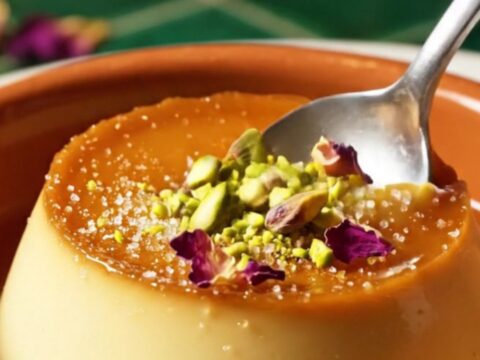
Pistachio Orange Blossom Crème Brûlée
Total time: 4 h 55 min
Ultra-Soft Heavy Cream Cinnamon Rolls
Total time: 55 min
Salted Dulce de Leche Crème Brûlée: Caramel on Caramel
Total time: 6 h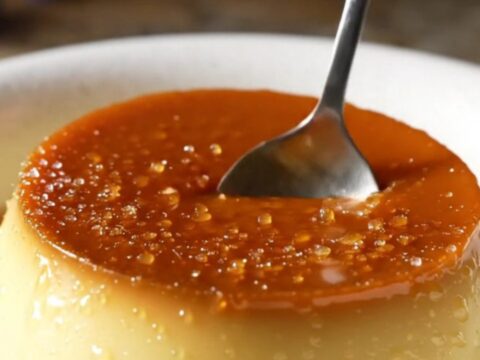
Elegant Earl Grey and Lavender Crème Brûlée
Total time: 4 h 55 min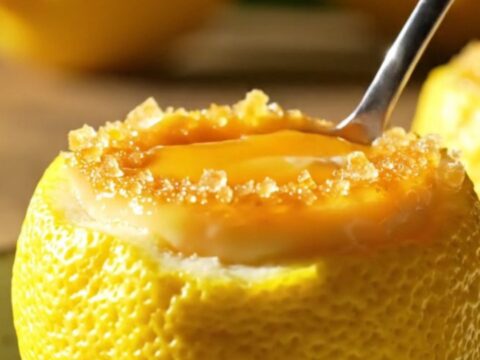
Three-Ingredient Lemon Posset Brûlée in Real Lemon Shells
Total time: 3 h 18 min